Product Design, Manufacturing & Innovation Resources
» 플랑크의 관계식 (플랑크-아인슈타인 관계식)

플랑크의 관계식 (플랑크-아인슈타인 관계식)

1900
  • Max Planck
  • Albert Einstein
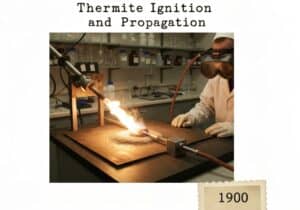
Vintage laboratory scene illustrating Planck's relation in quantum mechanics.

(설명을 위한 생성된 이미지입니다)

플랑크의 관계식은 양자역학의 기본 방정식이다. 역학 이는 단일 광자의 에너지를 정량화하는 공식입니다. 공식은 [latex]E = hnu[/latex]이며, 여기서 [latex]E[/latex]는 광자의 에너지, [latex]nu[/latex](nu)는 광자의 주파수, [latex]h[/latex]는 플랑크 상수입니다. 이 관계식은 빛의 입자적 성질을 확립하며, 빛의 에너지가 불연속적인 묶음, 즉 양자로 양자화되어 있음을 보여줍니다.

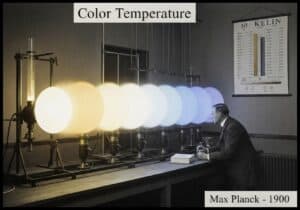
Max Planck first introduced this relationship in 1900 as part of his solution to the black-body radiation problem, which classical physics could not explain. He postulated that energy could only be emitted or absorbed by the walls of the black body in discrete packets, which he called “quanta”. The energy of each quantum was proportional to the frequency of the radiation, with the proportionality constant being [latex]h[/latex]. This was a radical departure from classical physics, where energy was considered continuous. In 1905, Albert Einstein extended this concept to light itself, proposing that light is not just emitted or absorbed in packets but actually consists of these discrete energy packets, later named photons. He used this idea to explain the photoelectric effect, where electrons are ejected from a material when light shines on it. The relation [latex]E = h\nu[/latex] is central to all of spectroscopy because it directly links the measurable frequency (or wavelength, since [latex]c = \lambda\nu[/latex]) of light to the discrete energy level transitions within atoms and molecules. When a substance absorbs or emits light, the photon’s energy [latex]E[/latex] must exactly match the energy difference [latex]\Delta E[/latex] between two quantum states of the atom or molecule, providing a direct probe into the quantum structure of matter.

UNESCO Nomenclature: 2213
이론 물리학

유형

추상 시스템

분열

혁명가

용법

널리 사용됨

전구체

  • 제임스 클러크 맥스웰의 전자기학 방정식 (1865)
  • The black-body radiation problem (ultraviolet catastrophe)
  • 하인리히 헤르츠의 광전 효과 발견(1887)

응용 프로그램

  • 광전 효과에 대하여 설명
  • 양자역학의 기초
  • 레이저 기술(유도 방출에 의한 광 증폭)
  • LED 및 반도체 물리학
  • 원자 및 분자 스펙트럼 이해

특허:

NA

잠재적 혁신 아이디어

현재 하루 4만 건이 넘는 봇 트래픽을 차단하기 위해 이 콘텐츠는 커뮤니티 회원만 이용할 수 있습니다.
> 로그인 < 또는 >등록 < 이 콘텐츠를 비롯한 모든 제한된 콘텐츠와 도구는 (100% 무료로) 이용할 수 있습니다.

관련 개념: 플랑크의 관계식, 양자역학, 광자, 플랑크 상수, 에너지, 주파수, 광전 효과, 양자화, 흑체 복사, E=hv.

역사적 맥락

플랑크의 관계식 (플랑크-아인슈타인 관계식)

1900
1900
1900
1900
1900
1900
1900
1900
1900
1900
1900
1900
1900
1900
1900

(날짜를 알 수 없거나 관련이 없는 경우, 예를 들어 "유체역학"의 경우, 주목할 만한 등장 시기를 대략적으로 추정하여 제공합니다.)

관련 발명, 혁신 및 기술 원칙

고화질 이미지 및 다운로드는 등록된 회원에게만 100% 무료로 제공됩니다.

> 로그인 <