지속적인 개선, 식스 시그마 설계(DfSS), Process Capability, 프로세스 개선, 품질 보증, 품질 관리, 통계 분석
목적:
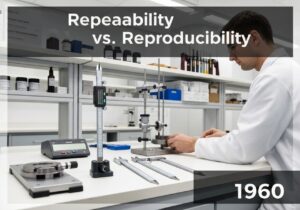
측정 시스템의 변동량 중 측정 장치 자체로 인한 변동량(반복성)과 장치를 사용하는 작업자로 인한 변동량(재현성)을 평가하기 위함입니다.
사용 방법:
여러 작업자가 동일한 측정 장비를 사용하여 동일한 부품을 여러 번 측정합니다. 그런 다음 통계 분석을 수행하여 전체 공정 변동 중 측정 시스템으로 인한 변동 비율을 결정합니다.
장점
측정 데이터의 신뢰성과 정확성을 보장하고, 측정 오류의 원인을 파악하는 데 도움이 되며, 효과적인 공정 관리 및 개선에 필수적입니다.
단점
제대로 수행하려면 시간이 많이 소요될 수 있으며, 신중한 계획과 실행이 필요하고, 결과 해석에는 통계적 이해가 요구됩니다.
카테고리:
린 시그마, 조작, 품질
다음과 같은 경우에 가장 적합합니다:
측정 시스템의 정밀도와 신뢰성을 평가합니다.
Gage R&R studies are widely implemented across various industries such as manufacturing, automotive, aerospace, and healthcare, where consistent and accurate measurements are paramount for quality control and assurance. This methodology is particularly applicable during the early stages of product development, pilot production runs, and ongoing quality monitoring. Participants typically include quality engineers, process engineers, and operators who utilize measurement systems to assess critical dimensions and performance metrics of components. By conducting experiments where multiple operators measure the same parts using a designated gage under similar conditions, organizations can determine the extent of variability that can be attributed to the measurement system itself, as well as to operator variability. In automotive manufacturing, for instance, Gage R&R assessments help to ensure that measurements of component specifications align with safety and performance standards, thereby avoiding costly defects and recalls. Data obtained from statistical analysis enables teams to pinpoint specific sources of variability, whether they stem from equipment calibration issues or operator technique differences. This knowledge informs decisions regarding training needs for personnel, adjustments in measurement procedures, or enhancements in measurement equipment, thereby leading to more reliable processes. Regular application of Gage R&R studies can reinforce a company’s commitment to maintaining high-quality manufacturing standards and facilitate continual improvement initiatives within quality management systems such as ISO 9001 or Six Sigma methodologies.
이 방법론의 주요 단계
측정 부품을 선택하고 해당 부품이 모집단 내의 변이를 대표하는지 확인하십시오.
측정 절차의 일관성을 유지하기 위해 작업자에게 측정 방법을 교육합니다.
여러 작업자가 동일한 측정기를 사용하여 동일한 부품을 여러 번 측정하도록 하십시오.
측정 순서를 무작위로 하여 편향을 최소화하십시오.
측정 데이터로부터 변동성 구성 요소를 계산합니다.
분산분석(ANOVA) 또는 이와 유사한 통계적 방법을 사용하여 데이터를 분석하십시오.
측정 시스템으로 인해 발생하는 전체 공정 변동의 비율을 결정하십시오.
측정 시스템이 의도된 용도에 적합한지 평가하고 문서화하십시오.
측정 오류의 원인을 파악하고 분석하여 시스템을 개선합니다.
프로 팁
게이지 R&R 연구 중에 시간 경과에 따른 변동과 작업자 성능을 모니터링하고 시각화하기 위해 관리도를 활용하십시오.
측정 기법 및 해석의 일관성을 확보하기 위해 게이지 R&R 연구를 수행하기 전에 작업자 교육 세션을 포함시키십시오.
측정값 변동의 미묘한 원인을 파악하기 위해 통계적 평가에 요인 간 상호작용을 포함하는 다차원 분석을 수행하십시오.