Product Design, Manufacturing & Innovation Resources

결함수목분석(FTA)

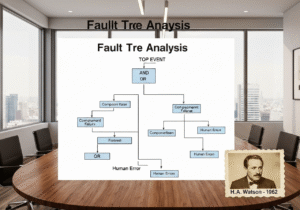
Fault Tree Analysis

결함수목분석(FTA)

목적:

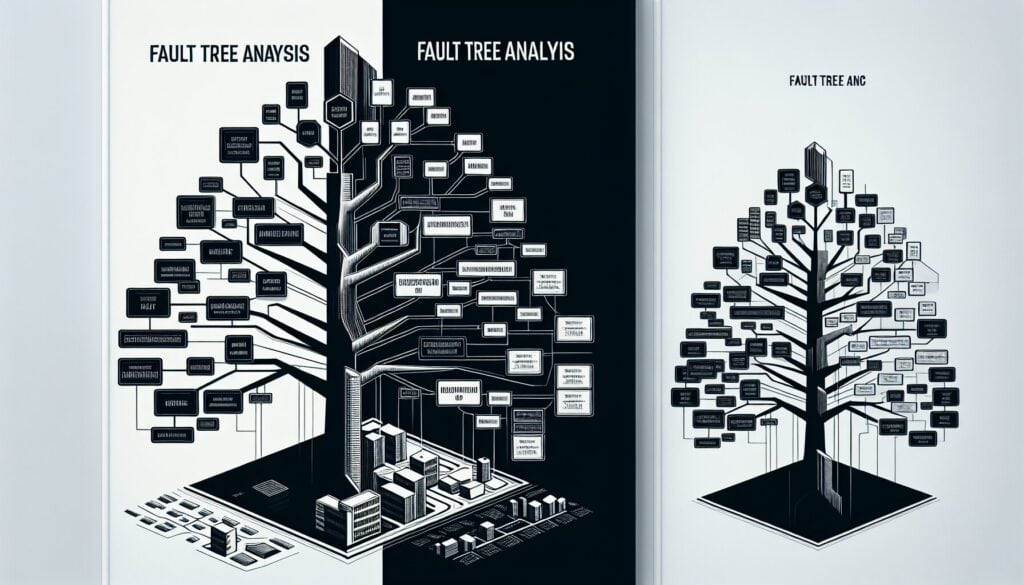
A top-down, deductive failure analysis technique where an undesired state of a system (the “top event” or failure) is analyzed using Boolean logic to combine a series of lower-level events or failures that could cause it.


사용 방법:

장점

단점

카테고리:

다음과 같은 경우에 가장 적합합니다:

Fault Tree Analysis (FTA) is particularly advantageous in industries such as aerospace, automotive, nuclear power, and healthcare, where system reliability and safety are paramount. This methodology is effective during the design phase of a project, where engineers and designers can preemptively identify potential failure modes before they manifest in real-world applications. For example, in the aerospace sector, FTA can be employed to analyze the reliability of a flight control system, mapping out all possible failure pathways that could lead to a flight safety incident. In the automotive industry, manufacturers might utilize FTA when developing new vehicle models to ensure that all safety mechanisms are robust against potential failure scenarios. Participants in an FTA typically include system engineers, safety engineers, and reliability analysts, who collaboratively assess both hardware and software components of a system. It is often initiated by stakeholders seeking to improve operational safety and reduce risks associated with system failures. By quantifying the probabilities of basic events, FTA also enables organizations to allocate resources effectively, directing focus to the most significant risk factors that, if addressed, would yield substantial improvements in safety and reliability metrics. The visual representation of the fault tree further facilitates communication among multidisciplinary teams and supports decision-making processes by providing clear pathways that depict how various failures can converge to a top event. This structured approach aligns well with regulatory requirements in industries governed by strict safety standards, ultimately leading to enhanced compliance with safety protocols.

이 방법론의 주요 단계

  1. 시스템 오류를 나타내는 최상위 이벤트를 정의하십시오.
  2. 최상위 사건으로 이어질 수 있는 직접적인 원인을 파악하십시오.
  3. 직접적인 원인에 기여하는 중간 사건들을 개발하십시오.
  4. 논리 게이트(AND, OR)를 사용하여 이벤트들을 연결하고 관계를 나타내세요.
  5. 가능한 경우 기본 사건에 확률을 할당하십시오.
  6. 기본 사건들의 확률을 이용하여 최상위 사건의 확률을 계산하십시오.
  7. 결함 트리를 검토하고 완성도와 정확성을 확보하십시오.

프로 팁

  • Incorporate Failure Mode Effects Analysis (FMEA) with FTA for a comprehensive understanding of failure modes and their effects on system performance.
  • 기본 사건에 할당된 확률에 대한 민감도 분석을 사용하여 최상위 사건의 확률에 가장 큰 영향을 미치는 사건을 식별합니다.
  • 시스템 설계가 발전하거나 운영 데이터가 확보됨에 따라 결함 트리를 정기적으로 업데이트하여 위험 평가의 관련성과 정확성을 보장하십시오.

여러 방법론을 읽고 비교하기 위해, 저희는 다음을 추천합니다

> 광범위한 방법론 저장소  <
400가지가 넘는 다른 방법론들과 함께.

이 방법론에 대한 의견이나 추가 정보는 언제든지 환영합니다. 아래 댓글란 ↓ , 엔지니어링 관련 아이디어나 링크도 마찬가지입니다.

역사적 맥락

1960
1960
1960
1962
1964
1970
1970
1960
1960
1960
1960
1963
1965-12-21
1970
1970

(날짜를 알 수 없거나 관련이 없는 경우, 예를 들어 "유체역학"의 경우, 주목할 만한 등장 시기를 대략적으로 추정하여 제공합니다.)

관련 게시물

고화질 이미지 및 다운로드는 등록된 회원에게만 100% 무료로 제공됩니다.

> 로그인 <