Product Design, Manufacturing & Innovation Resources
» 서던 블롯

서던 블롯

1975
  • Edwin Southern
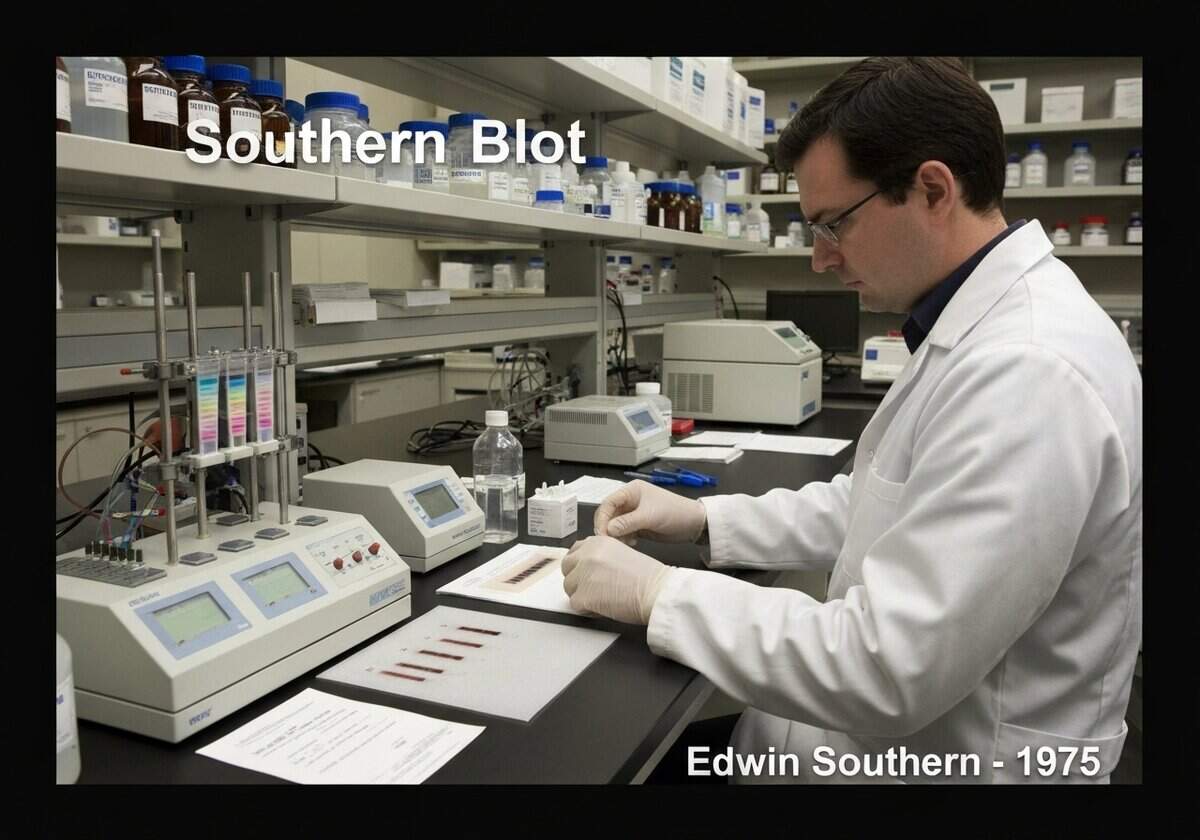
Laboratory scene demonstrating Southern blot technique for DNA analysis in molecular genetics.

(설명을 위한 생성된 이미지입니다)

The Southern blot is a 방법 used for the detection of a specific DNA sequence in a DNA sample. It combines transfer of electrophoresis-separated DNA fragments to a filter membrane with subsequent fragment detection by a labeled DNA probe. The technique allows researchers to identify a specific gene within a complex DNA mixture based on size and sequence.


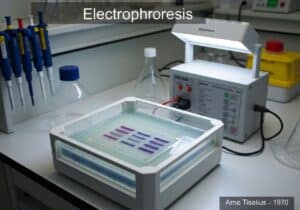
The Southern blot, named after its inventor Edwin Southern, is a powerful and specific method for detecting a target DNA sequence within a complex mixture of DNA. It was a foundational technique in molecular genetics before the widespread adoption of PCR and sequencing. The process is a multi-step procedure that combines size separation with specific molecular recognition. It begins with the digestion of the total genomic DNA sample using one or more restriction enzymes, which cleaves the DNA into fragments of varying sizes. These fragments are then separated according to their size by agarose gel electrophoresis. The gel now contains a smear of countless DNA fragments, sorted by length. The crucial next step is the transfer, or ‘blotting,’ of these separated DNA fragments from the fragile gel onto a more durable membrane, typically made of nitrocellulose or nylon. This is achieved through capillary action, which wicks a buffer solution through the gel and the membrane, carrying the DNA along with it and immobilizing it on the membrane’s surface. The DNA is first denatured into single strands so it can bind to the probe. The membrane now holds a faithful replica of the DNA fragment pattern from the gel. To find the specific gene of interest among the thousands of fragments, a labeled probe is used. This probe is a single-stranded piece of DNA (or RNA) that has a sequence complementary to the target gene and is tagged with a marker, such as a radioactive isotope ([latex]^{32}P[/latex]) or a fluorescent/chemiluminescent molecule. The membrane is incubated with this probe, which hybridizes (forms a double helix) only with its complementary DNA fragment on the membrane. After washing away any unbound probe, the location of the hybridized probe is detected, revealing a band that corresponds to the size of the DNA fragment containing the target gene.

UNESCO Nomenclature: 2406
분자생물학

유형

화학 공정

분열

점진적

용법

틈새/전문 분야

전구체

  • gel electrophoresis for DNA separation
  • discovery of restriction enzymes
  • understanding of DNA hybridization principles
  • development of radioactive labeling techniques for probes
  • techniques for creating nitrocellulose membranes

응용 프로그램

  • gene mapping
  • diagnosing genetic diseases (e.g., sickle cell anemia)
  • identifying gene mutations or rearrangements
  • forensic DNA analysis (RFLP)
  • 친자 확인 테스트
  • detecting transgenes in GMOs

특허:

NA

잠재적 혁신 아이디어

현재 하루 4만 건이 넘는 봇 트래픽을 차단하기 위해 이 콘텐츠는 커뮤니티 회원만 이용할 수 있습니다.
> 로그인 < 또는 >등록 < 이 콘텐츠를 비롯한 모든 제한된 콘텐츠와 도구는 (100% 무료로) 이용할 수 있습니다.

Related to: Southern blot, Edwin Southern, DNA detection, hybridization, DNA probe, RFLP, blotting, molecular biology, gene identification, electrophoresis.

역사적 맥락

서던 블롯

1960
1970
1973
1975
1979
1983
1988
1960
1967
1970
1975
1977
1983
1987
1990

(날짜를 알 수 없거나 관련이 없는 경우, 예를 들어 "유체역학"의 경우, 주목할 만한 등장 시기를 대략적으로 추정하여 제공합니다.)

관련 발명, 혁신 및 기술 원칙

고화질 이미지 및 다운로드는 등록된 회원에게만 100% 무료로 제공됩니다.

> 로그인 <