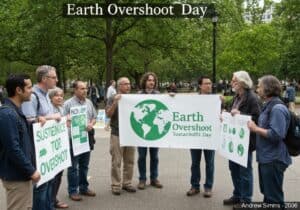
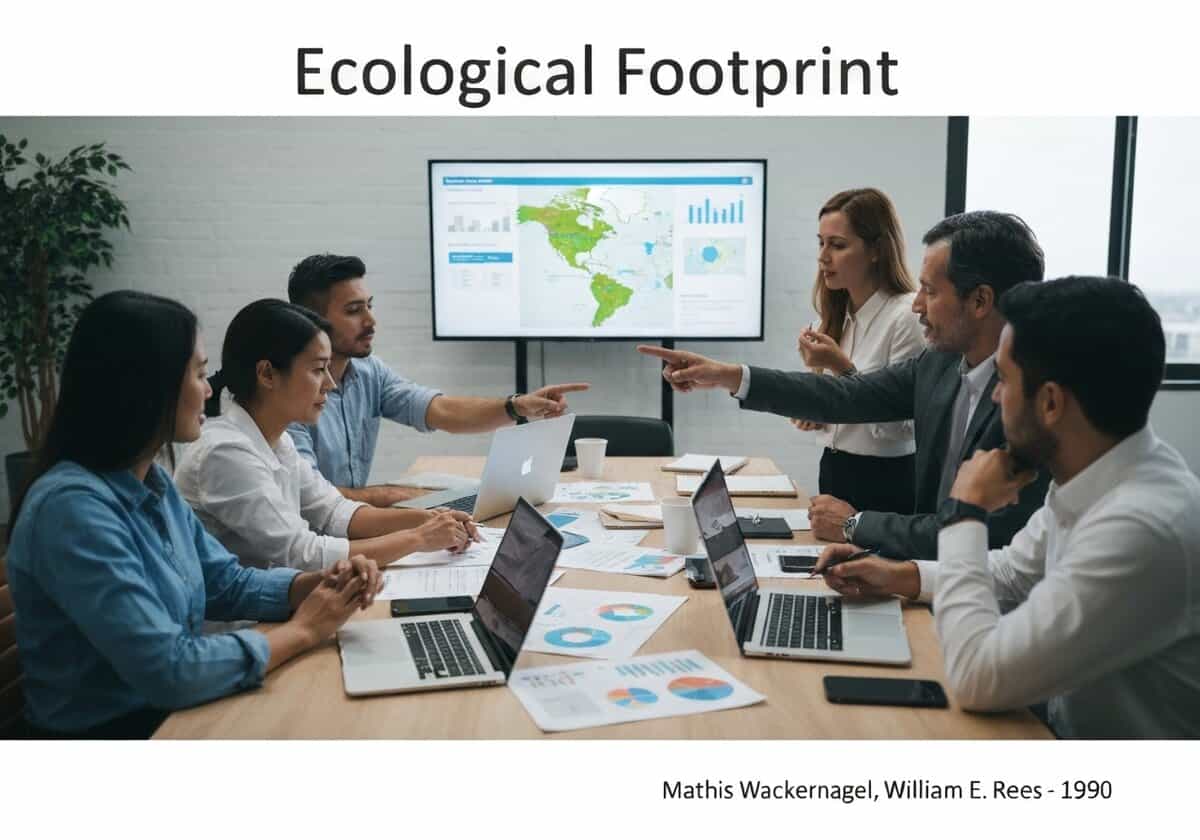
생태발자국은 인간의 자연에 대한 수요를 측정하는 자원 회계 지표입니다. 이는 한 인구가 소비하는 자원(식량, 섬유, 목재 등)을 생산하고, 특히 탄소 배출과 같은 폐기물을 흡수하는 데 필요한 생물학적으로 생산적인 토지와 해양 면적의 양을 정량화합니다. 이는 자원의 '수요' 측면을 나타냅니다. 지구 과잉 소비의 날 (EOD) 계산.

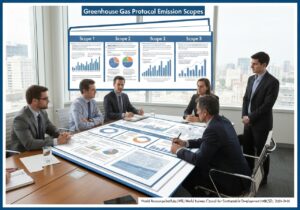
(설명을 위한 생성된 이미지입니다)
생태발자국은 인간의 자연에 대한 수요를 측정하는 자원 회계 지표입니다. 이는 한 인구가 소비하는 자원(식량, 섬유, 목재 등)을 생산하고, 특히 탄소 배출과 같은 폐기물을 흡수하는 데 필요한 생물학적으로 생산적인 토지와 해양 면적의 양을 정량화합니다. 이는 자원의 '수요' 측면을 나타냅니다. 지구 과잉 소비의 날 (EOD) 계산.
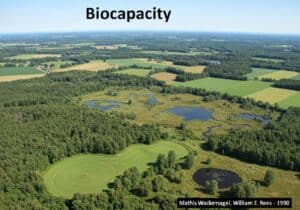
Developed in the early 1990s by Mathis Wackernagel during his PhD research under William E. Rees at the University of British Columbia, the Ecological Footprint concept was designed to be a comprehensive indicator of human pressure on the environment. It translates various types of consumption and waste generation into a single, understandable unit: the global hectare (gha). The methodology categorizes consumption into several major areas: food, shelter, mobility, goods, and services. It also accounts for the six main land use types: cropland, grazing land, fishing grounds, forest land for timber and fiber, built-up land for infrastructure, and forest land required to absorb carbon dioxide emissions not absorbed by the ocean (the carbon footprint). The carbon footprint component is often the largest part of the total Ecological Footprint for most industrialized nations. By summing up these areas, the metric provides an aggregate measure of demand that can be compared directly against the available biocapacity, making it a powerful tool for assessing sustainability at various scales, from an individual to the entire planet.
현재 하루 4만 건이 넘는 봇 트래픽을 차단하기 위해 이 콘텐츠는 커뮤니티 회원만 이용할 수 있습니다.
> 로그인 < 또는 >등록 < 이 콘텐츠를 비롯한 모든 제한된 콘텐츠와 도구는 (100% 무료로) 이용할 수 있습니다.
생태 발자국
(날짜를 알 수 없거나 관련이 없는 경우, 예를 들어 "유체역학"의 경우, 주목할 만한 등장 시기를 대략적으로 추정하여 제공합니다.)

고화질 이미지 및 다운로드는 등록된 회원에게만 100% 무료로 제공됩니다.
> 로그인 <