공학, 과학 및 연구를 위한 프로그래밍 언어 - 전체 비교
공학, 과학 및 연구 분야에서 선택 프로그래밍 언어 can significantly impact project outcomes and efficiencies. With over 8 million developers leveraging Python for tasks ranging from data analysis to machine learning, its popularity underscores a critical trend in software selection (Stack Overflow, 2023). This article presents a full list and comparison of programming languages suited for engineering and scientific applications, utilizing criteria such as performance, ease of use, available libraries, community support, and cost. We will also offer an overview of key programming languages like C++, MATLAB, and Fortran, while dissecting their strengths and weaknesses for specific engineering tasks.
핵심 요약
- 연산량이 많은 작업의 성능에 초점을 맞추세요.
- 프로그래밍 라이브러리는 기능을 향상시키므로, 라이브러리의 가용성을 평가해야 합니다.
- 프로젝트 반복 속도를 높이기 위해 사용 편의성을 고려하십시오.
- 지역사회의 지원은 문제 해결 자원에 영향을 미칩니다.
- 사용하는 도구 및 라이브러리의 비용을 평가합니다.
- 미래의 가능성을 위해 새롭게 떠오르는 언어들을 주시하십시오.
비교 기준
프로그래밍 언어는 가독성, 사용 편의성, 커뮤니티 지원 등 여러 기준에 따라 평가되어야 합니다.
- 가독성: 이는 엔지니어들이 코드를 쉽게 이해하고 수정할 수 있도록 보장합니다. 예를 들어, 파이썬은 명확한 구문으로 유명하며, 초보자조차도 쉽게 코드를 작성할 수 있습니다. 관계를 맺다 복잡한 작업도 신속하게 처리할 수 있습니다. 또한, 방대한 문서와 커뮤니티 포럼이 이를 뒷받침합니다. 사용자 경험이를 통해 문제 해결 및 협업을 통한 문제 해결이 더욱 효과적입니다.
- 성능 및 계산 효율성: C와 C++ 같은 언어는 탁월한 속도와 효율성을 제공하여 시간에 민감한 엔지니어링 애플리케이션에 이상적입니다. 반면, 파이썬과 같은 인터프리터 언어는 순수 성능 면에서는 다소 뒤처질 수 있지만 프로토타이핑 및 실험에 있어 훨씬 편리하다는 장점이 있습니다. 벤치마크 결과에 따르면, 특정 상황에서는 C++가 파이썬보다 최대 10배 빠른 성능을 보이는 시뮬레이션 결과를 통해 성능을 비교해 볼 수 있습니다. 유한 요소 분석.
- 특정 작업에 필요한 라이브러리 및 툴킷의 가용성언어의 도메인별 라이브러리는 과학 컴퓨팅 분야에서의 활용도에 지대한 영향을 미칩니다. 도메인별 라이브러리가 풍부한 언어는 빠른 개발을 촉진할 수 있습니다. 예를 들어, R은 통계 분석을 위한 다양한 패키지를 제공하며, MATLAB은 선형 대수 계산을 위한 광범위한 함수를 제공하여 엔지니어들이 코딩의 기본 사항보다는 문제 해결에 집중할 수 있도록 합니다.
- 대규모 온라인 커뮤니티: for a complex programming language, a vast pool of collective knowledge, makes easier to find solutions to obscure problems and get help with difficult concepts. This active community often translates into more readily available learning resources, such as tutorials, documentation, and example code, which can significantly shorten the learning curve. Furthermore, a vibrant community usually means a richer ecosystem of third-party libraries and tools, along with faster bug fixes and updates for both the language and its packages.
팁: 기능이나 최적화를 향상시킬 수 있는 최신 라이브러리 업데이트를 확인하세요. 이러한 업데이트는 프로그래밍 언어의 유용성을 크게 변경할 수 있습니다.
팁: 선택할 때는 프로젝트 일정과 각 단계의 성능 요구 사항을 고려해야 합니다. 파이썬으로 프로토타입을 제작한 후 필요에 따라 C++로 전환하여 실제 제품에 적용하는 등 혼합 솔루션을 사용하는 것이 유리할 수 있습니다.
Performance Benchmarks for Typical Engineering and Scientific Computations
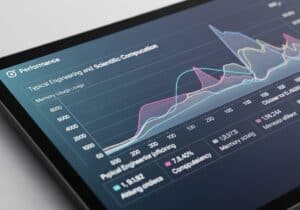
When assessing programming languages for engineering and scientific computations, key performance metrics include execution speed, memory usage, and parallel processing. C and C++ excel in execution speed due to efficient memory access, making them ideal for real-time simulations, while Python, though versatile, generally performs slower in numerical tasks unless optimized with libraries like NumPy. For example, optimized C can outperform Python in matrix multiplication by nearly 10x. Emerging languages like Julia and Rust offer strong performance in numerical computing and memory safety, respectively.
Because performance depends primary on specific applications, and specific libraries can change performance significantly, we have chosen to only rate from * to *** this parameter.
Emerging Programming Languages and Future Trends

Emerging programming languages like Julia or Rust are significantly influencing technology and engineering. Julia excels in numerical computing with high performance and user-friendly syntax, experiencing a 50% growth in scientific communities since 2020. Rust enhances safety and performance in systems engineering, attracting companies like Boeing and Ford to reduce runtime errors. Swift, particularly with Swift for TensorFlow, offers efficient data manipulation for machine learning, reportedly reducing training time by up to 30% compared to traditional Python libraries.
팁: consider exploring hybrid solutions that combine the strengths of multiple languages, such as using Python for data analysis and Julia for numerical computation, to optimize project outcomes, javascript/D3 for graphical summary.
| 언어 | Primary usages | 장점 | 단점 | Estimated total additional libraries | Estimated scientific libraries | Community & Practitioners | Estimated Speed for Complex Math on Large Data | Specificities |
|---|---|---|---|---|---|---|---|---|
| 파이썬 | Data science, Machine learning, Scientific computing, Web development | Easy to learn and use, vast number of libraries (e.g., NumPy, Pandas, SciPy, Matplotlib), large and active community, general-purpose capabilities, good for scripting and automation. | Slower speed for very CPU-intensive tasks compared to compiled languages (though C integrations help), Global Interpreter Lock (GIL) can limit true parallelism for CPU-bound tasks, higher memory consumption. | 500,000+ (from PyPI) | 20,000+ (core scientific stack like SciPy, Pandas, scikit-learn, plus specialized tools) | *** | ** (*** with optimized libraries like NumPy/Cython) | Interpreted, dynamically typed, object-oriented, strong for integrating different systems, extensive documentation. |
| 아르 자형 | Statistical computing, Data analysis, Data visualization | Specifically designed for statistics, vast array of packages for statistical modeling and visualization (CRAN), powerful graphics capabilities, strong community in academia and research. | Steeper learning curve for those not from a statistical background, can be slower for general-purpose programming and some large-scale computations, memory management can be an issue with very large datasets. | 20,000+ (from CRAN, Bioconductor adds thousands more for bioinformatics) | 18,000+ (most of CRAN is domain-specific) | *** | ** (optimized for statistical operations, can be slower on general math than some others). | Interpreted, array-oriented, functional programming features, designed around data objects like vectors, matrices, data frames. |
| 줄리아 | Scientific computing, High-performance numerical analysis, Machine learning | High performance (approaching C/Fortran), designed for scientific computing, easy syntax (similar to Python/MATLAB), strong interoperability with other languages, built-in parallelism, multiple dispatch. | Smaller community and ecosystem compared to Python or R (though growing rapidly), "time-to-first-plot" issue (initial compilation lag for functions/packages), still maturing in some areas. | 10,000+ (registered packages) | 5,000+ (strong focus on scientific domains) | ** | *** | Dynamically typed with optional type annotations, JIT (적시 생산) compiled, designed for parallelism and distributed computing, multiple dispatch. |
| MATLAB | Numerical computing, Engineering simulations, Algorithm development, Data visualization | Extensive built-in mathematical functions and toolboxes for various engineering and scientific domains, integrated development environment (IDE) tailored for numerical work, high-quality plotting capabilities, good for matrix operations. | Proprietary and expensive (licenses for base and toolboxes), can be slower than compiled languages for non-vectorized operations or general-purpose tasks, resource-intensive. | 5,000+ (combining official toolboxes, often dozens of functions each, and extensive File Exchange community submissions) | 4,500+ (most toolboxes and a large portion of File Exchange are domain-specific) | *** (especially in engineering and specific academic fields) | *** (highly optimized for matrix operations). | Matrix-based language, interpreted with JIT compilation for some operations, extensive toolboxes, graphical environment (Simulink). |
| C++ | High-performance scientific computing, Game development (physics engines), Systems programming, Embedded systems | Excellent performance and speed (close to hardware), Fine-grained memory control, Large number of libraries (Boost, Eigen, GSL), Mature language, Object-oriented, procedural, and generic programming. | Steep learning curve, Manual memory management (can be error-prone), Longer development time compared to higher-level languages, More complex syntax, compilation times can be long. | 10,000+ (considering major libraries like Boost, Qt, and numerous smaller ones available through package managers like Conan, vcpkg, or directly) | 500+ (key, high-impact libraries like Eigen, GSL, Boost.Math, ROOT, Armadillo, deal.II, Trilinos, PETSc) | *** | *** | Compiled language, Statically typed, Supports manual memory management, High control over system hardware, Multi-paradigm. |
| Java | Large-scale enterprise applications, Big data systems (e.g., Hadoop ecosystem), Android app development | Platform independent ("Write Once, Run Anywhere" - WORA) due to JVM, Strong memory management (automatic garbage collection), Large standard library and ecosystem (Maven Central), Good for building large, robust systems, Supports multithreading. | Can be more verbose than Python, Slower performance for purely numerical tasks compared to C++/Fortran (though JIT compilation helps significantly), Higher memory consumption than C++. | 500,000+ (unique libraries/artifacts on Maven Central) | 2,000+ (e.g., Apache Commons Math, Weka, Deeplearning4j, ND4J, Smile, various specialized scientific tools) | *** | ** | Object-oriented, Statically typed, Runs on JVM, Automatic garbage collection, Portable, Interpreted bytecode with JIT compilation. |
| SAS | Advanced statistical analysis, Business intelligence, 임상 시험 data analysis, Data mining | Comprehensive and validated statistical procedures, Strong data handling capabilities for large datasets, Widely used and accepted in regulated industries (e.g., pharmaceuticals, finance), Good for reporting and data management. | Proprietary and very expensive, Less flexible than general-purpose languages, Steeper learning curve for programming aspects beyond basic procedures, GUI can be complex. | 200+ (referring to distinct procedures and modules offered by SAS Institute) | 200+ (virtually all SAS modules are for statistical, analytical, or data management tasks) | ** | ** (Optimized for its specific statistical procedures and handling large datasets on disk). | Primarily a 4GL with data step for manipulation and proc step for analysis, Strong on data management and reporting. |
| Scala | Big data processing (especially with Apache Spark), Distributed systems, Concurrent programming, Functional programming applications | Combines functional and object-oriented programming, Runs on JVM (interoperable with Java libraries), Excellent for concurrency and parallelism, Statically typed with type inference (concise code), Good for building scalable systems. | Can have a steeper learning curve due to its rich feature set (functional programming concepts), Smaller community compared to Java or Python (though growing), Build times can sometimes be slower. | 50,000+ (leveraging Java's ecosystem via JVM and its own on Scaladex/Scala Index) | 500+ (e.g., Breeze for numerical computing, Spark MLlib, Saddle, plus Java interop for others) | ** | ** (Leverages JVM performance, very fast for big data processing with Spark). | Hybrid functional/object-oriented, Statically typed, Runs on JVM, Immutable data structures encouraged, Actor model for concurrency (Akka). |
| 포트란 | High-performance numerical computation, Scientific and engineering simulations (CFD, weather modeling, physics) | Excellent performance for numerical tasks (especially array/matrix operations), Mature and highly optimized compilers, Designed for numerical work (syntax close to mathematical notation), Long history with vast amounts of legacy code and libraries, native support for parallelism (coarrays). | Less versatile for general-purpose programming (e.g., web development, GUI), Smaller and more specialized community, Can be verbose for non-numerical tasks, Modern features adopted more slowly than in some other languages. | 500+ (significant, publicly known libraries from sources like Netlib, vendor-specific, and emerging fpm ecosystem) | 400+ (most established Fortran libraries are for scientific/engineering computation) | * (Smaller overall, but very strong in HPC and specific scientific domains). | *** | Compiled, Statically typed, Strong support for array operations, Designed for numerical precision and speed, Coarrays for parallel programming. |
| 울프람 매스매티카 | Symbolic computation, Technical computing, Data visualization, Algorithm development | Powerful symbolic manipulation, Integrated numeric and symbolic computation, Extensive built-in mathematical functions and curated data, Notebook interface, High-level programming language, Wolfram Knowledgebase access. | Proprietary and very expensive, Can be slower for pure numerical tasks compared to compiled languages if not written carefully, Steeper learning curve for some advanced features, Less suited for general-purpose application development. | 5,000+ (if considering the vast array of built-in functions, curated datasets, and packages in Wolfram Library Archive as library equivalents) | 4,800+ (core strength; most functionalities are math/science/engineering focused) | ** (Strong in academia and specific research areas) | ** to *** (Excellent for symbolic, good for numerical if well-written, but overhead for very large raw numerical data compared to C/Fortran) | Symbolic language, Term rewriting, Rule-based programming, Notebook interface, Everything is an expression, Functional programming constructs. |
| 메이플 | Symbolic computation, Mathematical education, Engineering 문제 해결, Algorithm development | Strong symbolic computation capabilities, User-friendly interface for mathematical exploration, Extensive mathematical functions and toolboxes, Good for education and interactive problem solving. | Proprietary and expensive, Performance for very large numerical computations may lag behind specialized numerical languages, Smaller community than Mathematica or MATLAB in some fields. | 3,000+ (counting built-in packages, toolboxes, and community contributions via MapleCloud) | 2,800+ (primary focus is mathematics and engineering) | * (Strong in mathematical education and specific research) | ** (Good for symbolic and moderate numerical, but not its primary design for massive raw data crunching) | Symbolic computation engine, Procedural and functional programming, Worksheet-based interface, Strong emphasis on mathematical notation. |
| JavaScript | Web development (front-end and back-end with Node.js), Interactive data visualizations (e.g., D3.js, Plotly.js), Mobile apps (via frameworks) | Ubiquitous in web browsers, Large and active community, Vast number of libraries and frameworks (npm), Non-blocking I/O with Node.js good for I/O bound tasks, Growing use in data science (TensorFlow.js). | Dynamically typed nature can lead to runtime errors, Performance for CPU-intensive scientific tasks can be lower than specialized languages (though improving with WebAssembly and Node.js C++ addons), "Callback hell" or promise management can be complex if not handled well. | 2,000,000+ (packages on npm) | 1,000+ (e.g., TensorFlow.js, stdlib-js, math.js, Plotly.js, D3.js, various specialized utilities) | *** (Overall, one of the largest communities) | * (Improving, especially with WebAssembly or server-side Node.js leveraging C++ libraries, but base JS is slower for this) | Interpreted or JIT-compiled, Prototype-based object-oriented, Single-threaded event loop model, Dynamically typed, Multi-paradigm. |
| Swift | iOS, macOS, watchOS, tvOS app development, Server-side development (growing), Some interest in scientific computing | Modern syntax, Fast performance (compiled), Strong type safety, Automatic memory management (ARC), Good interoperability with Objective-C and C, Growing open-source community. | Primarily focused on Apple ecosystem (though now open-source and cross-platform efforts exist), Smaller ecosystem for scientific computing compared to Python/R, Younger language with fewer established scientific libraries. | 20,000+ (Swift Package Index tracking packages) | 100+ (emerging numerical libraries, plotting tools, some bindings; not a primary focus yet) | ** (Strong within Apple ecosystem, growing elsewhere) | ** (Compiled language, can be very fast, but depends on library availability and optimization for scientific tasks) | Compiled, Statically typed, Protocol-oriented, Optional types, Value and reference types, ARC (Automatic Reference Counting). |
| Go (Golang) | Network services, Distributed systems, Cloud infrastructure, Command-line tools, Systems programming | Excellent concurrency support (goroutines, channels), Fast compilation, Statically typed with good performance, Simple syntax, Strong standard library, Good for building scalable and reliable systems. | Smaller ecosystem for data science and numerical computing compared to Python/R, Manual error handling can be verbose, Generics were added relatively recently, Less rich GUI options. | 50,000+ (discoverable modules) | 100+ (e.g., Gonum for numerical computing, some machine learning library efforts, but not extensive) | ** | ** (Compiled and efficient, good for data processing pipelines, but less mature numerical libraries than C++/Fortran) | Compiled, Statically typed, Concurrency primitives (goroutines, channels), Garbage collected, Simplicity emphasized. |
| 기음# | Windows desktop applications, Web development (ASP.NET), Game development (Unity), Enterprise software, Cross-platform apps with .NET | Powerful and versatile, Strong support from Microsoft (.NET ecosystem), Good performance (JIT compiled), Type safety, Large standard library (BCL), Good IDE support (Visual Studio), Asynchronous programming features. | Historically Windows-centric (though .NET Core/.NET 5+ are cross-platform), Can be more verbose than Python for scripting, Scientific computing ecosystem less extensive than Python or R but growing (e.g. Math.NET Numerics). | 300,000+ (unique packages on NuGet) | 500+ (e.g., Math.NET Numerics, Accord.NET, ML.NET, ScottPlot, OxyPlot) | *** | ** (JIT compiled, good performance, can interop with C++/Fortran via P/Invoke or C++/CLI) | Object-oriented, Statically typed, Runs on .NET CLR (Common Language Runtime), Garbage collected, LINQ for data querying, Component-oriented. |
| Perl | Text processing, System administration, Bioinformatics (historically strong), Web development (CGI, older frameworks, some modern ones like Mojolicious) | Powerful text manipulation capabilities (regular expressions), Mature language, CPAN (Comprehensive Perl Archive Network) offers a vast number of modules, Good for scripting and automation. | Syntax can be dense and sometimes perceived as "write-only," Declining popularity compared to Python for many tasks, Performance for heavy numerical computation not its core strength, Object-oriented features can feel bolted on by some. | 200,000+ (distributions on CPAN; individual modules are more numerous) | 500+ (e.g., PDL - Perl Data Language, extensive BioPerl modules, various statistics modules) | * (Still active but smaller than its peak, loyal community) | * (Interpreted, PDL can improve this for numerical arrays but generally not as fast as compiled languages for heavy math) | Interpreted, Dynamically typed, Strong regular expression engine, "There's More Than One Way To Do It" (TMTOWTDI) philosophy, Context-sensitive. |
| LISP | Artificial intelligence (historically), Symbolic computation, Extensible software systems, Research, Domain-Specific Languages (DSLs) | Powerful macro system for metaprogramming (code that writes code), Dynamic and interactive development, Homoiconicity (code is data), Good for complex symbolic manipulation and AI algorithms. (Clojure adds JVM/JS interop, concurrency features). | Niche language with a smaller mainstream community (except Clojure which has a vibrant one), Parenthesis-heavy syntax can be a barrier for some, Ecosystem for general scientific/numerical libraries less extensive than Python/R. | 10,000+ (Quicklisp for Common Lisp has ~1,500 projects, Clojars for Clojure has >30,000 libraries; estimate covers major dialects collectively) | 150+ (some specialized numerical/AI libraries in CL like GSLL; Clojure leverages Java/JS numeric libraries extensively) | * (Smaller, dedicated communities for each dialect; Clojure's is larger and more active in industry) | * (Interpreted/compiled depending on dialect and implementation, can be fast if optimized. Clojure gets JVM/JS speed benefits) | Family of languages, Homoiconic (code as data), Macro system, Functional programming emphasis (strong in Scheme/Clojure), Dynamic typing (Common Lisp, Scheme) or dynamic with strong typing (Clojure). |
| Haskell | Academic research, Financial modeling, Building robust and correct software, 컴파일러 development, DSLs | Purely functional language, Strong static typing with type inference, Emphasis on correctness and reliability (lazy evaluation, purity), Excellent concurrency and parallelism support. | Steep learning curve (functional concepts, monads), Smaller community compared to mainstream languages, Ecosystem for general scientific tasks less developed, Performance for highly iterative numerical algorithms can be harder to optimize than imperative languages if not careful. | 15,000+ (packages on Hackage) | 100+ (e.g., HMatrix for numerical linear algebra, some statistics packages, bindings to other libraries, but less comprehensive than Python/R) | * | * (Compiled, but lazy evaluation and functional style can have performance implications if not carefully managed for numerical tasks; can achieve high performance with effort) | Purely functional, Statically typed with strong type inference, Lazy evaluation, Type classes, Monads. |
| Prolog | Artificial intelligence (logic programming, expert systems, 자연어 처리), Database programming, Symbolic reasoning, Theorem proving | Declarative language based on logic, Built-in backtracking and search mechanisms, Good for problems involving rules and relationships, Symbolic reasoning. | Niche language with a small community, Not well-suited for numerical computation or general-purpose application development, Performance can be an issue for large-scale problems if not carefully structured, Debugging can be challenging. | 300+ (e.g., SWI-Prolog's package system and libraries for specific implementations) | 20+ (very few for general numerical math; more for constraint logic programming over finite domains or rationals) | * | * (Not designed for this; speed is in its logical inference capabilities, not raw numerical crunching) | Logic programming paradigm, Declarative, Based on Horn clauses, Unification, Backtracking. |
마무리
As we have seen throughout this examination of programming languages tailored for engineering, science, and research, each language presents its own unique blend of advantages and limitations. The ongoing dialogue among engineers about which language best meets specific project needs highlights the importance of context and application. For instance, while Python’s widespread use showcases its 다재, C++ continues to serve as a robust option for performance-intensive tasks.
Ultimately, the right choice hinges on factors such as project requirements, existing infrastructure, and the team’s familiarity with the language.
관련 주제
- Integration with Hardware: understanding how programming languages interface with various hardware components used in engineering applications.
- Real-Time Systems: examining the use of programming languages in developing responsive systems required in engineering projects.
- Code Optimization Techniques: studying methods to enhance the performance of programming codes used in scientific computations.
- Data Formats and Management: comparing how different programming languages handle data storage and retrieval processes.
- Parallel Computing Approaches: exploring programming paradigms that facilitate execution on multiple processors for improved computational speed.
- Statistical Methods in Programming: investigating how programming languages incorporate statistical techniques for data analysis.
- Open Source vs. Proprietary Software: weighing the benefits and drawbacks of open-source languages versus commercially licensed ones in engineering.
- Integration with Existing Tools: examining how well programming languages work with established engineering software and tools in the industry.
External Links on Programming Languages for Science
국제 표준
(링크 위에 마우스를 올려놓으면 콘텐츠에 대한 설명을 볼 수 있습니다.)