To identify potential problems, weaknesses, or ways a plan could fail, in order to proactively address them.
使用方法:
Instead of asking "How can we achieve X?", the group asks "How could X fail?" or "How could we cause X to fail?". The identified problems are then used to generate solutions.
長所
Helps anticipate and mitigate risks; encourages critical thinking; can be a good starting point for improvement efforts by focusing on what to avoid.
短所
Can sometimes lead to a negative or pessimistic atmosphere if not managed well; may not be suitable for all types of problems; requires reframing problems into solutions.
カテゴリー:
アイデア創出, 問題解決, リスク管理
最適な用途:
Identifying potential problems or ways a project/idea could fail, to then find solutions.
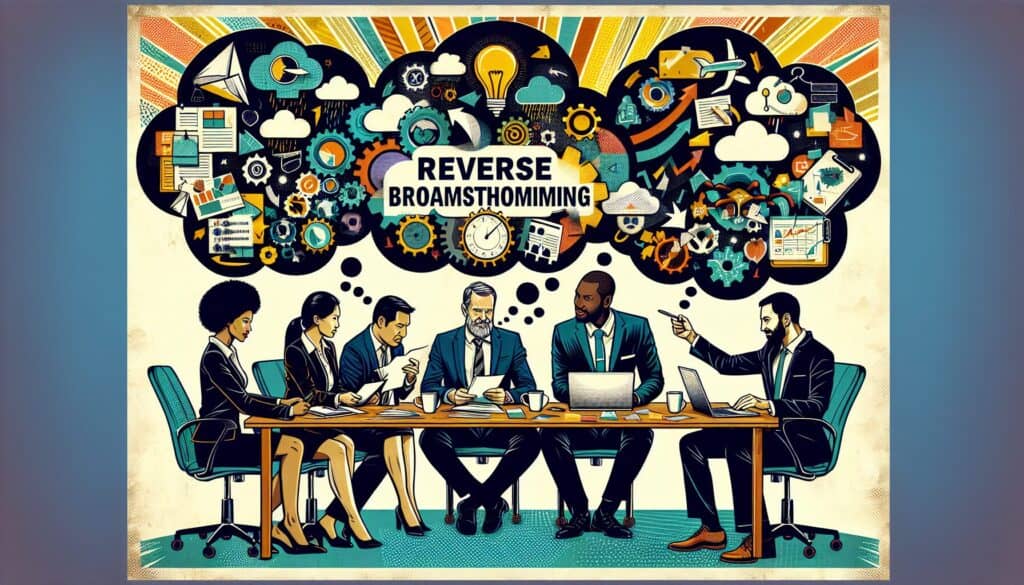
Reverse brainstorming is particularly effective in industries such as product design, software development, and engineering, allowing teams to proactively identify failure modes before they manifest in real-world applications. This methodology is well-suited for the early phases of project development, such as concept design and feasibility studies, where understanding potential pitfalls can inform design choices and resource allocation. Facilitators can initiate sessions with diverse teams, including engineers, designers, marketing personnel, and stakeholders, ensuring a broad range of viewpoints and expertise is represented. Participants can collaboratively brainstorm various scenarios that might lead to a product’s failure, such as design flaws, market misalignment, or inadequate user testing. The findings from these discussions can then be systematically addressed through innovative problem-solving techniques, strengthening the robustness of the product or service. Industries that have successfully implemented reverse brainstorming include automotive design, where safety and performance are paramount, and consumer electronics, where understanding user experience and preventing product recalls are crucial. This proactive approach not only enhances the likelihood of success but also nurtures a culture of continuous improvement, fostering an environment where team members feel comfortable expressing concerns and suggestions. Tools like fishbone diagrams or affinity diagrams can be utilized during these sessions to visualize problems and categorize potential failures, thereby guiding the development of targeted solutions to mitigate risks that might otherwise derail a project.
この方法論の主なステップ
Define the objective or project.
Formulate failure-oriented questions related to the objective.
Brainstorm potential ways the project could fail or obstacles that could arise.
Encourage participants to think broadly and creatively about failure scenarios.
Prioritize and categorize the identified potential failures based on impact and likelihood.
Analyze the prioritized failures to identify root causes.
Develop strategies or solutions to mitigate each identified failure.
Assign responsibilities for implementing the solutions.
Establish metrics for monitoring the effectiveness of the solutions.
プロのヒント
Encourage team members to assume the mindset of a competitor or antagonist, enhancing the identification of potential failures from an opposing viewpoint.
Utilize structured metrics to evaluate the identified risks and their likelihood of occurrence, ensuring prioritization of the most pressing concerns.
Schedule follow-up sessions specifically for generating countermeasures based on the identified risks, promoting a culture of continuous improvement.