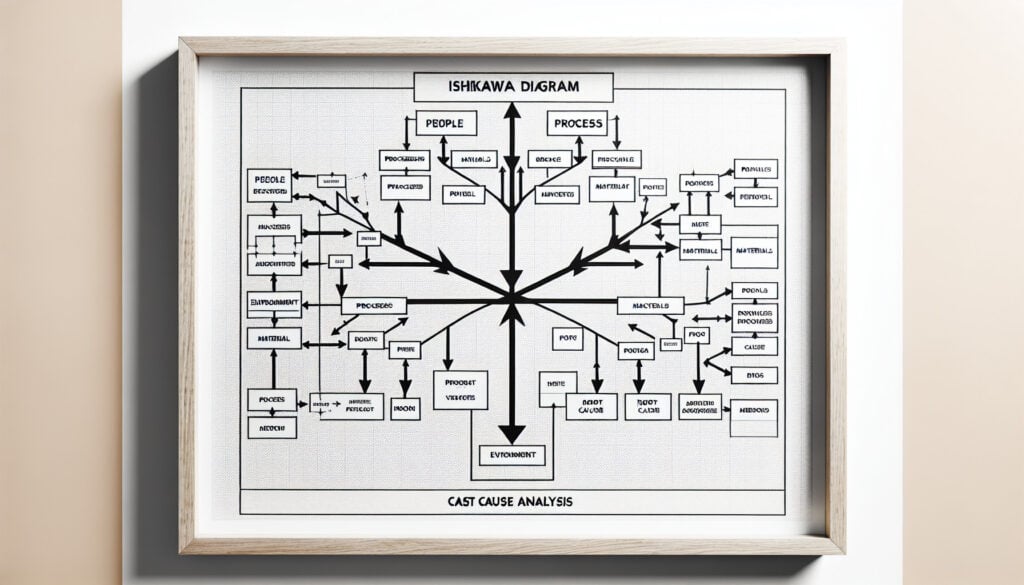
The Ishikawa Diagram is widely utilized in various industries such as manufacturing, healthcare, software development, and service sectors, serving as an effective tool during phases of problem-solving or quality improvement initiatives. Typically employed in team brainstorming sessions, this methodology draws participation from diverse stakeholders including engineers, quality assurance personnel, project managers, and frontline employees, enabling a comprehensive examination of issues from multiple angles. Each category within the diagram, such as people, processes, machinery, materials, measurements, and environment, encourages participants to think critically about all potential causes that could contribute to a problem, facilitating a systematic approach to identifying root causes rather than just addressing surface-level symptoms. With its straightforward visual format, the diagram promotes collaborative discussions and enhances understanding among team members, making it easier to communicate complex issues and fostering a shared commitment to developing actionable solutions. Industries often apply this methodology in contexts like Six Sigma projects or Lean initiatives, where continuous improvement is crucial, demonstrating its versatility across different project types and goals. In practice, this tool can lead to more sustainable outcomes by encouraging teams to implement corrective measures that tackle the actual underlying issues rather than simply providing temporary fixes. Engaging in this exercise not only aids in troubleshooting but also strengthens the team’s problem-solving capabilities for future challenges.
この方法論の主なステップ
プロのヒント
複数の方法論を読み比べて、 私たちは、
> 包括的な方法論リポジトリ <
400以上の他の手法と併せて。
この方法論に関するご意見や追加情報は、 以下のコメント欄 ↓、エンジニアリング関連のアイデアやリンクも同様です。