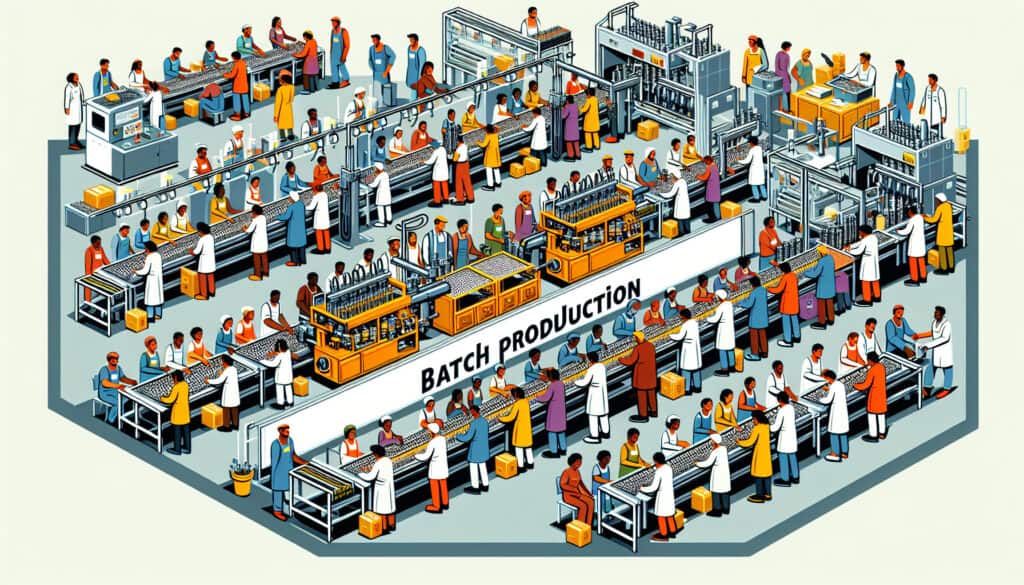
あ 製造方法 where a group of identical products are produced together in a batch.
使用方法:
Batch production is a common manufacturing method that is used to produce a wide range of products, from food and beverages to pharmaceuticals and chemicals.
長所
Is a flexible manufacturing method that can be used to produce a wide range of products, is more efficient than job production, and can be used to produce products in large quantities.
短所
Is less efficient than mass production, requires more setup time than job production, and can result in high levels of work-in-progress inventory.
カテゴリー:
リーンシックスシグマ, 製造業
最適な用途:
Producing a moderate volume of a variety of products.
Batch production is widely utilized in various industries such as automotive manufacturing, consumer goods, and textiles, wherein products are created in groups or “batches” instead of in a continuous flow, which allows for flexibility in switching between different product types. This methodology is particularly well-suited for scenarios where production needs to adapt to varying seasonal demands, such as in food processing where seasonal ingredients may dictate different product lines. During the design phase, engineers and product designers collaborate to establish specifications and processes that accommodate fluctuating volumes, making it a preferred choice for products with shorter life cycles, like electronics or fashion items. The initiation of batch production projects typically involves input from stakeholders including product managers, supply chain specialists, and automation engineers, fostering an environment that enhances interdepartmental collaboration. This method also allows for quality control checks between batches, which can lead to improved product reliability, especially in industries like pharmaceuticals, where stringent regulatory standards are a requirement. Consequently, businesses might implement batch production to capitalize on cost benefits associated with economies of scale, minimizing production costs while maintaining the adaptability to cater to differing consumer preferences and market trends.
この方法論の主なステップ
Design the production schedule based on order quantities and timelines.
Set up the production line and equipment tailored for the specific batch.
Manufacture the product batch according to defined specifications and processes.
Conduct quality control checks throughout the production process.
Package the finished products, ensuring compliance with regulatory requirements.
Clean and reset the production line for the next batch, if applicable.
Analyze production efficiency and identify areas for improvement.
プロのヒント
Utilize process mapping to identify bottlenecks and optimize workflow, ensuring smoother transitions between batches.
Implement a robust quality control system at each stage of production to detect variations early, reducing waste and rework.
Leverage data analytics to forecast demand accurately, aligning production schedules with market needs and reducing inventory costs.