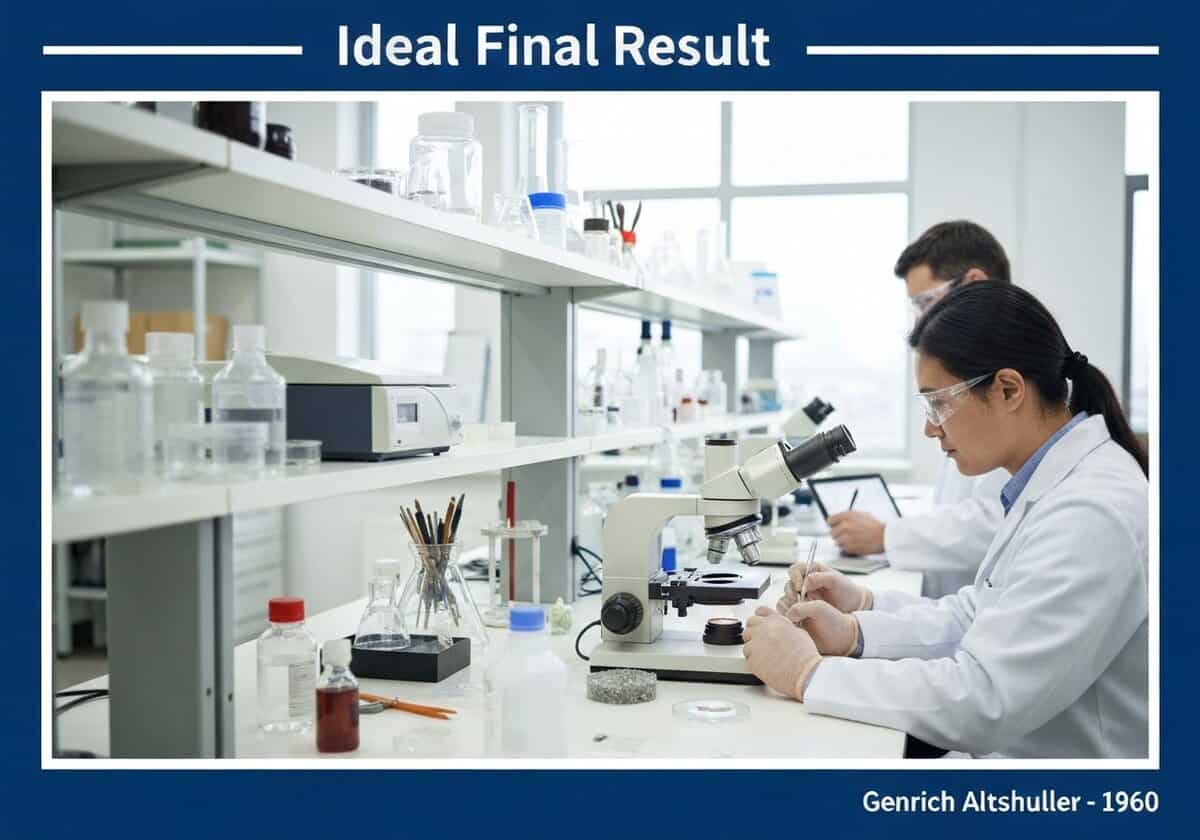
理想的な最終結果(IFR)は、 トリズ これは、現在の制約やリソースとは無関係に、問題に対する究極的かつ完璧な解決策を定義するものです。典型的には、「システム(または要素)自体が、それ自体の存在なしに、必要な機能を実行する」と表現されます。この思考ツールは、問題解決者が心理的な慣性を克服し、形式ではなく機能に焦点を当てるのに役立ちます。


(画像はイメージです)
理想的な最終結果(IFR)は、 トリズ これは、現在の制約やリソースとは無関係に、問題に対する究極的かつ完璧な解決策を定義するものです。典型的には、「システム(または要素)自体が、それ自体の存在なしに、必要な機能を実行する」と表現されます。この思考ツールは、問題解決者が心理的な慣性を克服し、形式ではなく機能に焦点を当てるのに役立ちます。

理想的な最終結果(IFR)は、TRIZ手法における強力な心理学的・分析的ツールです。これは、理想化の法則の終点を定義することで、問題解決プロセスを画期的な解決策へと導く道標として機能します。IFRの策定は、現在のシステムとその問題によって課せられた精神的な制約から意図的に脱却する行為です。「この装置をどう改良できるか?」と問う代わりに、IFRは「装置を全く使わずに、あるいはコストゼロ、害ゼロで、必要な機能を実現するにはどうすればよいか?」という問いを投げかけます。
The classic formulation is: “The X itself performs the function Y”. For example, if the problem is to inspect a pipe for cracks, the IFR would be “The pipe itself indicates its cracks”. This leads to solutions like adding a substance to the pipe material that changes color when exposed to air through a crack. The IFR forces the problem-solver to look for existing resources in the system or its environment that can perform the desired function. This concept is closely linked to the TRIZ principle of ‘Trimming’, where unnecessary or harmful components of a system are removed, and their useful functions are reassigned to other existing components. By defining the ideal outcome, engineers and innovators can work backward to find a practical solution that is simpler, cheaper, and more elegant than a conventional, incremental improvement.
ボットによるトラフィック(現在1日あたり4万件以上)を排除するため、このコンテンツはコミュニティメンバー限定となっています。
> ログイン < または > 登録 < (100%無料)でこれにアクセスできます。他のすべての制限付きコンテンツとツールも同様です。
理想的な最終結果(IFR)
(日付が不明または関連性がない場合、例えば「流体力学」などでは、その注目すべき出現時期の概算値が提示されます。)

フルサイズの画像とダウンロードは、登録会員のみが100%無料で利用できます。
> ログイン <