Product Design, Manufacturing & Innovation Resources
घर » पुनर्संयोजित डीएनए (आरडीएनए)

पुनर्संयोजित डीएनए (आरडीएनए)

1973
  • Stanley Norman Cohen
  • Herbert Boyer
Molecular biologist conducting recombinant DNA technology in a laboratory.

(यह छवि केवल उदाहरण के लिए बनाई गई है)

रिकॉम्बिनेंट डीएनए (आरडीएनए) तकनीक में दो अलग-अलग प्रजातियों के डीएनए अणुओं को आपस में जोड़ा जाता है। नए आनुवंशिक संयोजन बनाने के लिए रिकॉम्बिनेंट डीएनए को एक मेजबान जीव में डाला जाता है। यह प्रक्रिया डीएनए को विशिष्ट स्थानों पर काटने के लिए रिस्ट्रिक्शन एंजाइम और टुकड़ों को जोड़ने के लिए डीएनए लाइगेज का उपयोग करके की जाती है, जिसमें अक्सर वांछित जीन को क्लोनिंग के लिए प्लास्मिड वेक्टर में शामिल किया जाता है।


Recombinant DNA technology, also known as genetic engineering, is the process of creating artificial DNA by combining genetic material from different sources. This technology fundamentally changed biology and medicine by allowing scientists to directly manipulate the genetic code of organisms. The core procedure involves several key steps. First, a gene of interest is identified and isolated from a source organism’s DNA. This is often done using restriction enzymes, which are proteins that act like molecular scissors, cutting DNA at specific recognition sequences. Second, a vector, which is a DNA molecule used to carry the foreign genetic material into another cell, is chosen. Bacterial plasmids—small, circular DNA molecules separate from the bacterial chromosome—are the most common vectors. The same restriction enzyme used to cut out the gene is used to cut open the plasmid vector. This creates compatible ‘sticky ends’ on both the gene and the plasmid. Third, the isolated gene is inserted into the plasmid. The sticky ends of the gene anneal with the complementary sticky ends of the plasmid, and the enzyme DNA ligase is added to permanently join them by forming phosphodiester bonds. The resulting molecule is a recombinant plasmid containing the new gene. Finally, this recombinant vector is introduced into a host organism, typically a bacterium like *E. coli*, through a process called transformation. As the host cells multiply, they replicate the recombinant plasmid along with their own DNA, creating many copies of the inserted gene. The host cells can also transcribe and translate the foreign gene to produce the desired protein, such as human insulin produced in bacteria.

UNESCO Nomenclature: 2406
आणविक जीवविज्ञान

Type

रासायनिक प्रक्रिया

व्यवधान

क्रांतिकारी

उपयोग

व्यापक उपयोग

शगुन

  • आनुवंशिक सामग्री के रूप में डीएनए की खोज
  • डीएनए डबल हेलिक्स संरचना का स्पष्टीकरण
  • बैक्टीरिया में प्लास्मिड की खोज
  • वर्नेर आर्बर, डैनियल नैथंस और हैमिल्टन स्मिथ द्वारा प्रतिबंध एंजाइमों की खोज और लक्षण वर्णन
  • डीएनए लाइगेज की खोज

आवेदन

  • मधुमेह रोगियों के लिए कृत्रिम मानव इंसुलिन का उत्पादन
  • आनुवंशिक रूप से संशोधित जीवों (जीएमओ) का निर्माण
  • टीकों का उत्पादन (उदाहरण के लिए, हेपेटाइटिस बी का टीका)
  • पित्रैक उपचार
  • हीमोफिलिया के लिए थक्के बनाने वाले कारकों का उत्पादन

पेटेंट:

  • US4237224

संभावित नवाचार विचार

बॉट ट्रैफिक को कम करने के कारण, जो वर्तमान में प्रति दिन 40,000 से अधिक है, यह सामग्री केवल समुदाय के सदस्यों के लिए आरक्षित है।
> लॉगिन < या > रजिस्टर < इस सामग्री और अन्य सभी प्रतिबंधित सामग्रियों और उपकरणों तक पहुंच (100% निःशुल्क) है।

संबंधित विषय: रिकॉम्बिनेंट डीएनए, जेनेटिक इंजीनियरिंग, स्टेनली कोहेन, हर्बर्ट बॉयर, प्लास्मिड, वेक्टर, रिस्ट्रिक्शन एंजाइम, डीएनए लाइगेज, जीन क्लोनिंग, जीएमओ।

ऐतिहासिक संदर्भ

पुनर्संयोजित डीएनए (आरडीएनए)

1958
1960
1970
1973
1975
1979
1983
1954
1960
1967
1970
1975
1977
1983
1987
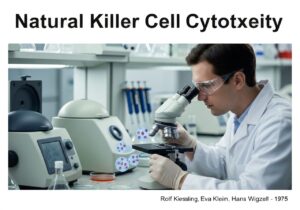
Natural Killer cells in a laboratory setting, examining cytotoxicity mechanisms.

प्राकृतिक हत्यारा (एनके) कोशिका साइटोटॉक्सिसिटी

नेचुरल किलर (एनके) कोशिकाएं जन्मजात प्रतिरक्षा प्रणाली की साइटोटॉक्सिक लिम्फोसाइट्स हैं, जो वायरल संक्रमण और कैंसर के खिलाफ प्रारंभिक रक्षा के लिए महत्वपूर्ण हैं। टी कोशिकाओं के विपरीत, इन्हें पूर्व संवेदीकरण की आवश्यकता नहीं होती है। एनके कोशिकाएं "मिसिंग-सेल्फ" पहचान तंत्र के माध्यम से उन लक्ष्य कोशिकाओं की पहचान करती हैं और उन्हें नष्ट करती हैं जिनमें एमएचसी क्लास I अणु कम हो गए हैं - जो ट्यूमर और वायरस द्वारा अपनाई जाने वाली एक सामान्य प्रतिरक्षा बचाव रणनीति है - और परफोरिन और ग्रैनजाइम के माध्यम से एपोप्टोसिस को प्रेरित करती हैं।

(यदि तिथि अज्ञात है या प्रासंगिक नहीं है, उदाहरण के लिए "द्रव यांत्रिकी", तो इसके उल्लेखनीय उद्भव का एक अनुमानित आंकड़ा प्रदान किया गया है)

संबंधित आविष्कार, नवाचार और तकनीकी सिद्धांत

पंजीकृत सदस्यों के लिए पूर्ण आकार की छवियाँ और डाउनलोड 100% निःशुल्क उपलब्ध हैं।