Product Design, Manufacturing & Innovation Resources
घर » कैथोडिक संरक्षण

कैथोडिक संरक्षण

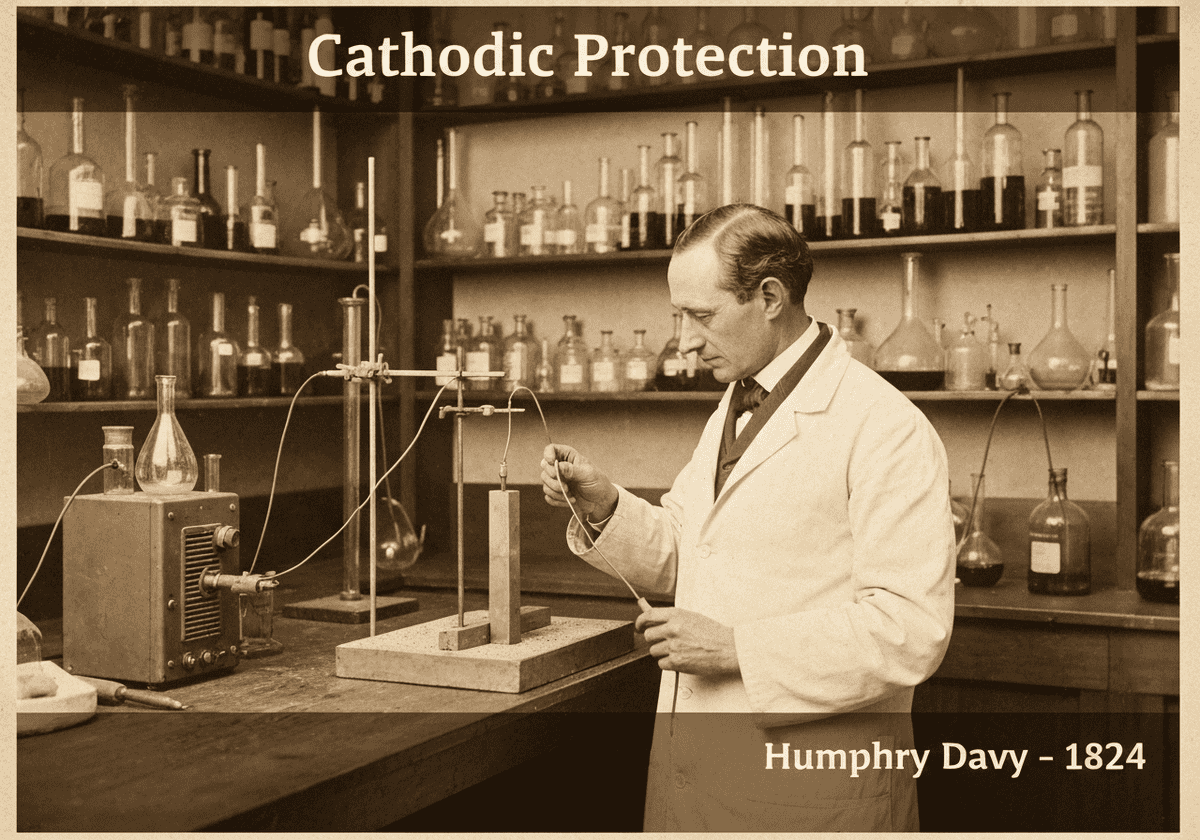
1824
  • Humphry Davy
हम्फ्री डेवी द्वारा कैथोडिक सुरक्षा के लिए इलेक्ट्रोकेमिकल सेल प्रयोग।.

(यह छवि केवल उदाहरण के लिए बनाई गई है)

Cathodic protection (CP) is a technique used to control the corrosion of a metal surface by making it the cathode of an electrochemical cell. This is achieved by supplying an external electrical current that suppresses the natural corrosion currents. The protected metal’s potential is polarized to a more negative value, shifting it into a region of immunity or passivity.

There are two primary methods of applying cathodic protection. The first is the Galvanic Anode Cathodic Protection (GACP) system, which uses sacrificial anodes. In this method, a more electrochemically active metal (like zinc, aluminum, or magnesium) is electrically connected to the protected metal (e.g., steel). The active metal becomes the anode and corrodes preferentially, ‘sacrificing’ itself to protect the steel structure, which becomes the cathode. This system is simple, requires no external power, but the anodes must be periodically replaced.

दूसरी विधि है इंप्रेस्ड करंट कैथोडिक प्रोटेक्शन (ICCP) प्रणाली। इसमें एक बाहरी डीसी पावर स्रोत (जैसे ट्रांसफार्मर-रेक्टिफायर) का उपयोग करके एक निष्क्रिय एनोड (जैसे उच्च-सिलिकॉन कच्चा लोहा या मिश्रित धातु ऑक्साइड) से इलेक्ट्रोलाइट के माध्यम से संरक्षित की जाने वाली संरचना पर करंट प्रवाहित किया जाता है। इससे संरचना कैथोड की तरह कार्य करने के लिए बाध्य हो जाती है और संक्षारण कम हो जाता है। ICCP प्रणालियाँ बहुत बड़ी संरचनाओं को भी संरक्षित कर सकती हैं और समायोज्य होती हैं, लेकिन ये अधिक जटिल होती हैं और इन्हें निरंतर बिजली आपूर्ति और निगरानी की आवश्यकता होती है।

The effectiveness of a CP system is monitored by measuring the structure-to-electrolyte potential. A sufficient negative shift in potential indicates that protection is being achieved. This technique effectively halts most forms of electrochemical corrosion by overpowering the natural corrosion cells on the metal’s surface.

UNESCO Nomenclature: 2203
विद्युत रसायन विज्ञान

Type

रासायनिक प्रक्रिया

व्यवधान

संतोषजनक

उपयोग

व्यापक उपयोग

शगुन

  • Alessandro Volta’s invention of the voltaic pile (1800)
  • संक्षारण की विद्युतरासायनिक प्रकृति की समझ
  • माइकल फैराडे के विद्युत अपघटन के नियम (1834)

आवेदन

  • तेल, गैस और पानी के लिए स्टील पाइपलाइनों की सुरक्षा करना
  • जहाजों और अपतटीय प्लेटफार्मों के ढांचों का संरक्षण करना
  • कंक्रीट संरचनाओं में सुदृढ़ीकरण इस्पात (रीबार)
  • पानी गर्म करने वाले यंत्र और भंडारण टैंक

पेटेंट:

NA

संभावित नवाचार विचार

बॉट ट्रैफिक को कम करने के कारण, जो वर्तमान में प्रति दिन 40,000 से अधिक है, यह सामग्री केवल समुदाय के सदस्यों के लिए आरक्षित है।
> लॉगिन < या > रजिस्टर < इस सामग्री और अन्य सभी प्रतिबंधित सामग्रियों और उपकरणों तक पहुंच (100% निःशुल्क) है।

Related to: cathodic protection, corrosion control, sacrificial anode, impressed current, electrochemistry, pipeline, ship hull, rebar.

ऐतिहासिक संदर्भ

कैथोडिक संरक्षण

1820
1820
1822
1824
1827
1831
1831
1820
1820
1821
1822
1827
1831
1831
1832

(यदि तिथि अज्ञात है या प्रासंगिक नहीं है, उदाहरण के लिए "द्रव यांत्रिकी", तो इसके उल्लेखनीय उद्भव का एक अनुमानित आंकड़ा प्रदान किया गया है)

संबंधित आविष्कार, नवाचार और तकनीकी सिद्धांत

पंजीकृत सदस्यों के लिए पूर्ण आकार की छवियाँ और डाउनलोड 100% निःशुल्क उपलब्ध हैं।