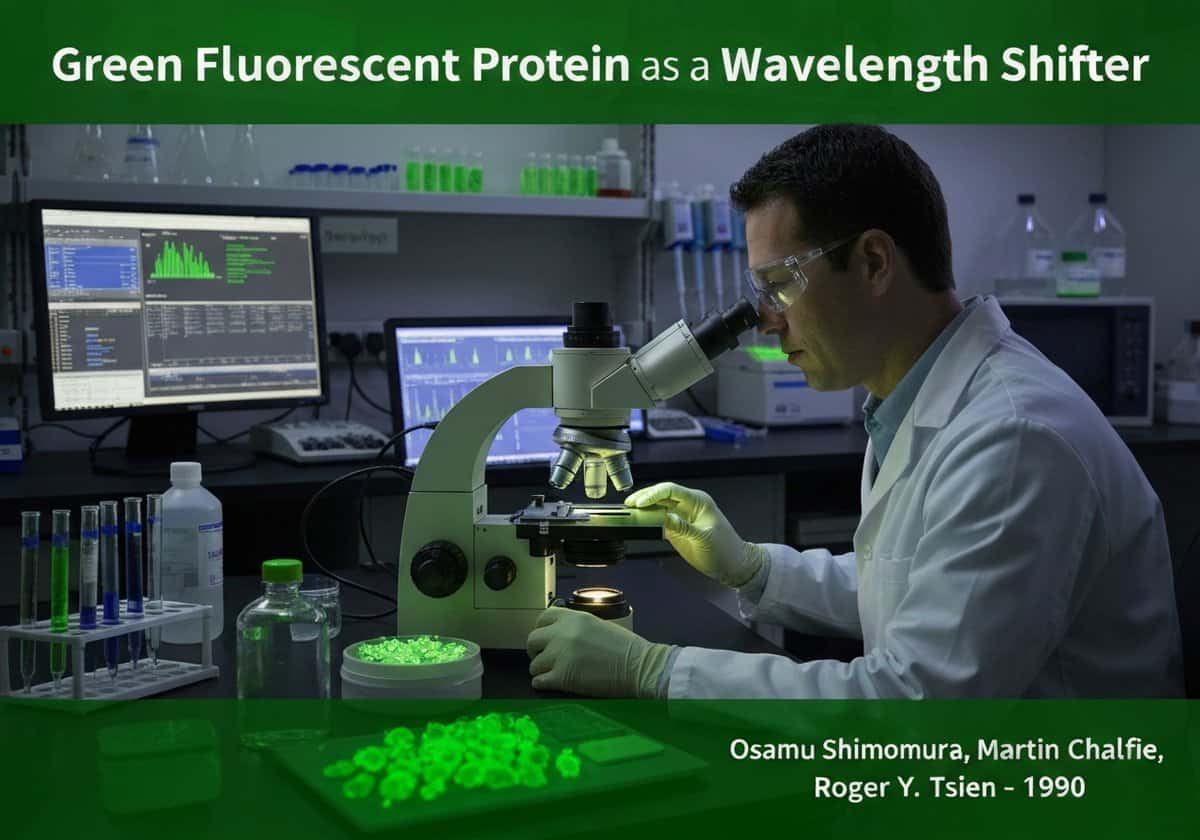
Martin Chalfie later demonstrated that the gene for GFP could be expressed in other organisms (*E. coli* and *C. elegans*), where it would function as a fluorescent marker without needing any species-specific cofactors. Roger Tsien’s work was crucial in understanding the mechanism of chromophore formation and in engineering a vast palette of GFP variants (BFPs, CFPs, YFPs, RFPs) with different colors, improved brightness, and photostability. This toolkit allows researchers to track multiple proteins or processes simultaneously within a single living cell, a technique known as multicolor imaging. The 2008 Nobel Prize in Chemistry was awarded to Shimomura, Chalfie, and Tsien for this work.