压力的定义是施加在物体表面的垂直力([latex]F[/latex])与该力分布的单位面积([latex]A[/latex])之比。计算公式为 [latex]p = \frac{F}{A}[/latex]。它是一个标量,即有大小但没有方向。压力的 SI 单位是帕斯卡(Pa),相当于一个 牛顿 每平方米.
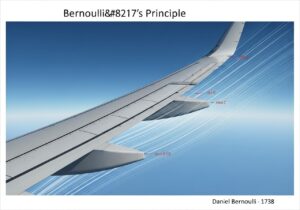
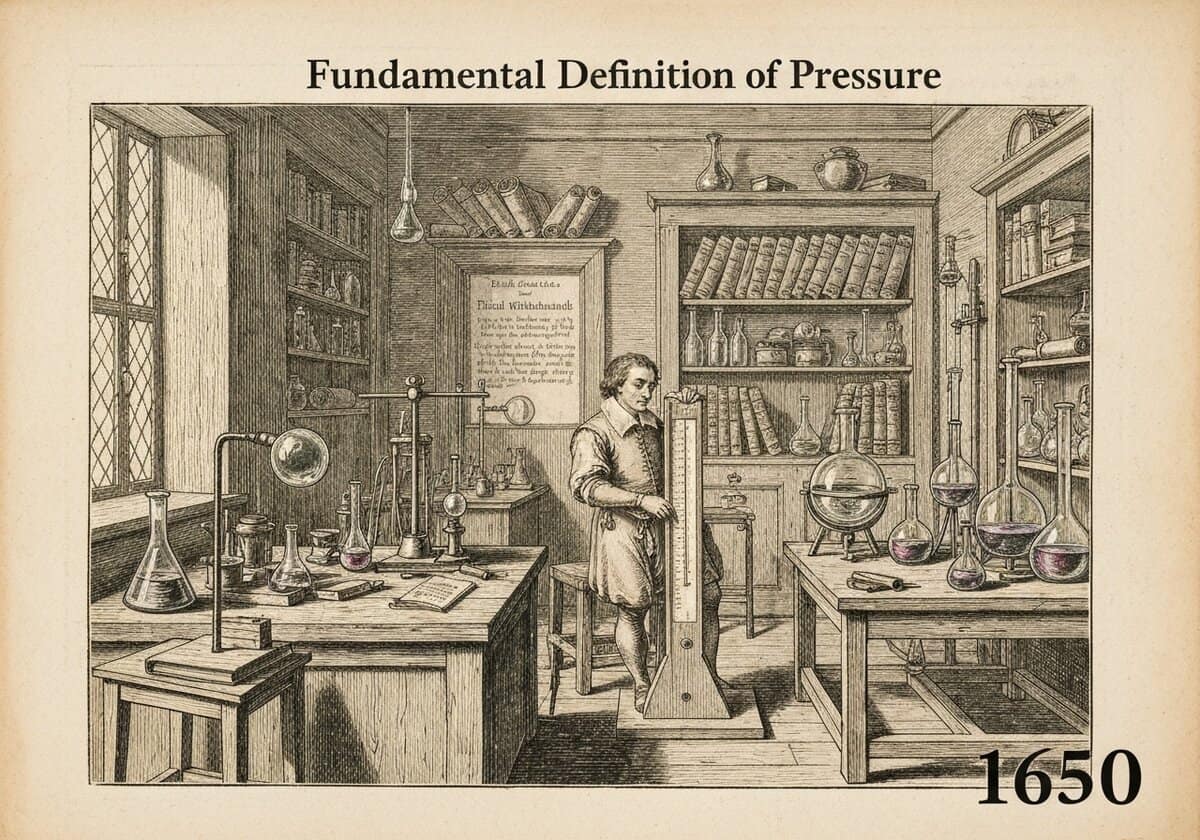
The concept of pressure evolved from early studies of mechanics and fluids. While earlier thinkers like Archimedes understood buoyancy, the formal quantification of pressure as force per unit area was crystallized during the 17th century through the work of scientists like Evangelista Torricelli and Blaise Pascal. Pressure is a fundamental concept in thermodynamics and fluid mechanics. It is an intensive property, meaning it does not depend on the size of the system. In a static fluid, pressure increases with depth due to the weight of the fluid above. This is the principle behind manometers and barometers. For gases, pressure is understood at a microscopic level as the average force from molecular collisions on the container walls. This kinetic theory of gases connects the macroscopic property of pressure to the microscopic behavior of atoms and molecules. The formula [latex]p = frac{F}{A}[/latex] is a macroscopic definition. For a force applied at an angle [latex]theta[/latex] to the surface normal, the formula becomes [latex]p = frac{F costheta}{A}[/latex]. In continuum mechanics, pressure is often represented as the isotropic part of the stress tensor, which describes the forces internal to a continuous material. This more advanced view allows for the analysis of pressure in solids and complex fluid flows where forces are not uniform or perpendicular. Understanding pressure is critical for designing everything from aircraft wings, which rely on pressure differentials for lift, to deep-sea submersibles built to withstand immense external pressure.