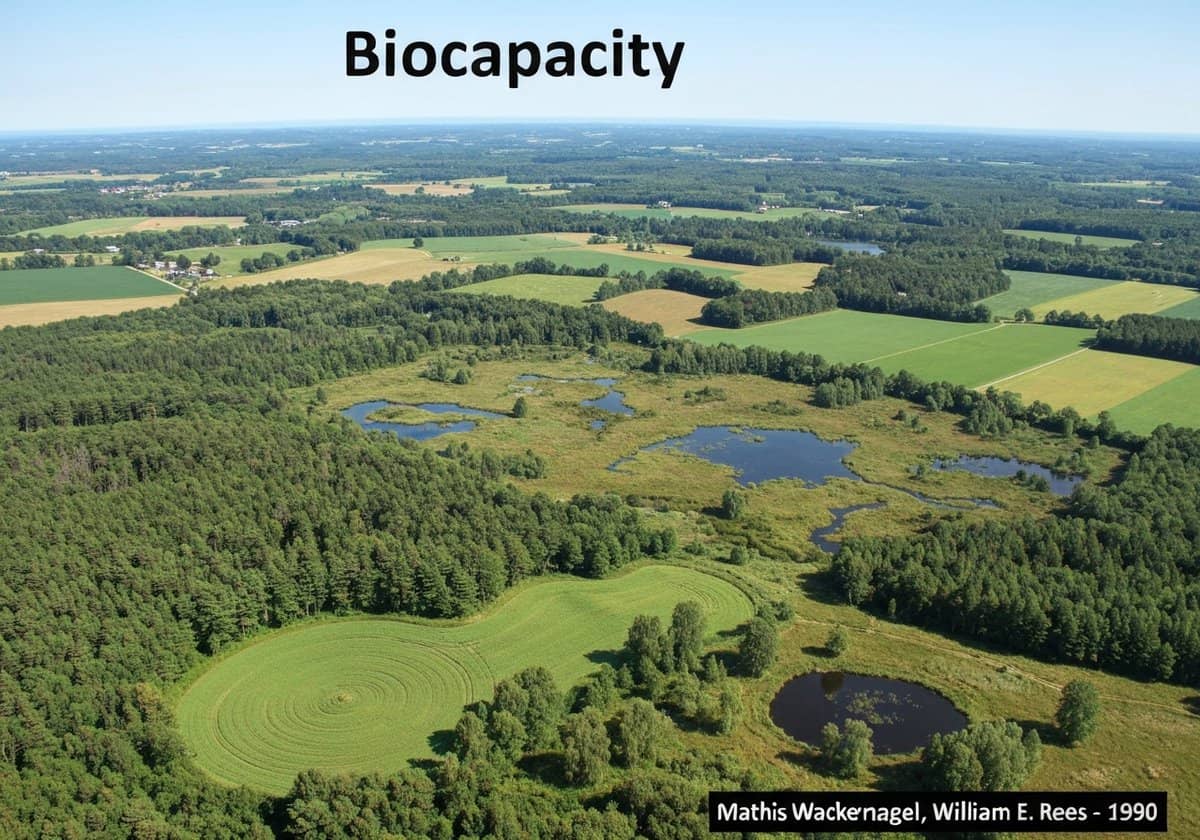
Biocapacity is the crucial counterpart to the Ecological Footprint. It quantifies the planet’s or a region’s ability to regenerate what humans demand. The calculation of biocapacity involves summing the productive areas of cropland, grazing land, forest land, and fishing grounds. These areas are then weighted by their biological productivity using equivalence factors, which compare their productivity to the world average, and yield factors, which compare local yields to world average yields. This process converts physical hectares into the standardized ‘global hectares’ unit, allowing for a direct comparison with the Ecological Footprint. Biocapacity is not a static figure; it can be influenced by technology, agricultural practices (e.g., irrigation, fertilizer use), ecosystem degradation, and climate change. For example, soil erosion can decrease the biocapacity of cropland, while sustainable forestry practices can maintain or enhance the biocapacity of forests. A country can have an ecological deficit if its national Ecological Footprint exceeds its own biocapacity, meaning it is either importing biocapacity from other nations, liquidating its own ecological assets, or polluting the global commons with waste like CO2.