Product Design, Manufacturing & Innovation Resources

Análise de Árvore de Falhas (FTA)

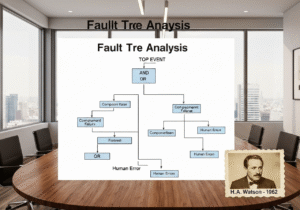
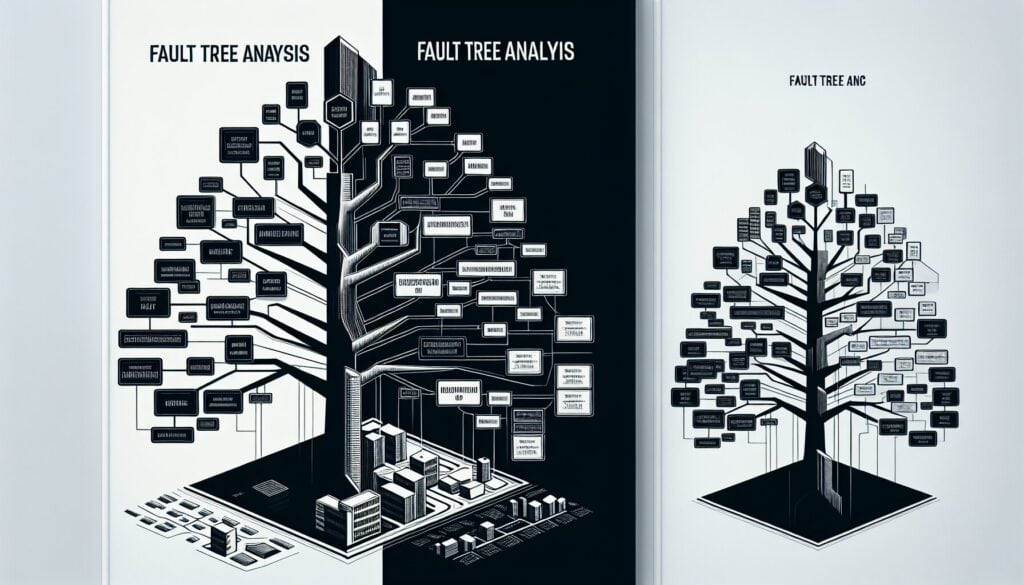
Fault Tree Analysis

Análise de Árvore de Falhas (FTA)

Objetivo:

A top-down, deductive failure analysis technique where an undesired state of a system (the “top event” or failure) is analyzed using Boolean logic to combine a series of lower-level events or failures that could cause it.


Como é usado:

Prós

Contras

Categorias:

Ideal para:

Fault Tree Analysis (FTA) is particularly advantageous in industries such as aerospace, automotive, nuclear power, and healthcare, where system reliability and safety are paramount. This methodology is effective during the design phase of a project, where engineers and designers can preemptively identify potential failure modes before they manifest in real-world applications. For example, in the aerospace sector, FTA can be employed to analyze the reliability of a flight control system, mapping out all possible failure pathways that could lead to a flight safety incident. In the automotive industry, manufacturers might utilize FTA when developing new vehicle models to ensure that all safety mechanisms are robust against potential failure scenarios. Participants in an FTA typically include system engineers, safety engineers, and reliability analysts, who collaboratively assess both hardware and software components of a system. It is often initiated by stakeholders seeking to improve operational safety and reduce risks associated with system failures. By quantifying the probabilities of basic events, FTA also enables organizations to allocate resources effectively, directing focus to the most significant risk factors that, if addressed, would yield substantial improvements in safety and reliability metrics. The visual representation of the fault tree further facilitates communication among multidisciplinary teams and supports decision-making processes by providing clear pathways that depict how various failures can converge to a top event. This structured approach aligns well with regulatory requirements in industries governed by strict safety standards, ultimately leading to enhanced compliance with safety protocols.

Etapas principais desta metodologia

  1. Defina o evento principal que representa a falha do sistema.
  2. Identifique as causas imediatas que podem levar ao evento principal.
  3. Desenvolver eventos intermediários que contribuam para as causas imediatas.
  4. Conecte eventos usando portas lógicas (AND, OR) para ilustrar relacionamentos.
  5. Atribua probabilidades a eventos básicos sempre que possível.
  6. Calcule a probabilidade do evento principal usando as probabilidades dos eventos básicos.
  7. Revisar e refinar a árvore de falhas para garantir sua completude e precisão.

Dicas profissionais

  • Incorporate Failure Mode Effects Analysis (FMEA) with FTA for a comprehensive understanding of failure modes and their effects on system performance.
  • Utilize a análise de sensibilidade nas probabilidades atribuídas aos eventos básicos para identificar quais eventos influenciam mais significativamente a probabilidade do evento principal.
  • Atualize regularmente a árvore de falhas à medida que os projetos do sistema evoluem ou que os dados operacionais se tornam disponíveis para garantir a relevância e a precisão nas avaliações de risco.

Para ler e comparar diversas metodologias, Recomendamos o

> Repositório abrangente de metodologias  <
juntamente com mais de 400 outras metodologias.

Seus comentários sobre esta metodologia ou informações adicionais são bem-vindos em [link para o site/plataforma]. seção de comentários abaixo ↓, assim como quaisquer ideias ou links relacionados à engenharia.

Contexto histórico

1960
1960
1960
1962
1964
1970
1970
1960
1960
1960
1960
1963
1965-12-21
1970
1970

(Caso a data seja desconhecida ou irrelevante, por exemplo, "mecânica dos fluidos", é fornecida uma estimativa aproximada de seu surgimento notável)


Imagens em tamanho real e downloads estão disponíveis apenas, 100% gratuitos, para membros registrados.