Product Design, Manufacturing & Innovation Resources
Lar » DNA recombinante (rDNA)

DNA recombinante (rDNA)

1973
  • Stanley Norman Cohen
  • Herbert Boyer
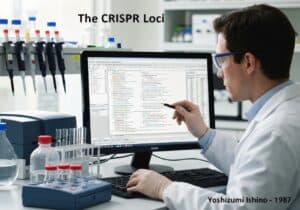
Biólogo molecular que conduz a tecnologia de DNA recombinante em um laboratório.

(Imagem gerada apenas para fins ilustrativos)

A tecnologia do DNA recombinante (DNA-r) envolve a união de moléculas de DNA de duas espécies diferentes. O DNA recombinante é inserido em um organismo hospedeiro para produzir novas combinações genéticas. Isso é feito utilizando enzimas de restrição para cortar o DNA em locais específicos e DNA ligase para unir os fragmentos, frequentemente incorporando o gene desejado em um vetor plasmídeo para clonagem.


Recombinant DNA technology, also known as genetic engineering, is the process of creating artificial DNA by combining genetic material from different sources. This technology fundamentally changed biology and medicine by allowing scientists to directly manipulate the genetic code of organisms. The core procedure involves several key steps. First, a gene of interest is identified and isolated from a source organism’s DNA. This is often done using restriction enzymes, which are proteins that act like molecular scissors, cutting DNA at specific recognition sequences. Second, a vector, which is a DNA molecule used to carry the foreign genetic material into another cell, is chosen. Bacterial plasmids—small, circular DNA molecules separate from the bacterial chromosome—are the most common vectors. The same restriction enzyme used to cut out the gene is used to cut open the plasmid vector. This creates compatible ‘sticky ends’ on both the gene and the plasmid. Third, the isolated gene is inserted into the plasmid. The sticky ends of the gene anneal with the complementary sticky ends of the plasmid, and the enzyme DNA ligase is added to permanently join them by forming phosphodiester bonds. The resulting molecule is a recombinant plasmid containing the new gene. Finally, this recombinant vector is introduced into a host organism, typically a bacterium like *E. coli*, through a process called transformation. As the host cells multiply, they replicate the recombinant plasmid along with their own DNA, creating many copies of the inserted gene. The host cells can also transcribe and translate the foreign gene to produce the desired protein, such as human insulin produced in bacteria.

UNESCO Nomenclature: 2406
Biologia Molecular

Tipo

Processo Químico

Interrupção

Revolucionário

Uso

Uso generalizado

Precursores

  • discovery of DNA as genetic material
  • elucidation of the DNA double helix structure
  • discovery of plasmids in bacteria
  • discovery and characterization of restriction enzymes by Werner Arber, Daniel Nathans, and Hamilton Smith
  • discovery of DNA ligase

Aplicações

  • production of synthetic human insulin for diabetics
  • creation of genetically modified organisms (GMOs)
  • production of vaccines (e.g., hepatitis B vaccine)
  • gene therapy
  • production of clotting factors for hemophilia

Patentes:

  • US4237224

Ideias de Inovação Potencial

Devido ao tráfego de bots de coleta de dados, atualmente superior a 40 mil por dia, este conteúdo é reservado aos membros da comunidade.
> Login < ou > Registrar < (100% gratuito) para acessar isso, assim como todo o restante do conteúdo e das ferramentas restritas.

Related to: recombinant DNA, genetic engineering, stanley cohen, herbert boyer, plasmid, vector, restriction enzyme, DNA ligase, gene cloning, GMO.

Contexto histórico

DNA recombinante (rDNA)

1958
1960
1970
1973
1975
1979
1983
1954
1960
1967
1970
1975
1977
1983
1987

(Caso a data seja desconhecida ou irrelevante, por exemplo, "mecânica dos fluidos", é fornecida uma estimativa aproximada de seu surgimento notável)

Princípios relacionados à invenção, inovação e tecnologia

Imagens em tamanho real e downloads estão disponíveis apenas, 100% gratuitos, para membros registrados.