Product Design, Manufacturing & Innovation Resources
Lar » Extinção de incêndio por sufocamento

Extinção de incêndio por sufocamento

-500
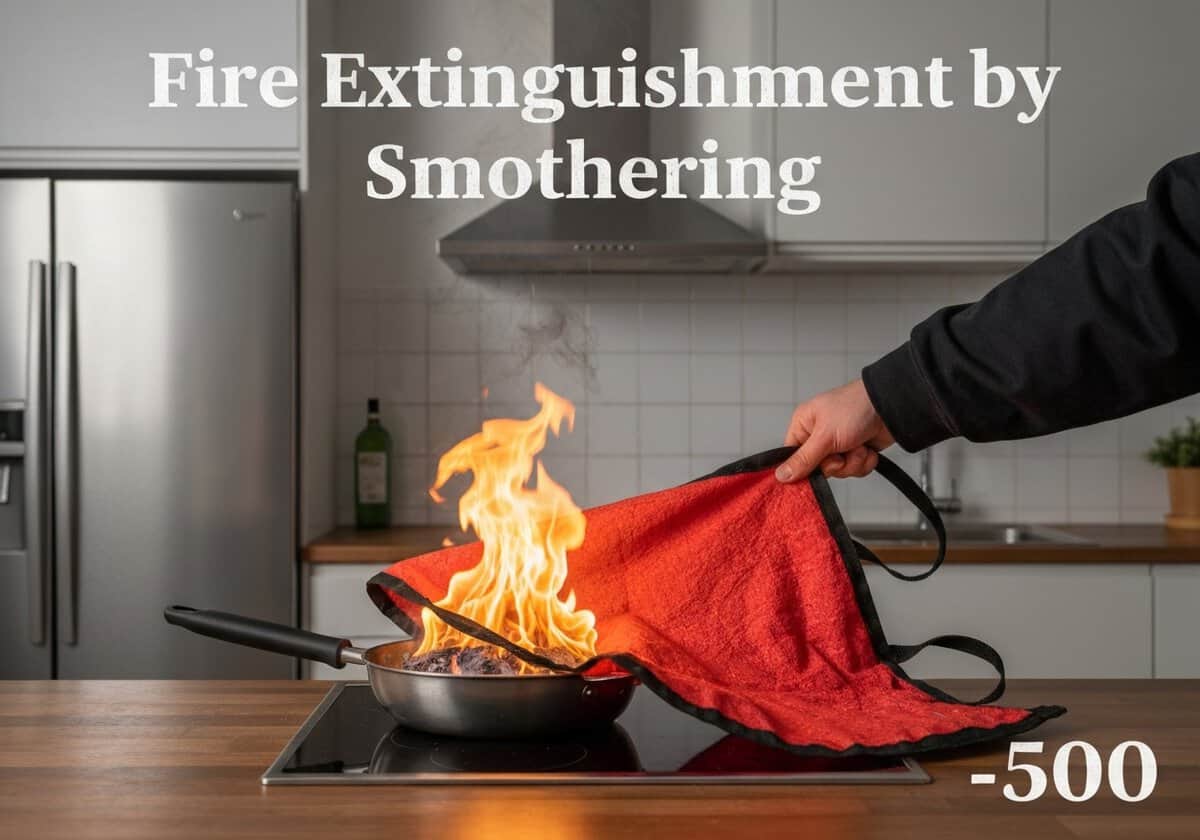
Manta de incêndio usada para abafar as chamas em um cenário de supressão de incêndio na cozinha.

(Imagem gerada apenas para fins ilustrativos)

Smothering, or oxygen deprivation, is a método of fire extinguishment that removes the ‘oxidizing agent’ from the triângulo de fogo. This is achieved by covering the fire to prevent air from reaching the fuel. Common methods include using a fire blanket, sand, or deploying an inert gas like carbon dioxide (CO2) or nitrogen.


Extinguishment by smothering works by isolating the fuel from its source of oxygen, thereby breaking the fire triangle. For combustion to occur, the concentration of oxygen in the atmosphere typically needs to be above 16%. Smothering aims to reduce this concentration below the sustainable limit. This can be done physically or chemically. Physical methods involve placing a barrier between the fire and the air. A fire blanket, for example, is a non-flammable sheet used to cover a fire, cutting off the oxygen supply. Similarly, putting a lid on a burning pan achieves the same effect on a smaller scale. Chemical methods involve flooding an area with an inert gas that displaces the oxygen. Carbon dioxide (CO2) is a common agent used in extinguishers and fixed systems. When released, the heavy CO2 gas sinks and blankets the fire, pushing the lighter, oxygen-rich air away. Other inert gases like nitrogen and argon are also used, particularly in systems designed to protect sensitive equipment where the thermal shock from CO2 could cause damage. This method is highly effective in enclosed spaces but less so in open areas where wind can quickly dissipate the smothering agent.

UNESCO Nomenclature: 3305
Engenharia química

Tipo

Processo físico

Interrupção

Incremental

Uso

Uso generalizado

Precursores

  • observation that fire needs air to burn
  • antoine lavoisier’s identification of oxygen’s role in combustion
  • development of methods to store and release compressed gases
  • invention of non-flammable materials like asbestos and later fiberglass for blankets

Aplicações

  • co2 fire extinguishers
  • fire blankets
  • inert gas fire suppression systems for server rooms
  • covering a small pan fire with a lid
  • using sand or dirt to put out campfires

Patentes:

NA

Ideias de Inovação Potencial

Devido ao tráfego de bots de coleta de dados, atualmente superior a 40 mil por dia, este conteúdo é reservado aos membros da comunidade.
> Login < ou > Registrar < (100% gratuito) para acessar isso, assim como todo o restante do conteúdo e das ferramentas restritas.

Related to: smothering, oxygen deprivation, fire blanket, co2 extinguisher, inert gas, fire suppression, oxidizing agent, fire triangle, asphyxiation, fire safety.

Contexto histórico

Extinção de incêndio por sufocamento

-250
-500
1750
1788
1834
1850
1850
1850
-500
1700
1761
1807-01-01
1850
1850
1850

(Caso a data seja desconhecida ou irrelevante, por exemplo, "mecânica dos fluidos", é fornecida uma estimativa aproximada de seu surgimento notável)

Princípios relacionados à invenção, inovação e tecnologia

Imagens em tamanho real e downloads estão disponíveis apenas, 100% gratuitos, para membros registrados.