애자일 방법론, 부서 간 협업, 디자인 스프린트, 디자인 사고, 혁신, 프로토타이핑, 신속 프로토타이핑, 사용자 테스트, 사용자 중심 디자인
목적:
To rapidly solve big challenges, create new products, or improve existing ones through intensive, time-boxed (typically 5-day) collaboration, prototyping, and user testing.
사용 방법:
A structured five-phase process: Understand (map out the problem, pick a focus), Sketch (generate broad solutions), Decide (select the best solutions), Prototype (build a realistic prototype), and Test (get feedback from real users).
장점
Fast-paced results, user-centric, reduces risk of building the wrong product, fosters team alignment and collaboration, tangible output (prototype and test results).
단점
Requires significant dedicated time from a cross-functional team, can be intense and exhausting, success depends heavily on facilitator skills and team participation, might not be suitable for all types of problems (e.g., very complex, long-term research).
카테고리:
고객 및 마케팅, 아이디어 구상, 문제 해결, 제품 디자인, 프로젝트 관리
다음과 같은 경우에 가장 적합합니다:
Validating product ideas, designing new features, solving complex design challenges, and fostering innovation in a short timeframe with clear, actionable user feedback.
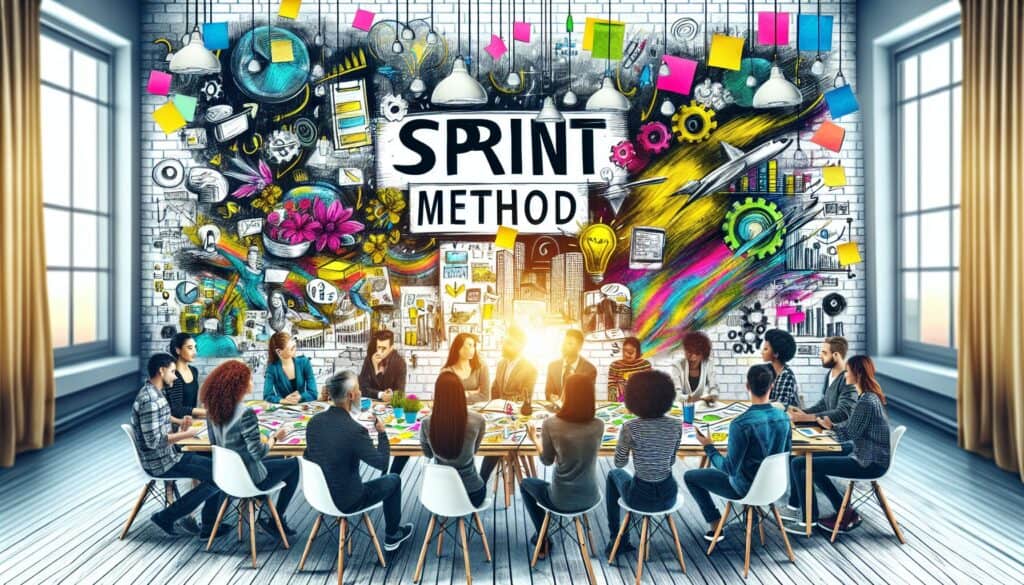
The Sprint Method, particularly in design contexts, is widely applicable in technology and product development sectors, including software engineering, consumer electronics, and health tech, where rapid prototyping and iterative testing can significantly influence market readiness. Organizations engage cross-functional teams, including designers, engineers, product managers, and stakeholders, to initiate sprints, ensuring diverse perspectives contribute to identifying and addressing user needs. This methodology is especially effective during the ideation and early development phases of project lifecycles, allowing teams to validate or pivot ideas before heavy investments are made. For instance, a software company might use a design sprint to refine a mobile app feature by rapidly constructing a prototype to test with actual users, which leads to actionable feedback that informs further development. By condensing a potentially lengthy development cycle into a focused week, teams can quickly assess the viability of their concepts, which can lead to reduced time-to-market. The collaborative nature of sprints not only aligns team members toward common goals but also cultivates a shared understanding of customer needs and expectations, thereby enhancing the likelihood of product-market fit. Successful application of this methodology has been documented in top-tier organizations such as Google and LEGO, illustrating its effectiveness in diverse industries and enhancing innovation capacity.
이 방법론의 주요 단계
Map out the problem and identify a specific focus.
Generate a variety of potential solutions through sketching.
Select the most promising solutions for further development.
Create a realistic prototype representing the chosen solutions.
Test the prototype with real users to gather feedback.
프로 팁
Involve cross-functional team members early to ensure diverse perspectives are incorporated and align on objectives swiftly.
Prioritize user feedback by engaging with a target audience representative in the testing phase to obtain actionable insights.
Document every phase comprehensively to facilitate reflection and iterative improvements for future sprints and projects.