생체모방공학, 생태학, 환경적 영향, 환경 기술, 혁신, 지속 가능한 개발, 지속가능한 관행, 지속 가능한 제품 디자인
목적:
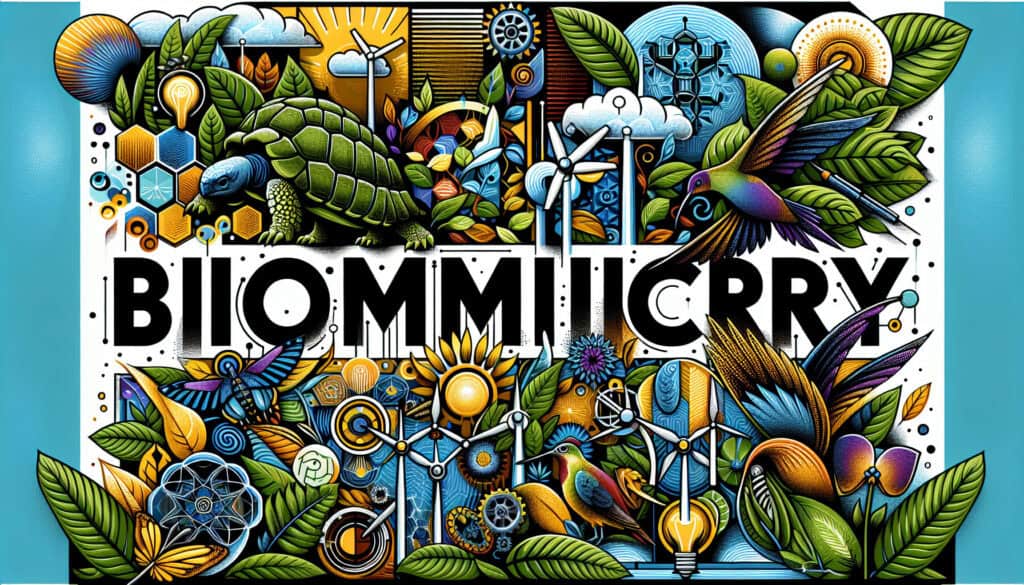
An approach to innovation that seeks sustainable solutions to human challenges by emulating nature’s time-tested patterns and strategies.
사용 방법:
Biomimicry is used to design new products, processes, and systems that are inspired by nature. By studying how nature solves problems, we can learn to create more sustainable and efficient solutions.
장점
Can lead to innovative and sustainable solutions, can help to reduce the environmental impact of human activities, and can be used to create new business opportunities.
단점
Can be difficult to find a suitable natural model, can be difficult to translate natural principles into a practical solution, and may not be suitable for all types of problems.
카테고리:
공학, 아이디어 구상, 제품 디자인
다음과 같은 경우에 가장 적합합니다:
Developing sustainable solutions to human challenges by learning from nature.
Biomimicry finds its applications across various industries, including architecture, product design, and materials science, as teams utilize nature’s time-tested patterns and strategies to tackle challenges ranging from energy efficiency to waste reduction. During the ideation and conceptual phases of design projects, biomimicry can be employed to inspire innovative solutions that align with sustainability goals; for instance, Velcro was inspired by the burrs that stick to animal fur, and buildings designed with natural ventilation systems mimic termite mounds to optimize energy use. Typically, multidisciplinary teams comprising designers, engineers, biologists, and ecologists engage in this methodology, enabling a collaboration that integrates diverse perspectives and expertise. Training and workshops that introduce biomimetic principles can enhance the skills of participants, whether they are within established corporations or startups looking to innovate. As new technologies emerge, tools such as computational design and simulation algorithms are increasingly leveraged to model and analyze biomimetic designs, paving the way for applications like self-cleaning surfaces inspired by lotus leaves or energy-efficient systems modeled on fish schools. The ongoing exploration of natural ecosystems also opens doors for new business opportunities, as organizations seek to develop products and processes that minimize environmental footprints while appealing to eco-conscious consumers, thereby contributing to a paradigm shift in how industries approach sustainability.
이 방법론의 주요 단계
Identify a specific challenge or problem that needs a solution.
Research biological systems that address similar challenges in nature.
Analyze the biological strategies and principles used by these systems.
Translate these biological strategies into design criteria for new products or processes.
Develop concepts and prototypes that incorporate nature-inspired features.
Test and validate the prototypes against desired performance and sustainability metrics.
Refine and iterate on the design based on testing feedback.
Implement the final design into production while considering lifecycle impacts.
프로 팁
- Incorporate interdisciplinary collaboration by engaging biologists, ecologists, and engineers early in the design process to leverage a broad spectrum of knowledge and approaches inspired by nature.
- Utilize reverse engineering techniques to analyze natural structures and systems, allowing for a deeper understanding of their efficiencies and adaptability in varying environments.
- Implement iterative prototyping based on biomimetic principles to refine solutions that emulate nature’s designs, testing early and often to optimize functionality and sustainability.