지속적인 개선, 오류 방지, Just-in-Time (JIT), 린 제조, 포카요케, 프로세스 개선, 품질 보증, 품질 관리, 도요타 생산 시스템(TPS)
목적:
To build in quality at the manufacturing process by enabling machines and operators to detect abnormal conditions and stop work.
사용 방법:
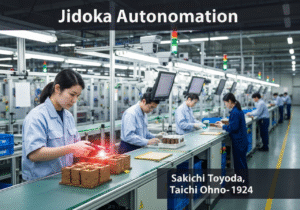
A principle in the Toyota Production System where equipment is designed to stop automatically when a problem occurs. This prevents the production of defective products, highlights issues, and allows operators to manage multiple machines.
장점
Improves quality by preventing defects; Reduces waste; Empowers operators; Increases productivity by allowing operators to manage multiple machines; Prevents machine damage.
단점
Requires investment in equipment modification or new technology; May lead to more frequent line stoppages if not managed properly; Requires a culture of problem-solving and operator involvement.
카테고리:
린 시그마, 조작, 품질
다음과 같은 경우에 가장 적합합니다:
Preventing the production of defective products and quickly identifying and addressing problems in the manufacturing process.
Autonomation, or Jidoka, plays an important role in various industries such as automotive, electronics, and consumer goods manufacturing, where precision and quality are paramount. In the design phase, engineers might integrate sensors and automated stopping mechanisms into machinery, enabling equipment to halt instantly when a defect is detected. This not only protects the integrity of the product but also facilitates a quick response to issues, promoting a culture of continuous improvement within teams. In an assembly line context, operators can oversee several machines, enhancing their efficiency, as they focus on problem-solving rather than merely monitoring the assembly process. Training programs for workers typically include initiatives to enhance their technical skills, allowing them to identify the root causes of defects and implement corrective measures. Participation in these initiatives may involve cross-functional teams, including engineers, quality assurance specialists, and operators, working together to establish protocols that prioritize defect prevention and operational excellence. In the context of maintenance, the method reduces the likelihood of machine breakdowns by addressing potential failures before they escalate, thereby extending equipment life and reducing maintenance costs. Various software tools are available to monitor machine performance and collect data, which can be analyzed to identify trends and areas for improvement, reinforcing the cycle of quality management and operational effectiveness.
이 방법론의 주요 단계
Design machinery with built-in sensors to detect anomalies and malfunctions.
Implement automatic shut-off mechanisms when issues arise to halt production.
Incorporate visual alerts to signal operators when a problem occurs.
Train operators to address issues directly when machines stop.
Establish protocols for operators to inspect and resolve detected problems quickly.
Analyze stoppage data to identify root causes of defects and implement corrective actions.
Continuously improve machinery and processes based on insights gained from stoppages.
프로 팁
Implement real-time monitoring systems that utilize IoT technologies to collect data on machine performance and stoppages, enabling faster response to anomalies.
Conduct regular training sessions focusing on problem-solving skills for operators, ensuring they can effectively utilize the Jidoka principle in their workflow.
Integrate root cause analysis methodologies, such as the 5 Whys, into the post-stoppage review process to facilitate deeper understanding and long-term solutions.