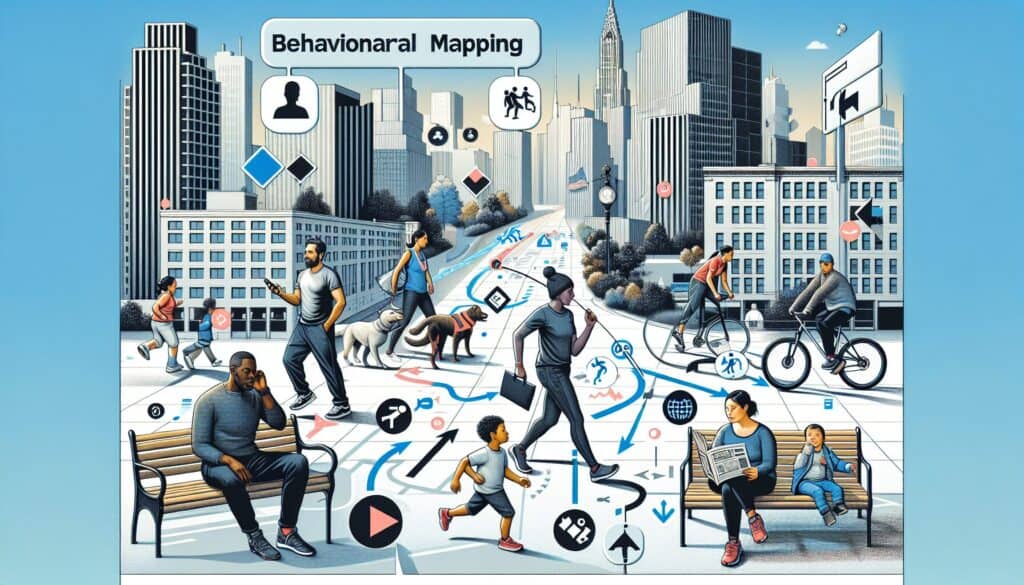
Behavioral mapping is particularly effective in various industries, including retail, urban planning, workplace design, and healthcare, where understanding user behavior can significantly influence design outcomes. For instance, in retail, this methodology allows designers to analyze customer pathways, dwell times, and interaction hotspots within a store, leading companies like Zara or Apple to optimize layouts that enhance customer engagement and increase sales. In urban planning, behavioral mapping can be employed in public spaces to examine how individuals interact with amenities, such as parks or transportation hubs, enabling planners to create environments that encourage social interaction or promote safety. In the context of healthcare facilities, it can highlight how patients navigate through hospitals, providing insights that inform the arrangement of departments to reduce stress and improve operational efficiency. This methodology can be initiated by designers, architects, or behavioral scientists and often involves collaboration with stakeholders, including end-users, to ensure that the mapping accurately captures human behavior. These participants may include focus groups or community members who provide qualitative input that complements the quantitative data collected through observation and logging. Importantly, the objective data generated from behavioral mapping can pinpoint not only areas for improvement but also validate successful design decisions, making it a valuable resource during different project phases, from initial concept development through to post-occupancy evaluation. Analyzing the patterns revealed through behavioral mapping equips teams with the information necessary to create environments that not only meet user needs but also encourage positive interactions and experiences within those spaces.
この方法論の主なステップ
プロのヒント
複数の方法論を読み比べて、 私たちは、
> 包括的な方法論リポジトリ <
400以上の他の手法と併せて。
この方法論に関するご意見や追加情報は、 以下のコメント欄 ↓、エンジニアリング関連のアイデアやリンクも同様です。