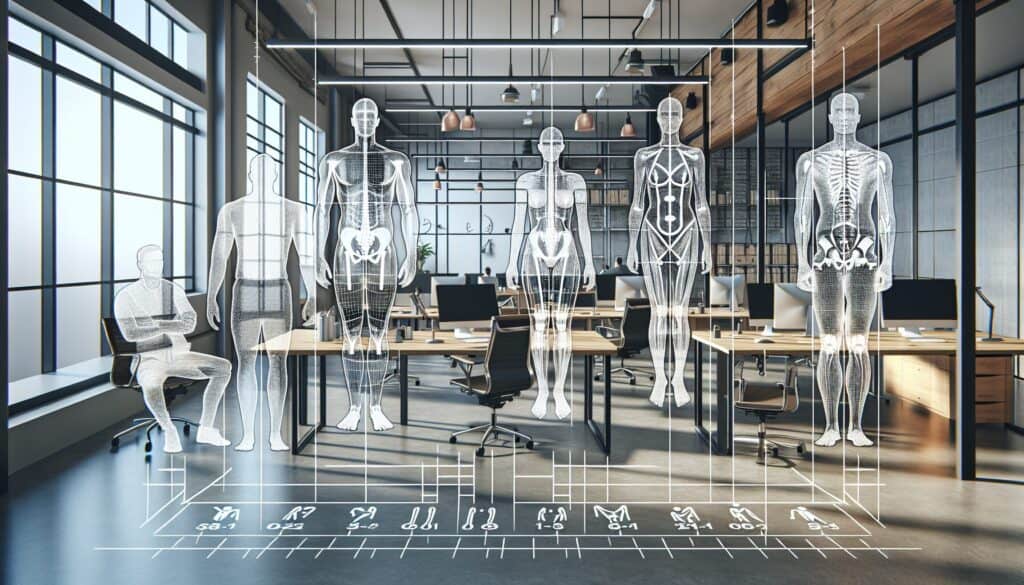
Anthropometric Analysis applies extensively across various industries, including ergonomics, industrial design, and healthcare, facilitating the creation of tools, equipment, and workspaces that are inherently user-centric. This methodology is often employed during the early stages of product development, typically in user research and concept design phases, where understanding the physical characteristics of the target user population is pivotal. Participants in this process include product designers, engineers, ergonomists, and market researchers, who collaborate to gather and analyze anthropometric data relevant to their specific demographic. Industries such as automotive and aerospace rely heavily on this analysis, ensuring that vehicle interiors and control interfaces accommodate diverse user heights and body shapes, thereby enhancing safety and comfort. Similarly, in healthcare, ergonomic design of medical instruments and patient handling equipment is informed by anthropometric data, directly impacting healthcare outcomes through improved usability. The application extends to consumer products like furniture, where knowledge of human dimensions informs the ergonomic design of chairs and tables, ensuring that they can be used comfortably across a broad range of body sizes. This attention to anthropometric details not only reduces physical strain but also minimizes the risk of injury and errors during use, thereby enhancing operational efficiency and user satisfaction in multiple contexts.