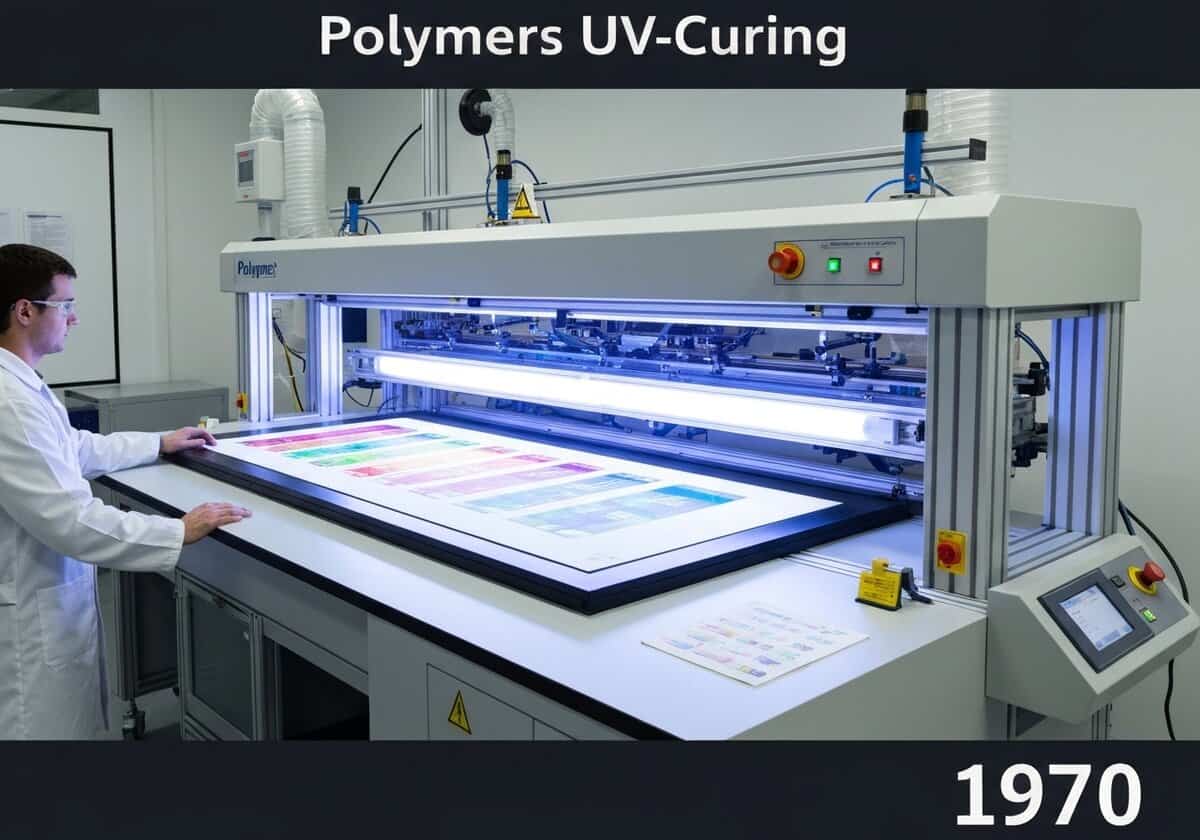
The UV-curing process relies on a specially formulated mixture containing monomers, oligomers, and photoinitiators. Monomers are small, simple molecules, while oligomers are short chains of these molecules. These components form the backbone of the final polymer. The key ingredient is the photoinitiator. When exposed to UV radiation of a specific wavelength and intensity, the photoinitiator molecule absorbs a photon and is promoted to an excited state. It then undergoes fragmentation, generating highly reactive species called free radicals. These free radicals immediately attack the carbon-carbon double bonds in the monomers and oligomers, initiating a chain reaction. This process, known as free-radical polymerization, rapidly creates a highly cross-linked, three-dimensional polymer network. The entire conversion from liquid to solid can occur in under a second. The main advantages of UV-curing over traditional thermal curing are speed, low energy consumption (as no large ovens are needed), and the absence of volatile organic compounds (VOCs) since the formulations are typically 100% solids. Different photoinitiators are sensitive to different UV wavelengths (UVA, UVB, or UVV – UV-Visible), allowing for precise control over the curing process, including the depth of cure in thicker coatings.