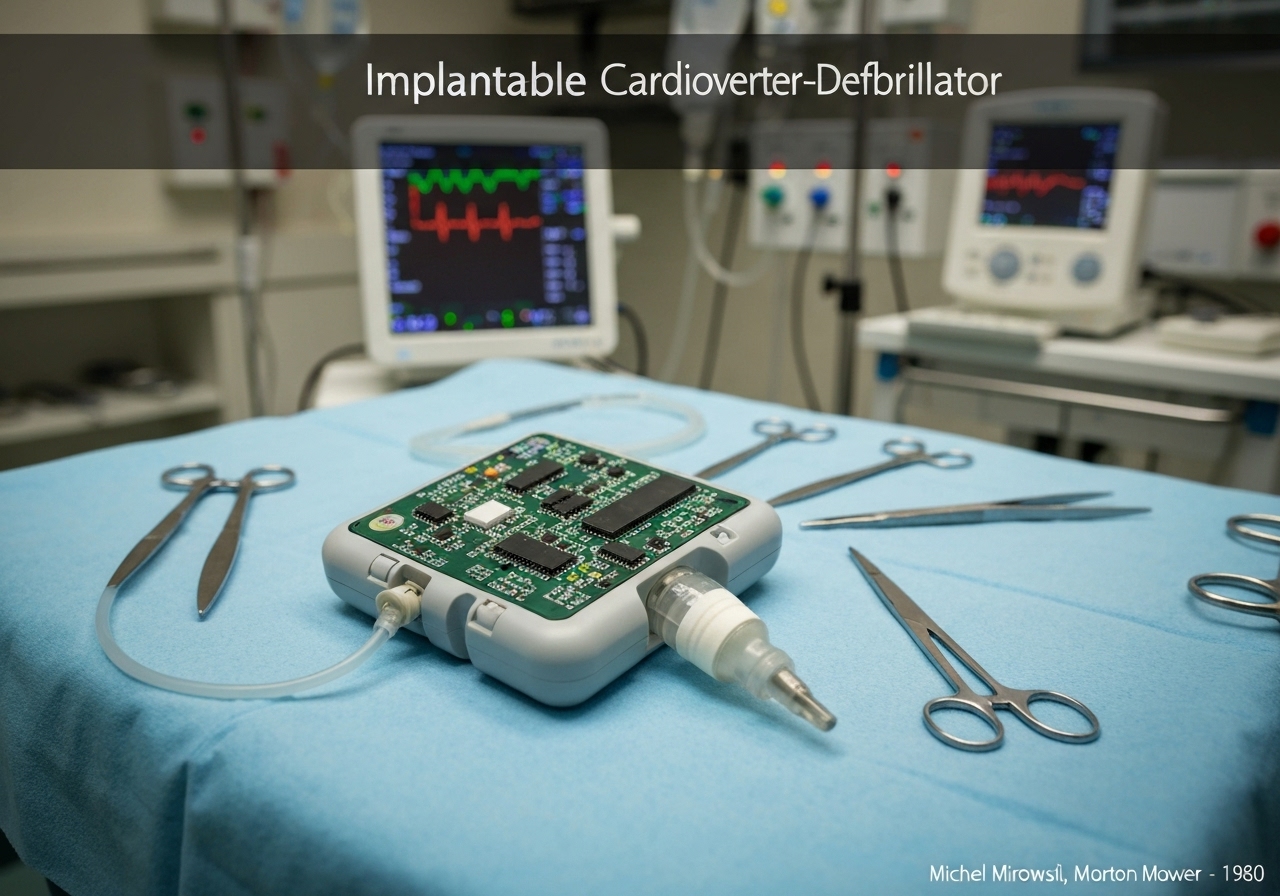
An ICD system consists of a pulse generator and one or more electrode leads. The generator, which contains a battery and the electronic circuitry, is typically implanted under the skin below the collarbone. The leads are thin, insulated wires that are threaded through a vein into the heart chambers. These leads have electrodes on their tips that monitor the heart’s electrical activity (acting as an ECG) and can also deliver electrical impulses. The device continuously analyzes the heart’s rhythm. If it detects a rhythm that is too fast or chaotic (tachycardia or fibrillation), it first attempts to correct it with a series of low-energy electrical pulses, a procedure called anti-tachycardia pacing (ATP). If ATP is unsuccessful or if the arrhythmia is immediately life-threatening (like ventricular fibrillation), the ICD charges its capacitors and delivers a high-energy shock to reset the heart. Modern ICDs also function as pacemakers, providing electrical stimulation if the heart rate becomes too slow (bradycardia). They also have sophisticated data logging capabilities, recording arrhythmic events for later review by a cardiologist, which helps in optimizing the patient’s therapy.