Product Design, Manufacturing & Innovation Resources
Lar » Extinção de incêndio por resfriamento

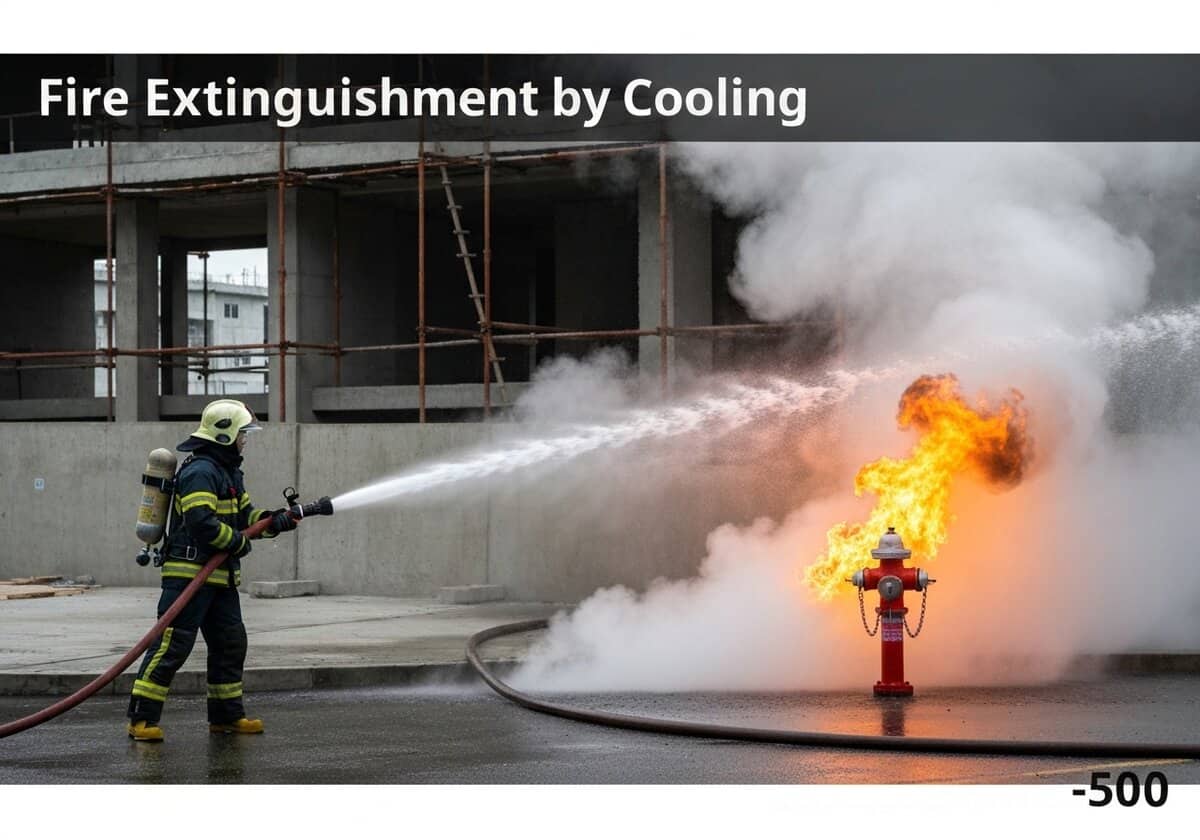
Extinção de incêndio por resfriamento

-500
Bombeiro extinguindo chamas com mangueira de água em um ambiente controlado, aplicação de engenharia química.

(Imagem gerada apenas para fins ilustrativos)

A primary método of fire extinguishment involves removing the ‘heat’ component of the triângulo de fogo. This is most commonly achieved by applying a substance that absorbs a large amount of heat, such as water (despite water also have other effects in the fire triangle -refer to dedicated post-). Water’s high specific heat and calor latente of vaporization make it highly effective at cooling a fire below its self-sustaining temperature.

Extinguishment by cooling is a fundamental firefighting tactic that directly targets the ‘heat’ side of the fire triangle. The goal is to reduce the temperature of the burning material to a point where it no longer produces sufficient flammable vapor to sustain combustion. This point is known as the fire point. Water is the most common cooling agent due to its unique thermal properties. It has a high specific heat capacity, meaning it can absorb a significant amount of thermal energy before its own temperature rises substantially. More importantly, it has a very high latent heat of vaporization. When liquid water turns into steam at 100°C, it absorbs a massive amount of energy from the fire without any change in temperature. This phase change is extremely efficient at drawing heat away from the fuel. The resulting steam also helps to displace oxygen, contributing to extinguishment by smothering. However, using water is not always appropriate. It can be ineffective or dangerous on grease fires (it can spread the burning grease) and electrical fires (due to conductivity), and it can react violently with certain metal fires.

UNESCO Nomenclature: 3305
Engenharia química

Tipo

Processo físico

Interrupção

Incremental

Uso

Uso generalizado

Precursores

  • observation of water’s effect on fire
  • compreensão do calor e da temperatura
  • development of thermodynamics, specifically concepts of specific heat and latent heat
  • invention of pumps and hoses for water delivery

Aplicações

  • fire hydrants and hoses
  • sprinkler systems in buildings
  • water-dropping aircraft for wildfires
  • personal water fire extinguishers
  • steam inerting systems

Patentes:

NA

Ideias de Inovação Potencial

Devido ao tráfego de bots de coleta de dados, atualmente superior a 40 mil por dia, este conteúdo é reservado aos membros da comunidade.
> Login < ou > Registrar < (100% gratuito) para acessar isso, assim como todo o restante do conteúdo e das ferramentas restritas.

Related to: cooling, extinguishment, water, heat of vaporization, specific heat, fire suppression, sprinkler system, firefighting, heat removal, fire triangle.

Contexto histórico

Extinção de incêndio por resfriamento

-500
1700
1761
1807-01-01
1850
1850
1850
-250
-500
1750
1788
1834
1850
1850
1850

(Caso a data seja desconhecida ou irrelevante, por exemplo, "mecânica dos fluidos", é fornecida uma estimativa aproximada de seu surgimento notável)

Princípios relacionados à invenção, inovação e tecnologia

Imagens em tamanho real e downloads estão disponíveis apenas, 100% gratuitos, para membros registrados.