5가지 질문, 지속적인 개선, Corrective Action, Failure analysis, 결함수목분석(FTA), 문제 해결 기법, 프로세스 개선, 품질 관리, 근본 원인 분석
목적:
단순히 증상을 해결하는 것이 아니라 문제나 사건의 근본 원인을 식별하는 것입니다.
사용 방법:
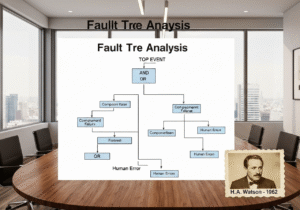
A systematic investigation process that uses various tools and techniques (e.g., 5 Whys, Fishbone Diagram, Fault Tree Analysis) to drill down through layers of symptoms to find the initiating cause(s) of an issue.
장점
Helps prevent problem recurrence by addressing the true source; Leads to more effective and lasting solutions; Improves understanding of processes and systems.
단점
Can be time-consuming and resource-intensive; Requires a skilled facilitator and team involvement; May be difficult to identify all root causes, especially for complex problems.
카테고리:
린 시그마, 조작, 문제 해결, 품질, 위험 관리
다음과 같은 경우에 가장 적합합니다:
Investigating significant problems, preventing recurrence of issues, and improving system reliability and safety.
Root Cause Analysis (RCA) finds its application across various industries including manufacturing, healthcare, software development, and safety engineering, often initiated in contexts where significant failures or recurring issues undermine efficiency or safety. In manufacturing, RCA is employed during the quality assurance phase to determine the fundamental causes of defects, utilizing tools like the Fishbone Diagram to categorize potential causes into various categories such as machinery, materials, and methods. In healthcare, RCA plays a pivotal role in investigating adverse events, enabling teams to identify process flaws that contribute to patient safety incidents, thus enhancing overall care quality. In software development, RCA can be applied during the debugging process, where teams use the 5 Whys technique to trace bugs back to their origin, fostering better code quality and less frequent failure occurrences. This methodology typically involves a cross-functional team of stakeholders, including engineers, quality assurance personnel, and sometimes even customers, who collaborate to analyze problems and derive solutions. By comprehensively understanding systems and processes through RCA, organizations can implement changes that not only rectify immediate issues but also enhance system reliability and reduce the chances of future failures, solidifying a culture of continuous improvement and operational excellence.
이 방법론의 주요 단계
Identify the problem and define it clearly.
Gather relevant data and evidence related to the problem.
Formulate a problem statement to describe the issue's impact.
Use tools like the Fishbone Diagram to categorize potential causes.
Apply the 5 Whys technique to drill down to deeper causes.
Prioritize the identified causes based on their significance.
Determine the root cause(s) by verifying against evidence.
Develop and implement corrective actions to address root causes.
Establish monitoring mechanisms to track the effectiveness of solutions.
프로 팁
Incorporate quantitative methods alongside qualitative analysis to validate findings and strengthen the reliability of conclusions.
Regularly review and update RCA documentation to incorporate new learnings, ensuring continuous improvement of methodologies.
Utilize cross-functional teams to bring diverse perspectives, fostering comprehensive understanding and facilitating root cause identification.