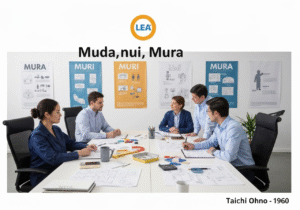
애자일 방법론, 브레인스토밍, 창의성, 부서 간 협업, 디자인 스프린트, 디자인 사고, 아이디어 구상, 혁신, 프로토타이핑
목적:
To quickly generate a large number of diverse ideas in a short amount of time.
사용 방법:
Techniques like brainstorming, brainwriting, or sketching are used under time constraints to encourage fluency and flexibility of thought, often deferring judgment until later.
장점
Generates a wide range of ideas quickly; helps overcome creative blocks; fosters a collaborative and energetic environment.
단점
May result in many superficial ideas if not focused; requires skilled facilitation to keep the energy up and ideas flowing; quantity doesn't always guarantee quality.
카테고리:
아이디어 구상, 제품 디자인
다음과 같은 경우에 가장 적합합니다:
Quickly generating a high volume of ideas in the early stages of problem-solving or concept development.
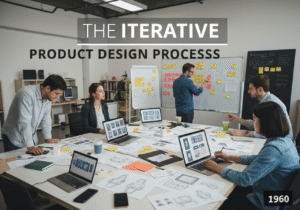
Rapid Ideation is commonly utilized during the initial phases of product development, where speed and creativity are paramount in generating diverse ideas to tackle various design challenges. Industries such as consumer electronics, automotive, healthcare, and software development frequently employ this methodology to drive innovation and overcome obstacles in traditional thinking. Participants typically include cross-functional teams, combining designers, engineers, marketers, and stakeholders who can contribute unique perspectives and expertise. These sessions often involve structured formats, with time constraints that compel participants to think quickly and produce a large volume of ideas, which may later be refined through systematic evaluation processes such as prioritization matrix analysis or feasibility assessments. Techniques like mind mapping, rapid sketching, and digital tools for collaborative ideation facilitate a dynamic environment where contributors can capture ideas in real time, ensuring a flow of information that encourages building off one another’s concepts. Such brainstorming sessions are particularly effective for addressing vague problems or entering new markets, as the diverse backgrounds of participants can lead to unexpected synergies and innovative solutions not previously considered. Post-session, selected ideas may undergo further development through prototyping and iterative testing, advancing from abstract concepts to tangible products while maintaining the momentum generated during the ideation phase.
이 방법론의 주요 단계
Define the challenge or problem statement clearly.
Set a strict time limit for ideation sessions.
Choose an ideation technique such as brainstorming, brainwriting, or sketching.
Encourage participants to generate ideas without self-censorship.
Document all ideas visually or textually as they come up.
Facilitate rapid sharing of concepts amongst participants.
After the time expires, allow a brief period for reflection on the ideas generated.
Group similar ideas to identify patterns or themes.
Select a few promising ideas for further exploration or refinement.
프로 팁
Utilize time constraints strategically by defining specific intervals for each ideation phase, encouraging rapid transitions from divergent to convergent thinking.
Incorporate diverse skills within the team by deliberately mixing departments, ensuring a variety of viewpoints that can trigger unexpected connections and solutions.
Use visual frameworks such as concept maps or affinity diagrams post-session to organize and evaluate the generated ideas more effectively, allowing for deeper analysis of patterns.