부서 간 협업, 고객 경험, 제조를 고려한 설계(DfM), 디자인 사고, 제품 개발, 품질 보증, 품질기능전개(QFD), 품질 관리
목적:
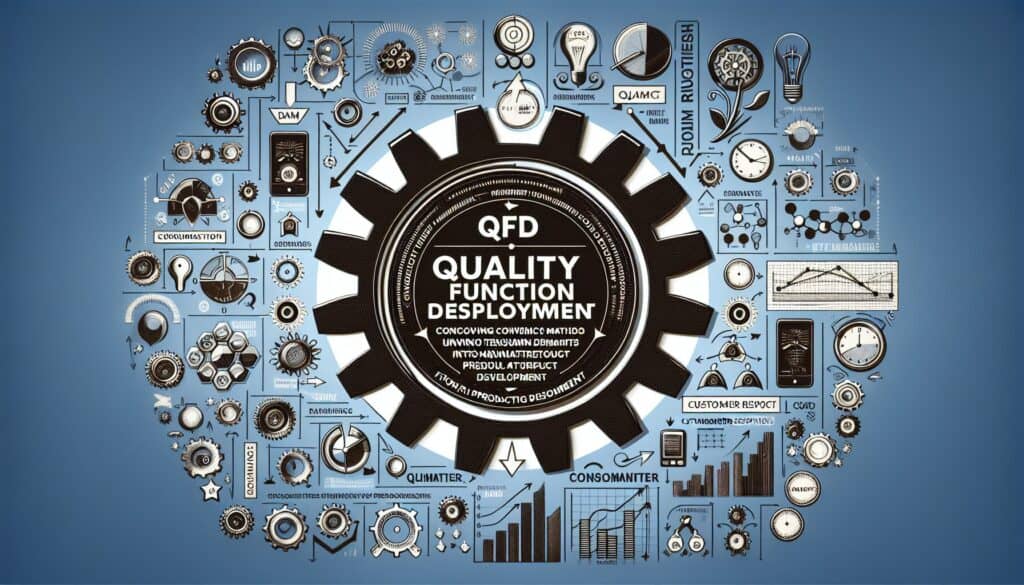
To translate customer requirements (Voice of the Customer) into specific technical characteristics for 제품 디자인 and development.
사용 방법:
A structured methodology, often using a series of matrices (like the "House of Quality"), to ensure that customer needs are clearly defined and deployed throughout all stages of product planning, design, engineering, and manufacturing.
장점
Customer-focused, ensuring products meet needs; Prioritizes design efforts based on customer importance; Improves cross-functional communication and teamwork; Reduces development time and costs by getting it right the first time.
단점
Can be complex and time-consuming, especially for intricate products; Requires significant data collection and analysis; The "House of Quality" matrix can become unwieldy; Success depends on accurate VOC input and team commitment.
카테고리:
고객 및 마케팅, 공학, 제품 디자인, 프로젝트 관리, 품질
다음과 같은 경우에 가장 적합합니다:
Ensuring that customer needs are the primary driver for design and development decisions throughout the product creation lifecycle.
Quality Function Deployment (QFD) is often applied in sectors such as automotive, aerospace, consumer electronics, and healthcare, where the intricate relationship between customer expectations and technical specifications is paramount. This methodology is typically employed in the early phases of product development, allowing teams to gather and analyze customer voice data through surveys, interviews, and market research, leading to a clearer articulation of customer needs. Participants typically include cross-functional teams composed of product managers, engineers, designers, marketing specialists, and production staff, ensuring a holistic approach that draws on diverse expertise throughout the design process. One of the primary applications of QFD is in the creation of the “House of Quality,” a matrix that visually represents the interplay between customer requirements and engineering characteristics, facilitating prioritization based on the significance of these customer needs. Subsequently, this leads to more focused design efforts, aligning resources toward high-impact features and minimizing the risk of costly revisions later in development. As projects advance, QFD can be revisited to accommodate changes in customer preferences or technological advancements, cementing its role in maintaining alignment with market demands. Companies leveraging QFD benefit from reduced time to market and lower development costs, as the structured approach encourages efficient communication and collaboration, ultimately driving higher customer satisfaction and loyalty.
이 방법론의 주요 단계
Identify customer requirements using Voice of the Customer (VoC) techniques.
Prioritize customer needs based on importance and urgency.
Translate customer requirements into technical specifications.
Develop a relationship matrix to link customer needs with engineering characteristics.
Assess the technical difficulty of achieving each engineering characteristic.
Determine competitive benchmarking to evaluate performance against competitors.
Create a prioritized action plan for design, development, and engineering efforts.
Review and update the QFD matrices regularly throughout the product lifecycle.
프로 팁
Involve customers directly during the QFD process, such as through surveys or focus groups, to better capture their true needs and preferences.
Use benchmarking against competitors to identify gaps in your offerings and align your product features based on comparative customer importance.
Regularly update QFD matrices throughout the project lifecycle to reflect changing customer expectations and technological advancements.