디자인 사고, 인간 중심 디자인, 정보 아키텍처, Interaction Design, 사용성, 사용성 테스트, 사용자 인터페이스(UI), 사용자 테스트
목적:
직관적인 디자인을 위해 사용자가 정보를 그룹화하는 방법과 어떤 레이블이 사용자에게 의미가 있는지 이해합니다. 정보 아키텍처.
사용 방법:
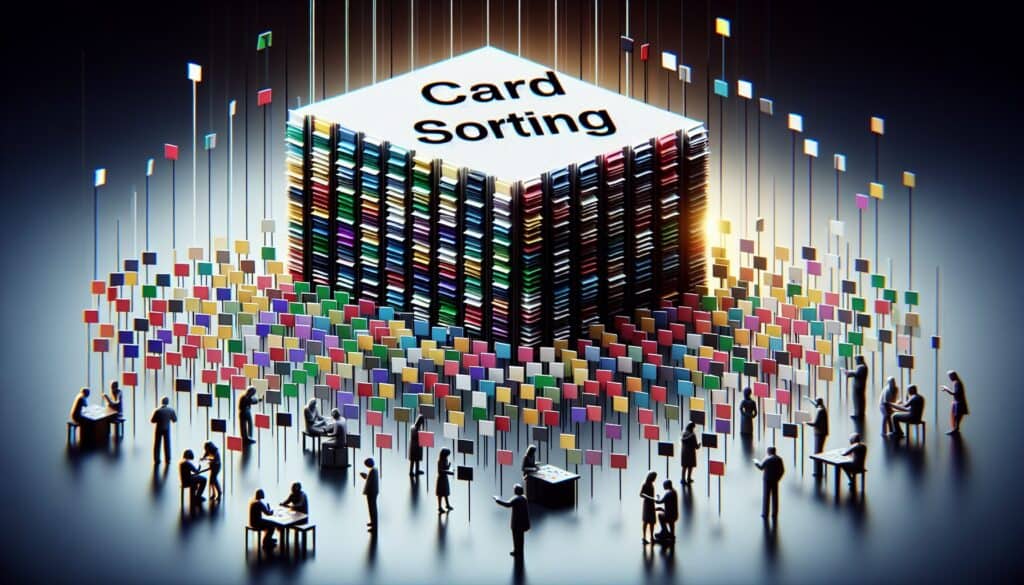
Participants are given a set of cards with topics or items and are asked to group them in a way that makes sense to them and then label these groups.
장점
Relatively simple and inexpensive to conduct; provides direct insight into users' mental models; can be done online or in person.
단점
Results can be influenced by participant selection; analysis can be time-consuming for open card sorts; may not reveal deeper contextual needs.
카테고리:
고객 및 마케팅, 제품 디자인
다음과 같은 경우에 가장 적합합니다:
Designing or evaluating the information architecture of websites, apps, or software.
Card Sorting can be particularly valuable during the early phases of product development, especially in projects focused on user experience design and information architecture. It is often utilized in industries such as e-commerce, education technology, and content management systems where organizing information effectively enhances user engagement and satisfaction. During this methodology, participant feedback can reveal patterns in how users categorize information, which can inform navigation structures and labeling conventions. For instance, a digital marketplace might employ Card Sorting to determine how customers intuitively group products, enabling more efficient search functionalities and filtering options within the platform. This approach invites a diverse range of participants, including end-users, product managers, designers, and content strategists, to collaborate in shaping the site’s structure. It can also be adapted to various contexts, whether conducted as a remote online activity or in structured workshops, allowing for flexibility in gathering qualitative data. The simplicity of Card Sorting not only reduces costs involved in extensive usability testing but also accelerates the iterative design process by swiftly gathering user feedback that can be analyzed and implemented in subsequent drafts of the digital product. Applying the insights gained from this methodology can lead to a more intuitive user interface, ultimately enhancing the overall experience of using the application or website.
이 방법론의 주요 단계
Distribute cards with topics or items to participants.
Instruct participants to group the cards in a way that makes sense to them.
Ask participants to label the groups they created.
Encourage participants to explain their reasoning behind the groupings and labels.
Observe and note patterns in groupings across multiple participants.
프로 팁
Incorporate demographic data analysis to understand variations in grouping patterns among different user segments.
Utilize card sorting results in conjunction with usability testing to validate information architecture choices within the context of user tasks.
Implement iterative rounds of card sorting with evolving card sets to refine categories and assess their relevance over time.