건축학, 행동 디자인, 지속가능성을 위한 디자인, 디자인 사고, 인간 중심 디자인, 사용성, 사용성 테스트, 사용자 경험(UX), 사용자 인터페이스(UI)
목적:
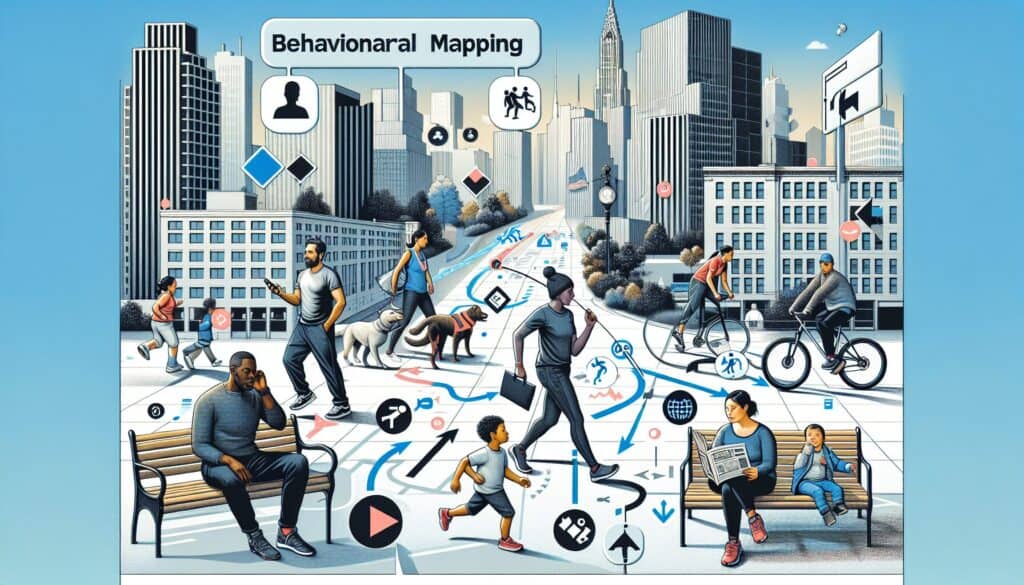
특정 물리적 공간 내에서 사람들의 행동과 움직임을 시간에 따라 체계적으로 관찰하고 기록하여 그 공간이 어떻게 사용되는지 이해하는 것.
사용 방법:
연구자들은 환경 지도를 만들고 기호나 표기법을 사용하여 공간 내 여러 위치에서의 특정 행동, 이동 경로, 상호 작용 및 활동 지속 시간을 기록합니다.
장점
공간 활용 및 사용자 행동 패턴에 대한 객관적인 데이터를 제공하고, 물리적 환경의 설계 결함이나 개선 기회를 파악하는 데 도움을 주며, 건축 또는 인테리어 디자인 결정에 정보를 제공할 수 있습니다.
단점
관찰은 노동 집약적이고 시간이 많이 소요될 수 있으며, 관찰자의 존재가 행동에 영향을 미칠 수 있고(호손 효과), 세부 수준에 따라 데이터 분석이 복잡해질 수 있으며, 관찰과 관련된 윤리적 고려 사항이 존재합니다.
카테고리:
고객 및 마케팅, 인간 공학, 제품 디자인
다음과 같은 경우에 가장 적합합니다:
소매점, 사무실, 공공장소 또는 의료 시설과 같은 물리적 공간과 사람들이 상호 작용하고 사용하는 방식을 이해하여 디자인과 기능을 최적화합니다.
Behavioral mapping is particularly effective in various industries, including retail, urban planning, workplace design, and healthcare, where understanding user behavior can significantly influence design outcomes. For instance, in retail, this methodology allows designers to analyze customer pathways, dwell times, and interaction hotspots within a store, leading companies like Zara or Apple to optimize layouts that enhance customer engagement and increase sales. In urban planning, behavioral mapping can be employed in public spaces to examine how individuals interact with amenities, such as parks or transportation hubs, enabling planners to create environments that encourage social interaction or promote safety. In the context of healthcare facilities, it can highlight how patients navigate through hospitals, providing insights that inform the arrangement of departments to reduce stress and improve operational efficiency. This methodology can be initiated by designers, architects, or behavioral scientists and often involves collaboration with stakeholders, including end-users, to ensure that the mapping accurately captures human behavior. These participants may include focus groups or community members who provide qualitative input that complements the quantitative data collected through observation and logging. Importantly, the objective data generated from behavioral mapping can pinpoint not only areas for improvement but also validate successful design decisions, making it a valuable resource during different project phases, from initial concept development through to post-occupancy evaluation. Analyzing the patterns revealed through behavioral mapping equips teams with the information necessary to create environments that not only meet user needs but also encourage positive interactions and experiences within those spaces.
이 방법론의 주요 단계
환경 내에서 구체적인 관심 영역을 파악하십시오.
행동 및 상호작용에 적합한 기호 또는 표기법을 선택하십시오.
관찰을 위한 시간 간격을 정하십시오.
미리 정해진 영역에서 체계적인 관찰을 수행하십시오.
사용자 상호작용 및 움직임에 대한 정량적 데이터를 기록합니다.
수집된 데이터에서 패턴과 행동 양식을 파악합니다.
관찰된 행동을 환경의 공간적 배치에 매핑합니다.
지도에 표시된 데이터를 분석하여 우려되는 영역이나 기회 영역을 파악합니다.
사용자 행동 분석을 바탕으로 디자인 권장 사항을 제시하세요.
프로 팁
행동 매핑의 정확도를 높이기 위해 모바일 애플리케이션이나 RFID 태그와 같은 실시간 데이터 수집 도구를 통합하십시오.
히트맵 기법을 기존 행동 분석 기법과 함께 활용하여 유동 인구가 많은 지역과 상호작용 지점을 더욱 효과적으로 시각화하세요.
변화하는 사용자 행동을 포착하기 위해 지속적인 관찰과 피드백을 바탕으로 매핑 방법론을 정기적으로 업데이트하고 개선하십시오.