Product Design, Manufacturing & Innovation Resources
» 실내 공기 중 총 휘발성 유기 화합물(TVOC)

실내 공기 중 총 휘발성 유기 화합물(TVOC)

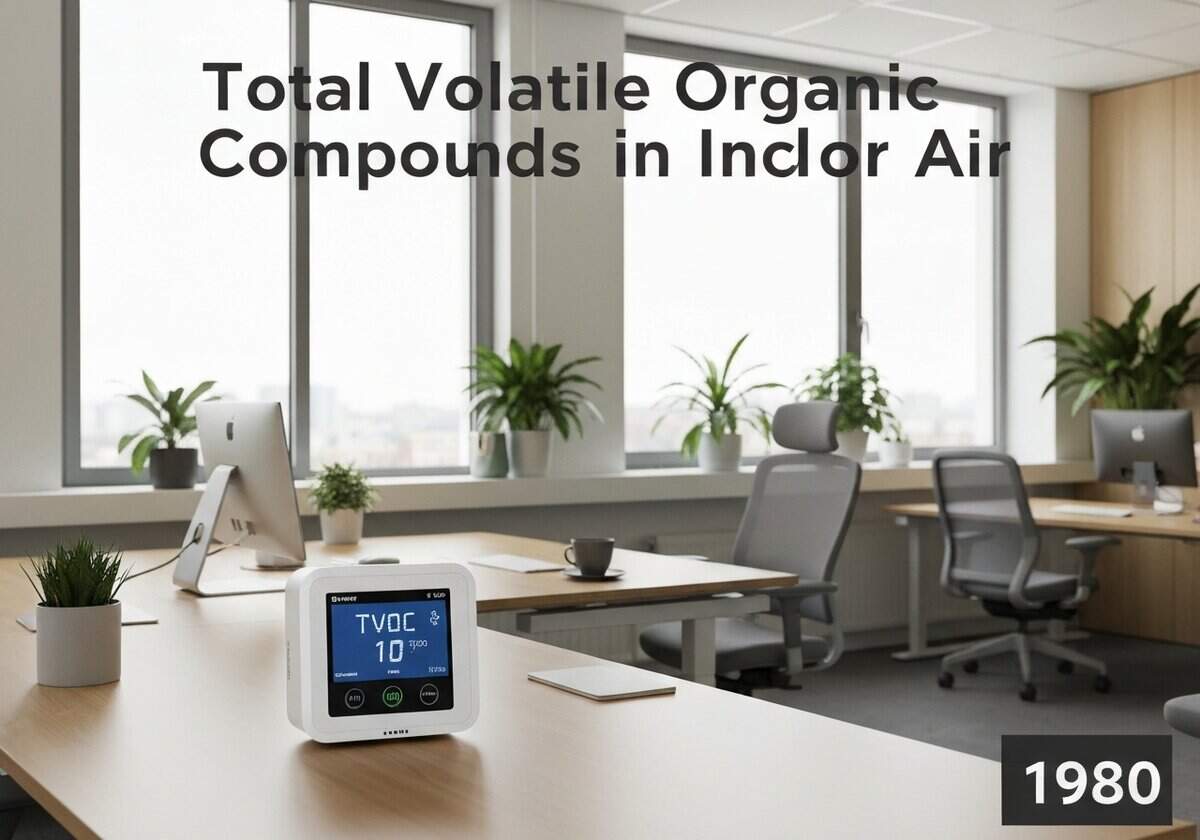
1980
Indoor air quality monitoring equipment measuring Total Volatile Organic Compounds in an office.

(설명을 위한 생성된 이미지입니다)

Indoor concentrations of VOCs from sources like building materials, furniture, and cleaning agents often exceed outdoor levels. Total Volatile Organic Compounds (TVOC) is a metric representing the summed concentration of multiple individual VOCs in the air. It is widely used as a general screening tool for assessing indoor air quality (IAQ), though it doesn’t distinguish between high and low toxicity compounds.
The concept of TVOC emerged from the need to quantify the complex mixture of pollutants found indoors, which can number in the hundreds. Sources are ubiquitous and include formaldehyde from pressed wood products, benzene from attached garages or tobacco smoke, terpenes (limonene, pinene) from cleaning products and air fresheners, and a wide array of alkanes and aromatic compounds from paints and adhesives. Measuring each compound individually is expensive and time-consuming. The TVOC measurement, typically performed using a photoionization detector (PID) or a metal-oxide semiconductor (MOS) sensor, provides a single, cost-effective value that indicates the overall ‘chemical load’ of the air.

While useful, the TVOC metric has significant limitations. It is a summation and does not provide information about the specific compounds present. Therefore, a high TVOC value could be caused by a high concentration of a relatively harmless compound like ethanol, or a low but dangerous concentration of a carcinogen like benzene. Different sensors also have varying sensitivities to different VOCs, leading to inconsistencies in measurements. Despite these drawbacks, TVOC remains a valuable first-pass indicator. A high TVOC reading often triggers more detailed investigation using methods like gas chromatography-mass spectrometry (GC-MS) to identify and quantify the specific VOCs of concern.

UNESCO Nomenclature: 3308
– Public health

유형

Measurement Metric

분열

점진적

용법

널리 사용됨

전구체

  • identification of ‘sick building syndrome’ in energy-efficient buildings in the 1970s
  • development of portable photoionization detectors (pids)
  • advances in material science identifying emissions from synthetic products
  • growing public awareness of the health effects of chemical exposure
  • gas chromatography for separating complex chemical mixtures

응용 프로그램

  • indoor air quality monitoring in homes and offices
  • building certification standards (e.g., leed, well)
  • evaluation of low-emitting building materials
  • research on sick building syndrome
  • hvac system control and automation

특허:

NA

잠재적 혁신 아이디어

현재 하루 4만 건이 넘는 봇 트래픽을 차단하기 위해 이 콘텐츠는 커뮤니티 회원만 이용할 수 있습니다.
> 로그인 < 또는 >등록 < 이 콘텐츠를 비롯한 모든 제한된 콘텐츠와 도구는 (100% 무료로) 이용할 수 있습니다.

Related to: TVOC, indoor air quality, IAQ, sick building syndrome, building materials, VOC sensor, environmental health, formaldehyde, benzene, air pollution.

역사적 맥락

실내 공기 중 총 휘발성 유기 화합물(TVOC)

1980
1980
1980
1980
1980
1984
1986
1980
1980
1980
1980
1980
1981
1986
1986

(날짜를 알 수 없거나 관련이 없는 경우, 예를 들어 "유체역학"의 경우, 주목할 만한 등장 시기를 대략적으로 추정하여 제공합니다.)

관련 발명, 혁신 및 기술 원칙

고화질 이미지 및 다운로드는 등록된 회원에게만 100% 무료로 제공됩니다.

> 로그인 <