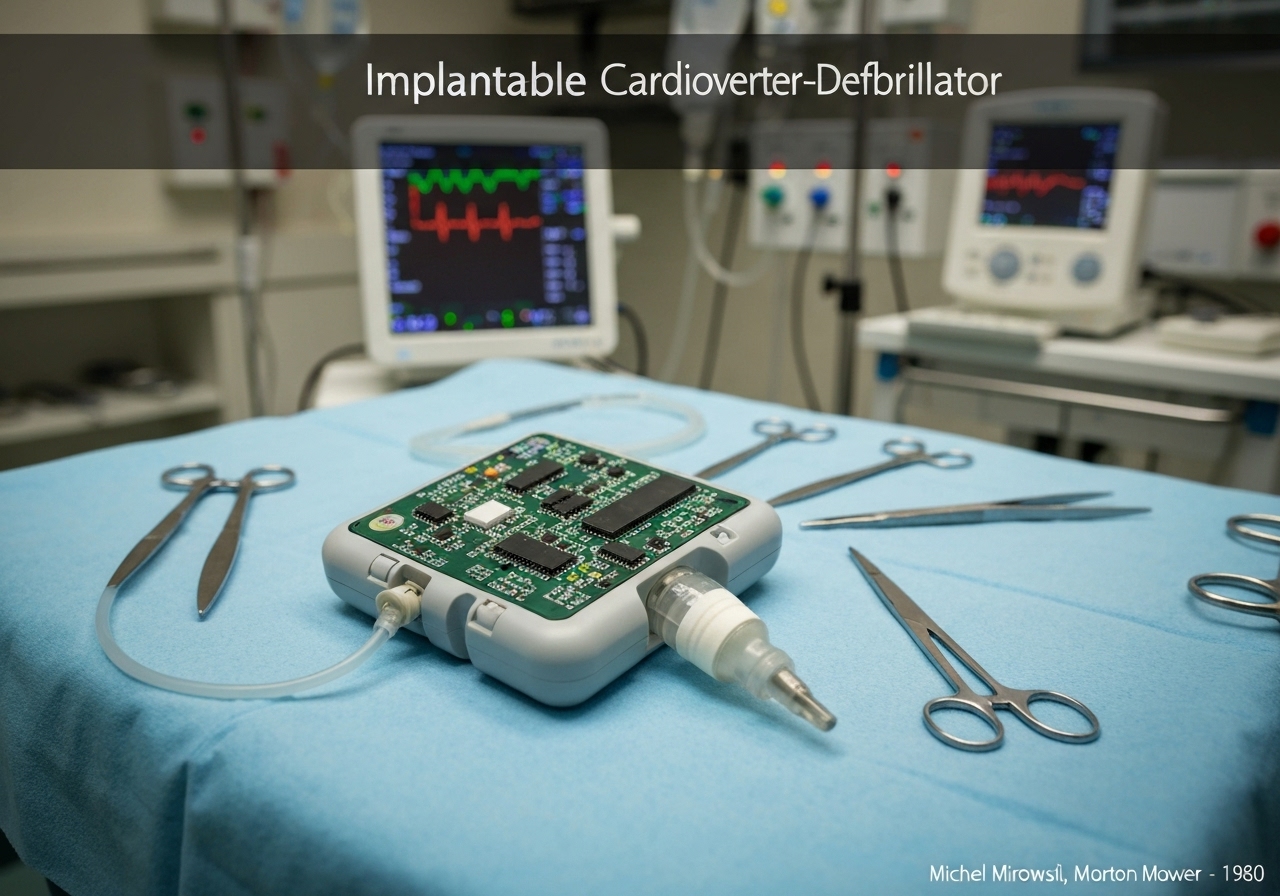
이식형 심장 제세동기(ICD)는 심장 박동을 모니터링하고 심실 빈맥이나 심실 세동과 같은 생명을 위협하는 부정맥을 감지하기 위해 가슴에 삽입하는 소형 배터리 구동 장치입니다. 비정상적인 심장 박동이 감지되면 ICD는 정밀하게 조절된 전기 충격(제세동)을 가하여 정상적인 심장 박동을 회복시키고 급성 심장사를 예방할 수 있습니다.


(설명을 위한 생성된 이미지입니다)
이식형 심장 제세동기(ICD)는 심장 박동을 모니터링하고 심실 빈맥이나 심실 세동과 같은 생명을 위협하는 부정맥을 감지하기 위해 가슴에 삽입하는 소형 배터리 구동 장치입니다. 비정상적인 심장 박동이 감지되면 ICD는 정밀하게 조절된 전기 충격(제세동)을 가하여 정상적인 심장 박동을 회복시키고 급성 심장사를 예방할 수 있습니다.

An ICD system consists of a pulse generator and one or more electrode leads. The generator, which contains a battery and the electronic circuitry, is typically implanted under the skin below the collarbone. The leads are thin, insulated wires that are threaded through a vein into the heart chambers. These leads have electrodes on their tips that monitor the heart’s electrical activity (acting as an ECG) and can also deliver electrical impulses. The device continuously analyzes the heart’s rhythm. If it detects a rhythm that is too fast or chaotic (tachycardia or fibrillation), it first attempts to correct it with a series of low-energy electrical pulses, a procedure called anti-tachycardia pacing (ATP). If ATP is unsuccessful or if the arrhythmia is immediately life-threatening (like ventricular fibrillation), the ICD charges its capacitors and delivers a high-energy shock to reset the heart. Modern ICDs also function as pacemakers, providing electrical stimulation if the heart rate becomes too slow (bradycardia). They also have sophisticated data logging capabilities, recording arrhythmic events for later review by a cardiologist, which helps in optimizing the patient’s therapy.
현재 하루 4만 건이 넘는 봇 트래픽을 차단하기 위해 이 콘텐츠는 커뮤니티 회원만 이용할 수 있습니다.
> 로그인 < 또는 >등록 < 이 콘텐츠를 비롯한 모든 제한된 콘텐츠와 도구는 (100% 무료로) 이용할 수 있습니다.
이식형 심장 제세동기(ICD)
(날짜를 알 수 없거나 관련이 없는 경우, 예를 들어 "유체역학"의 경우, 주목할 만한 등장 시기를 대략적으로 추정하여 제공합니다.)
고화질 이미지 및 다운로드는 등록된 회원에게만 100% 무료로 제공됩니다.
> 로그인 <