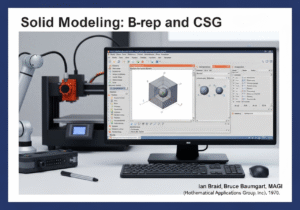
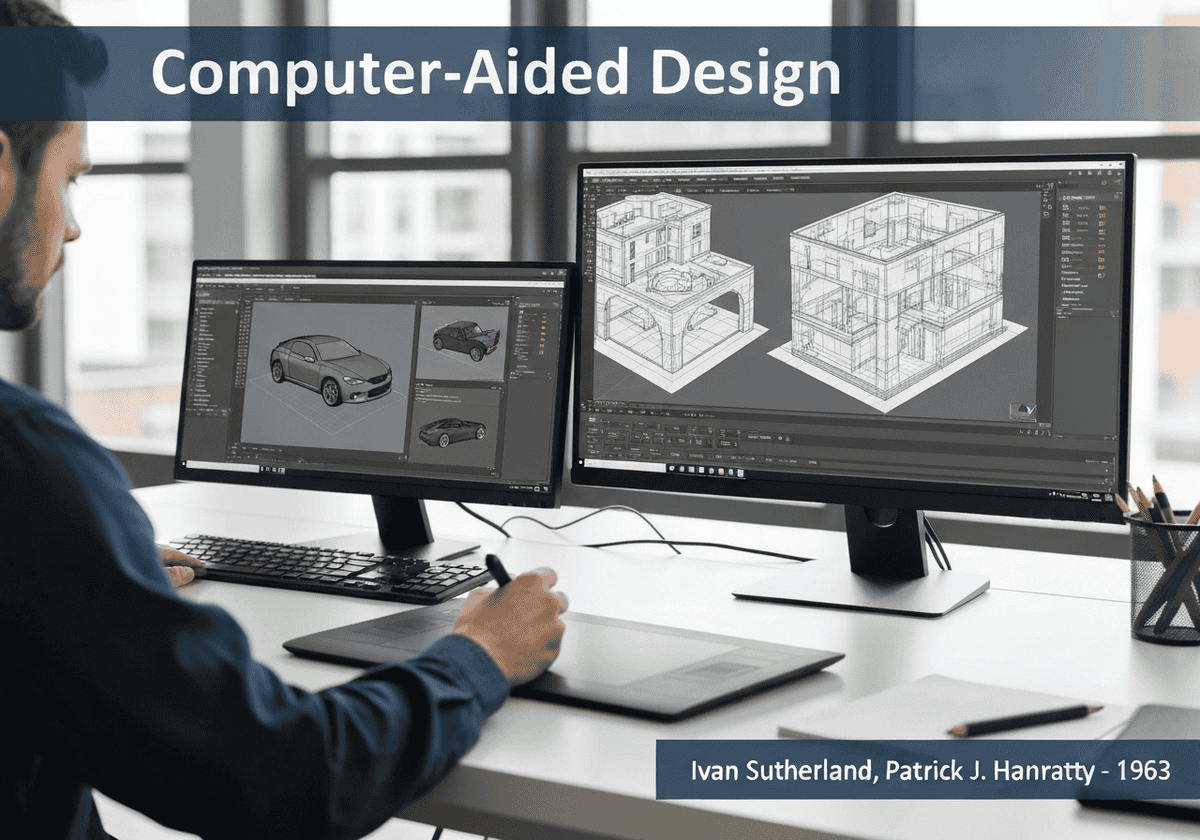
설계의 생성, 수정, 분석 또는 최적화를 지원하기 위해 컴퓨터 시스템을 사용하는 것. CAD 소프트웨어 이 기술은 제품 디자이너와 엔지니어가 수동 제도를 대체하여 정밀한 2D 및 3D 모델을 제작할 수 있도록 합니다. 생산성을 획기적으로 향상시키고 디자인 품질을 개선하며 더 나은 협업을 가능하게 합니다. 의사소통 상세한 시각화 및 시뮬레이션을 통해.

(설명을 위한 생성된 이미지입니다)
설계의 생성, 수정, 분석 또는 최적화를 지원하기 위해 컴퓨터 시스템을 사용하는 것. CAD 소프트웨어 이 기술은 제품 디자이너와 엔지니어가 수동 제도를 대체하여 정밀한 2D 및 3D 모델을 제작할 수 있도록 합니다. 생산성을 획기적으로 향상시키고 디자인 품질을 개선하며 더 나은 협업을 가능하게 합니다. 의사소통 상세한 시각화 및 시뮬레이션을 통해.

Computer-Aided Design (CAD) revolutionized the field of product design by digitizing the entire drafting and modeling process. Before CAD, engineers and designers relied on manual drafting with tools like pencils, rulers, and compasses, a time-consuming and error-prone process. The breakthrough came with systems like Ivan Sutherland’s Sketchpad in 1963, which demonstrated the potential of interactive computer graphics. Modern CAD software provides a vast toolkit for designers. They can create complex 3D solid and surface models with parametric features, meaning the model’s geometry can be updated automatically if a dimension is changed. This is crucial for iterative design. Beyond simple modeling, CAD is often integrated into broader systems. Computer-Aided Engineering (CAE) uses CAD models to run simulations, such as finite element analysis (FEA) to test structural strength or computational fluid dynamics (CFD) to analyze airflow, without building a physical prototype. Computer-Aided Manufacturing (CAM) uses the same CAD data to generate instructions for manufacturing machinery like CNC mills or 3D printers. This seamless digital thread from design to analysis to manufacturing is a cornerstone of modern product development, enabling rapid prototyping and mass customization.
현재 하루 4만 건이 넘는 봇 트래픽을 차단하기 위해 이 콘텐츠는 커뮤니티 회원만 이용할 수 있습니다.
> 로그인 < 또는 >등록 < 이 콘텐츠를 비롯한 모든 제한된 콘텐츠와 도구는 (100% 무료로) 이용할 수 있습니다.
컴퓨터 지원 설계(CAD)
(날짜를 알 수 없거나 관련이 없는 경우, 예를 들어 "유체역학"의 경우, 주목할 만한 등장 시기를 대략적으로 추정하여 제공합니다.)

고화질 이미지 및 다운로드는 등록된 회원에게만 100% 무료로 제공됩니다.
> 로그인 <