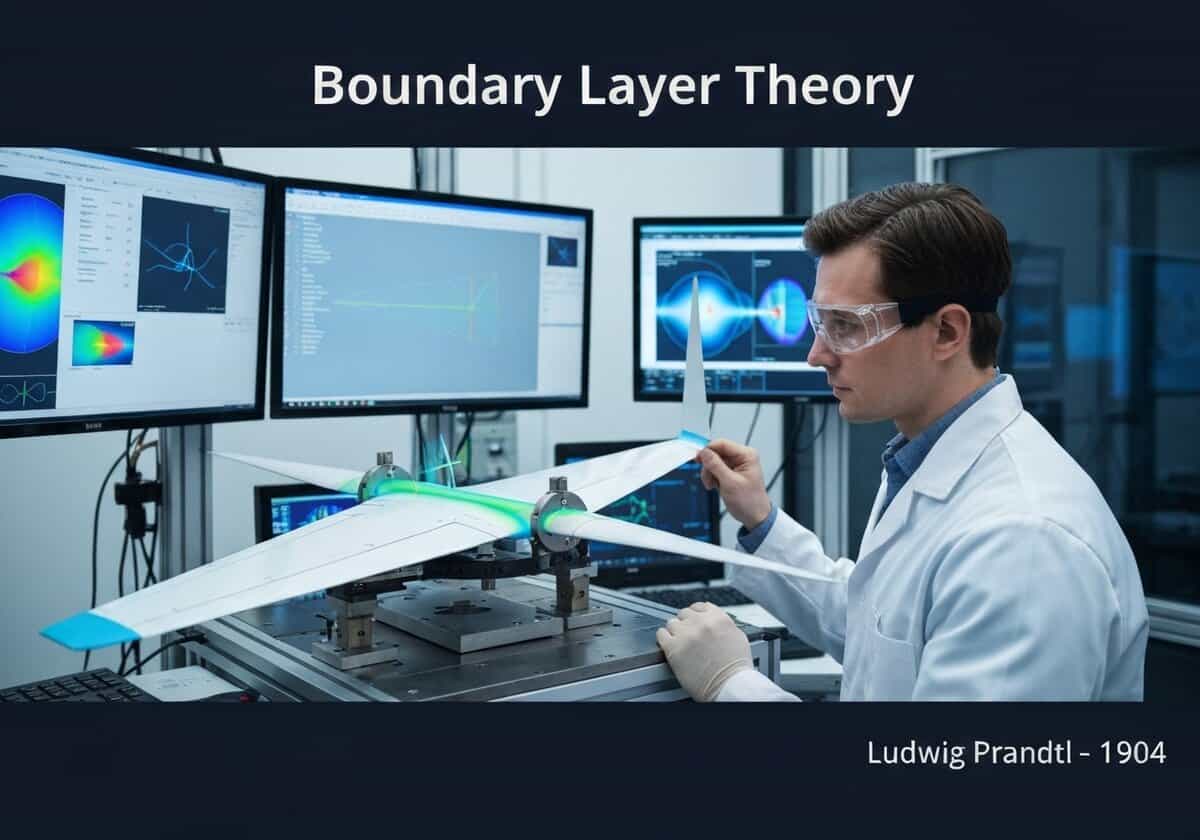
경계층은 경계면 바로 근처에 있는 얇은 유체층으로, 경계면의 영향이 가장 크게 나타나는 층입니다. 점도 이는 매우 중요합니다. 루트비히 프란틀이 도입한 이 개념은 유체 흐름을 두 영역으로 나누어 유체 역학 문제를 단순화합니다. 하나는 점성이 지배적인 얇은 경계층이고, 다른 하나는 비점성 유동 이론을 적용할 수 있는 외부 영역입니다.


(설명을 위한 생성된 이미지입니다)
경계층은 경계면 바로 근처에 있는 얇은 유체층으로, 경계면의 영향이 가장 크게 나타나는 층입니다. 점도 이는 매우 중요합니다. 루트비히 프란틀이 도입한 이 개념은 유체 흐름을 두 영역으로 나누어 유체 역학 문제를 단순화합니다. 하나는 점성이 지배적인 얇은 경계층이고, 다른 하나는 비점성 유동 이론을 적용할 수 있는 외부 영역입니다.

루트비히 프란틀의 경계층 이론은 이론 유체 역학과 실험 결과를 조화시킨 획기적인 발견이었습니다. 1904년 이전에는 비점성 흐름에 기반한 이론(예: 당랑베르의 역설)이 유체 속을 움직이는 물체의 항력이 0이라고 잘못 예측했는데, 이는 현실과 명백히 모순되는 것이었습니다. 프란틀은 유체의 마찰(점성) 효과가 흐름의 대부분에서는 무시할 수 있지만, 물체 표면에 인접한 매우 얇은 층에서는 매우 중요하다고 주장했습니다. 이것이 바로 경계층입니다.
Within this layer, the fluid velocity changes from zero at the surface (the no-slip condition) to the free-stream velocity at the edge of the layer. This velocity gradient creates shear stress, which is the source of skin friction drag, one of the two main components of aerodynamic drag. The behavior of the boundary layer is crucial. It can be either smooth and orderly (laminar) or chaotic and irregular (turbulent). A turbulent boundary layer has more energy and is more resistant to separating from the surface, but it also creates significantly more skin friction drag. Flow separation, where the boundary layer detaches from the surface, often occurs due to an adverse pressure gradient and leads to a massive increase in pressure drag, which is the other main drag component. Understanding and controlling the boundary layer is a central goal of aerodynamic design.
현재 하루 4만 건이 넘는 봇 트래픽을 차단하기 위해 이 콘텐츠는 커뮤니티 회원만 이용할 수 있습니다.
> 로그인 < 또는 >등록 < 이 콘텐츠를 비롯한 모든 제한된 콘텐츠와 도구는 (100% 무료로) 이용할 수 있습니다.
경계층 이론(유체)
(날짜를 알 수 없거나 관련이 없는 경우, 예를 들어 "유체역학"의 경우, 주목할 만한 등장 시기를 대략적으로 추정하여 제공합니다.)

고화질 이미지 및 다운로드는 등록된 회원에게만 100% 무료로 제공됩니다.
> 로그인 <