Product Design, Manufacturing & Innovation Resources
» 인체공학적 설계에서의 인체측정학

인체공학적 설계에서의 인체측정학

1940
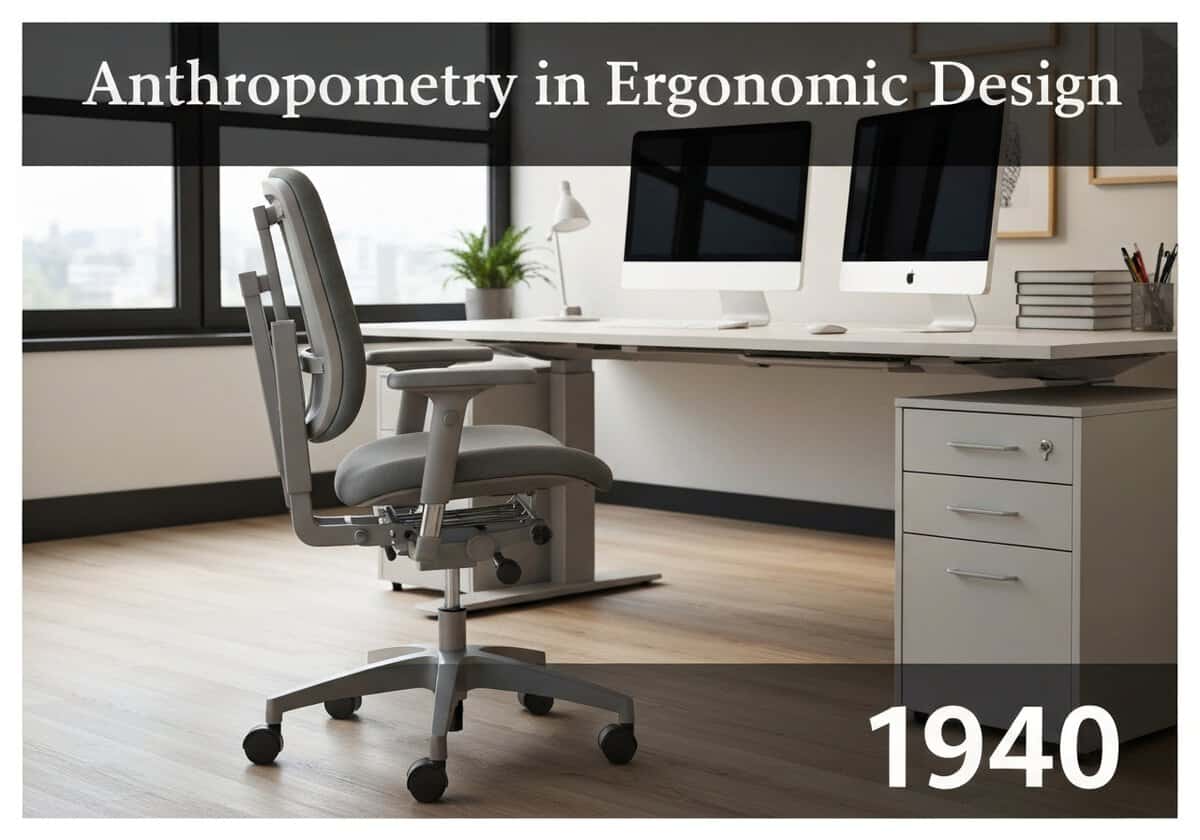
인체공학적 원리에 따라 조절 가능한 의자와 책상을 갖춘 인체공학적 사무공간.

(설명을 위한 생성된 이미지입니다)

Anthropometry is the scientific study of the measurements and proportions of the human body. In 인간 공학, anthropometric data is crucial for designing workspaces, equipment, and products that fit the user. Designs typically accommodate a specific range of the population, often the 5th to 95th percentile, to ensure that the majority of users can interact with the design safely and efficiently.


The core principle of applying anthropometry is ‘fit the task to the person,’ not the other way around. To achieve this, designers use large datasets of human body measurements, which are often specific to age, sex, and ethnicity. These datasets include static measurements (taken when the body is in a fixed position, e.g., height, arm length) and dynamic or functional measurements (taken during movement, e.g., reach envelope). A critical concept is designing for the appropriate population range. Designing for the ‘average’ person (the 50th percentile) is often a mistake, as it may fit no one well. Instead, designers use percentiles to accommodate a wider range. For example, a doorway’s height might be designed to accommodate the 95th or 99th percentile male height to prevent taller individuals from hitting their heads. Conversely, an emergency shut-off button’s reach distance might be designed for the 5th percentile female reach to ensure the smallest users can access it. This statistical approach allows for the creation of products and environments that are usable by the vast majority of the target population, enhancing comfort, safety, and performance.

UNESCO Nomenclature: 3307
산업공학

유형

추상 시스템

분열

기초적인

용법

널리 사용됨

전구체

  • The Vitruvian man by Leonardo Da Vinci, an early study of human proportion
  • Alphonse Bertillon’s system of criminal identification using body measurements (bertillonage)
  • statistical methods developed by Adolphe Quetelet, who studied the ‘average man’
  • large-scale anthropometric surveys of military personnel during world war i and ii

응용 프로그램

  • design of adjustable office chairs and desks
  • layout of vehicle interiors, including driver seats and controls
  • sizing of clothing and personal protective equipment (ppe)
  • design of hand tools and kitchen utensils
  • architectural design of spaces like doorways and counter heights

특허:

NA

잠재적 혁신 아이디어

현재 하루 4만 건이 넘는 봇 트래픽을 차단하기 위해 이 콘텐츠는 커뮤니티 회원만 이용할 수 있습니다.
> 로그인 < 또는 >등록 < 이 콘텐츠를 비롯한 모든 제한된 콘텐츠와 도구는 (100% 무료로) 이용할 수 있습니다.

Related to: anthropometry, human body measurement, ergonomics, design, percentile, human factors, user-centered design, workspace design, product design, reach envelope.

역사적 맥락

인체공학적 설계에서의 인체측정학

1940
1940
1940
1940
1940
1940
1948
1934
1940
1940
1940
1940
1940
1945-01-01
1949

(날짜를 알 수 없거나 관련이 없는 경우, 예를 들어 "유체역학"의 경우, 주목할 만한 등장 시기를 대략적으로 추정하여 제공합니다.)

관련 발명, 혁신 및 기술 원칙

고화질 이미지 및 다운로드는 등록된 회원에게만 100% 무료로 제공됩니다.

> 로그인 <