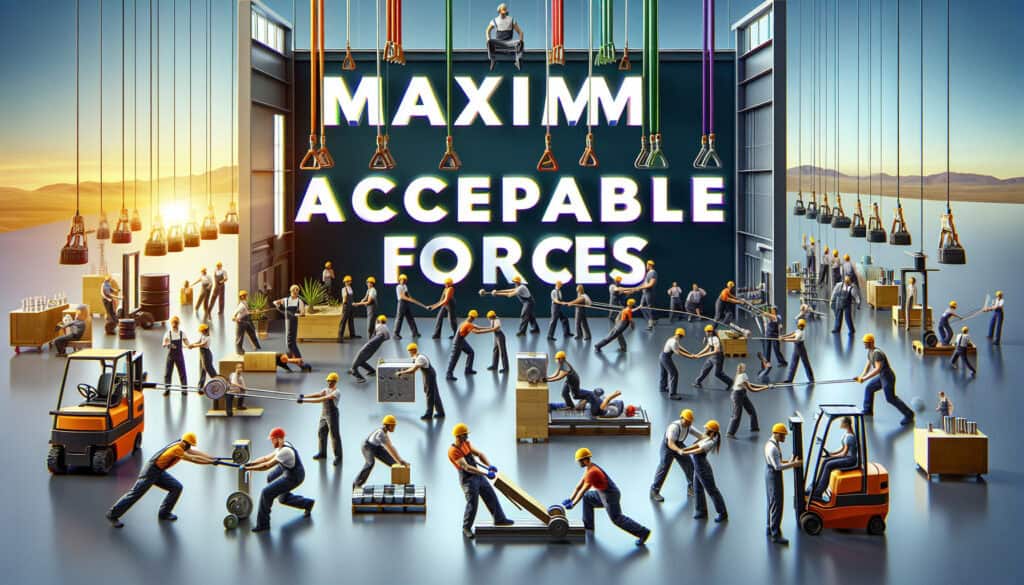
The application of Maximum Acceptable Pushing and Pulling Forces methodology is particularly valuable in settings like warehousing, manufacturing, and healthcare, where manual material handling is prevalent. Industries involved in logistics benefit significantly from these ergonomic guidelines, which offer a systematic approach to evaluating and improving workspace designs to accommodate a wide range of body types and strengths. For instance, when designing tasks that involve the use of trolleys or pallet jacks, embracing these ergonomic limits can reduce the risk of musculoskeletal injuries among workers. Participants in this methodology’s implementation typically include ergonomists, industrial engineers, safety personnel, and human resources staff who collaborate during the design phase of new processes or equipment. In practice, these guidelines can be used to develop training programs that educate employees on safe handling techniques, ensuring a lower incidence of work-related injuries. Companies may also use simulations or field tests to quantify how changes in equipment design or workplace layout affect the pushing and pulling forces experienced by workers, allowing for adjustments that enhance performance and safety. Engaging employees in feedback loops can further refine operational strategies, leading to innovations that prioritize human factors in design and elevate overall workplace health standards while also adhering to established regulatory requirements for safety.