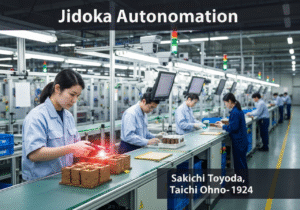
Jidoka, often associated with the Toyota Production System, is applied in various manufacturing sectors, including automotive, electronics, and consumer goods, where maintaining high quality is paramount. This methodology is typically initiated during the design and implementation phases of production systems, requiring involvement from frontline workers, management, and quality assurance teams to establish protocols for stopping the line. An example of Jidoka in action can be seen in automotive assembly lines, where operators are trained to identify anomalies, such as incorrect part placements or defects, leading to immediate intervention. The integration of Jidoka not only enhances product quality by ensuring that defects are caught early but also promotes a sense of ownership among workers, facilitating a culture where continuous improvement becomes part of daily operations. Such engagement encourages employees to contribute ideas for process optimizations and defect prevention, further strengthening the manufacturing system. Additionally, technology plays a supportive role in Jidoka applications, as automated systems and sensors can assist workers in identifying issues, allowing for quicker reaction times and reducing downtime. Organizations adopting this principle often experience reductions in waste and inefficiencies, translating into cost savings and improved customer satisfaction.