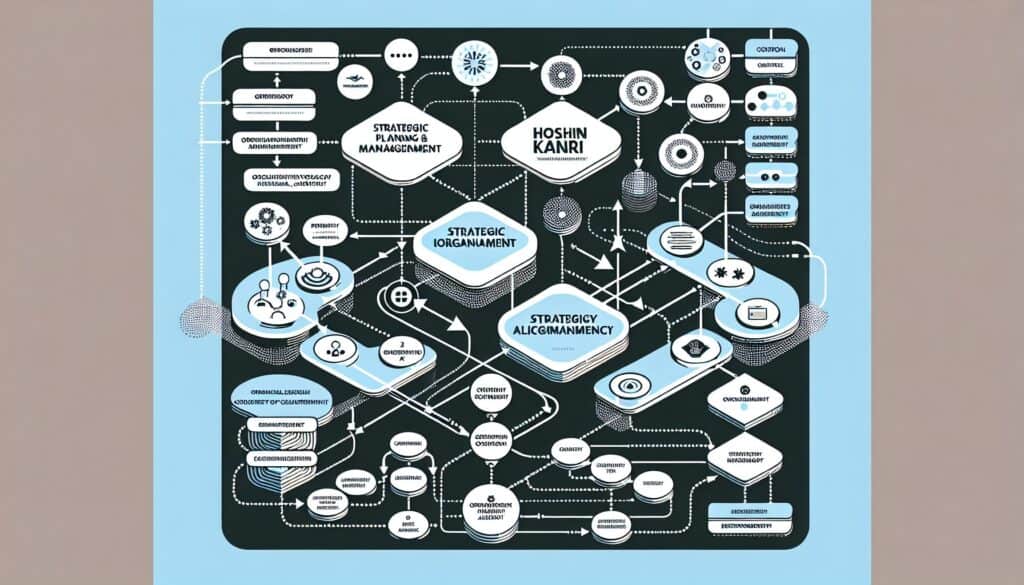
Top management sets long-term strategic goals (Hoshin). These are then cascaded down through the organization, with each level developing its own objectives and plans (often using a "catchball" process of discussion and alignment) to support the higher-level goals. Progress is regularly reviewed using PDCA cycles.
Hoshin Kanri is commonly used in various industries, including manufacturing, healthcare, information technology, and service sectors, where alignment between strategy and execution is paramount for success. This methodology is particularly effective during the planning phase of a project, allowing organizations to clearly define their strategic vision and translate it into actionable steps that are understood at all levels of the organization. Top management usually initiates the Hoshin Kanri process, but it requires active participation from all employees to develop a sense of ownership and accountability for the objectives set. The “catchball” process encourages idea exchange between different levels of management, enhancing collaboration and ensuring that the objectives reflect realistic capabilities and resources available at various tiers. Regular PDCA (Plan-Do-Check-Act) cycles help in monitoring progress, allowing teams to adjust their objectives and strategies as needed. This iterative approach to management enables organizations to remain agile and responsive to changes in the market or internal challenges while keeping every team aligned with overarching goals. Additionally, Hoshin Kanri promotes a culture of continuous improvement, as the constant review of processes encourages teams to identify inefficiencies and seek innovative solutions to enhance performance across functions. The effective communication fostered through this methodology helps in breaking down silos, ensuring that insights and lessons learned are shared widely across departments, further enhancing the organization’s capacity for innovation and adaptive change management.