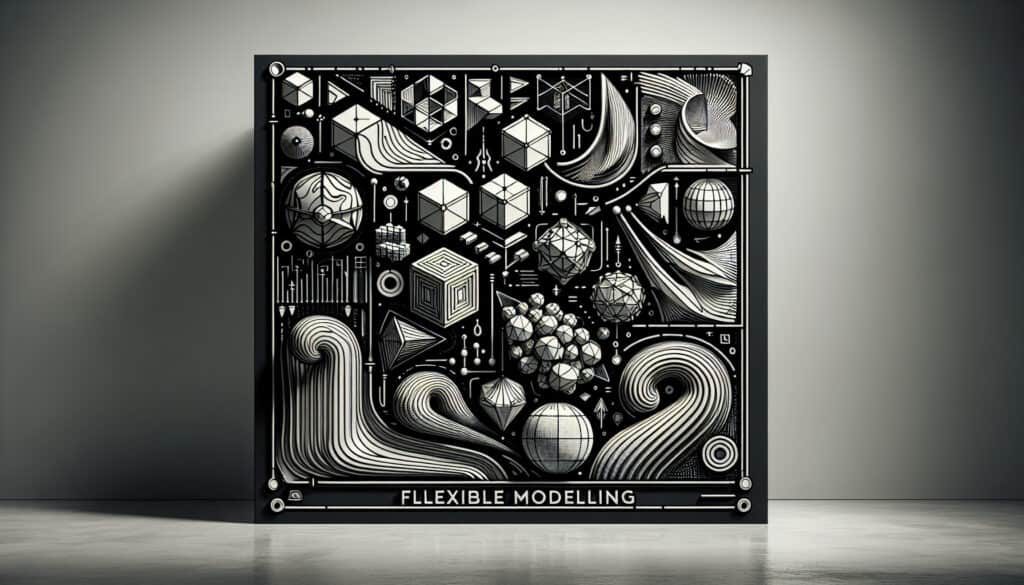
To create and modify 3D models with a combination of parametric and direct modeling techniques.
使用方法:
A CAD modeling approach that allows designers to easily modify geometry without being constrained by the original design intent. It is useful for making late-stage design changes and working with imported data.
長所
Provides flexibility in the design process; Allows for rapid design changes.
短所
Can be less precise than parametric modeling; May not be suitable for all types of design.
カテゴリー:
エンジニアリング, 製品デザイン
最適な用途:
Making late-stage design changes to a 3D model or working with imported CAD data.
Flexible Modeling is particularly advantageous in industries that require rapid iterations and responsiveness to client feedback, such as consumer electronics, automotive, and aerospace sectors. In these environments, engineers and designers often encounter late-stage modifications driven by market demands or design evaluations, making traditional CAD methods cumbersome. By utilizing this approach, teams can accommodate alterations to design without losing the original geometric intent, which is particularly beneficial when dealing with imported data from various CAD programs. Participants in this methodology often include mechanical engineers, industrial designers, and product managers who collaborate in cross-functional teams to ensure that the design remains aligned with practical functionalities and aesthetic considerations. This methodology is typically applied in the prototyping phase or during design reviews, allowing stakeholders to visualize and assess modifications efficiently before final manufacturing. Utilizing Flexible Modeling not only elevates the design capabilities but also significantly reduces the time taken to prototype, facilitating a quicker time-to-market while enhancing product quality and customer satisfaction. Examples of applications can be found in customizable consumer products, where quick design changes lead to new features based on user feedback or rapidly evolving fashion trends.
この方法論の主なステップ
Import CAD data or utilize existing models.
Identify key features for modification.
Utilize history-based modeling tools for editable parameters.
Apply direct modeling techniques for geometry alteration.
Use feature suppression or deletion to remove constraints.
Reapply constraints or apply new ones as needed.
Evaluate changes through simulations or visual inspections.
Iteratively refine geometry based on feedback.
Finalize modifications and prepare for downstream processes.
プロのヒント
Implement a robust layer management system in your CAD software to isolate and control modifications efficiently.
Utilize configuration tools and design tables for variations in parameters, enabling faster iterations based on project requirements.
Incorporate version control practices for imported data to track changes and maintain the integrity of the original design intent.