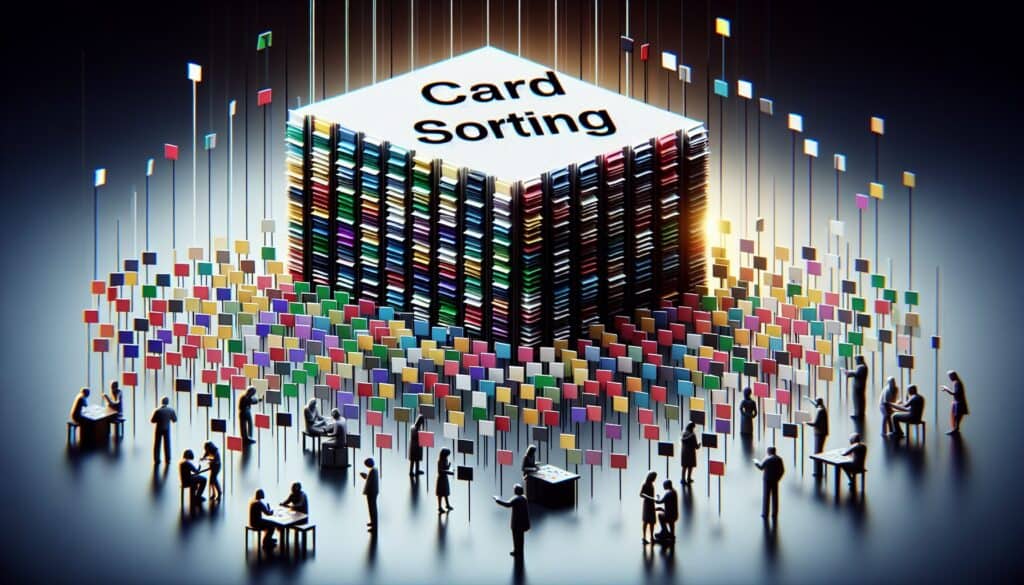
Card Sorting can be particularly valuable during the early phases of product development, especially in projects focused on user experience design and information architecture. It is often utilized in industries such as e-commerce, education technology, and content management systems where organizing information effectively enhances user engagement and satisfaction. During this methodology, participant feedback can reveal patterns in how users categorize information, which can inform navigation structures and labeling conventions. For instance, a digital marketplace might employ Card Sorting to determine how customers intuitively group products, enabling more efficient search functionalities and filtering options within the platform. This approach invites a diverse range of participants, including end-users, product managers, designers, and content strategists, to collaborate in shaping the site’s structure. It can also be adapted to various contexts, whether conducted as a remote online activity or in structured workshops, allowing for flexibility in gathering qualitative data. The simplicity of Card Sorting not only reduces costs involved in extensive usability testing but also accelerates the iterative design process by swiftly gathering user feedback that can be analyzed and implemented in subsequent drafts of the digital product. Applying the insights gained from this methodology can lead to a more intuitive user interface, ultimately enhancing the overall experience of using the application or website.