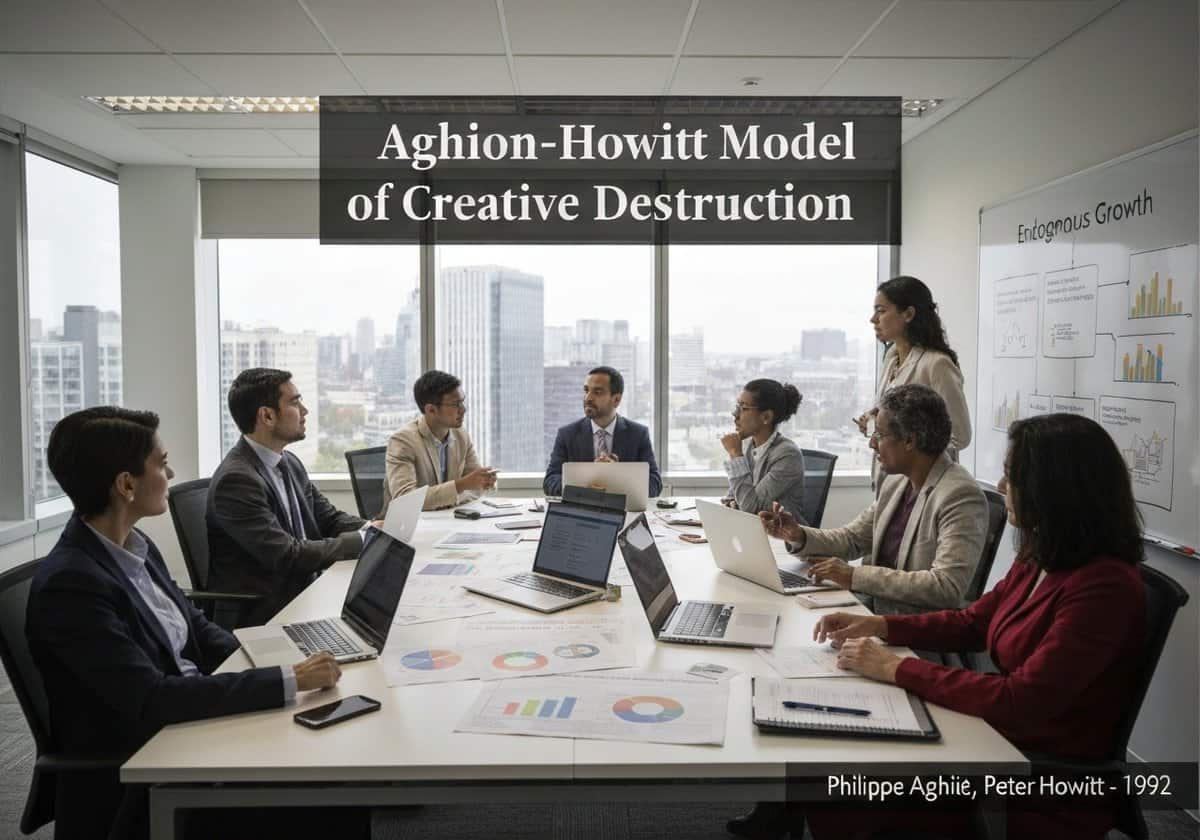
フィリップ・アギオンとピーター・ハウイットは、 創造的破壊 シュンペーターの思想に基づいている。彼らの内生的成長モデルでは、技術進歩が長期的な経済成長の原動力となる。新たなイノベーションは、以前のイノベーターの独占的利益を破壊し、成長が本質的に不確実であり、より高品質な新製品が古い製品に取って代わるにつれて、急激な成長が起こるプロセスを生み出す。

(画像はイメージです)
フィリップ・アギオンとピーター・ハウイットは、 創造的破壊 シュンペーターの思想に基づいている。彼らの内生的成長モデルでは、技術進歩が長期的な経済成長の原動力となる。新たなイノベーションは、以前のイノベーターの独占的利益を破壊し、成長が本質的に不確実であり、より高品質な新製品が古い製品に取って代わるにつれて、急激な成長が起こるプロセスを生み出す。

アギオン=ハウイット・モデルは、シュンペーターの洞察を一般均衡の枠組みの中で定式化した画期的な成果である。これは内生的成長モデルに属し、技術進歩の速度、ひいては長期的な経済成長は、ソロー=スワン・モデルのような初期の新古典派モデルのように外部の、外生的な力として想定されるのではなく、モデル内の経済的要因によって決定される。
In the model, innovation is a purposeful R&D activity undertaken by firms seeking to gain monopoly profits. A successful innovation creates a new, better-quality product that displaces the existing one, granting the innovator a temporary monopoly. However, this monopoly is itself vulnerable to future innovation. This constant threat of displacement is the “destruction” aspect. The “creative” aspect is that each new innovation builds upon the last, increasing the overall productivity of the economy. The model generates a clear trade-off: stronger patent protection can increase the incentive to innovate by protecting monopoly rents, but it can also slow down the diffusion of technology and subsequent innovations. This makes it a powerful tool for analyzing policies related to R&D, competition, and intellectual property.
ボットによるトラフィック(現在1日あたり4万件以上)を排除するため、このコンテンツはコミュニティメンバー限定となっています。
> ログイン < または > 登録 < (100%無料)でこれにアクセスできます。他のすべての制限付きコンテンツとツールも同様です。
アギオン=ハウイットの創造的破壊モデル
(日付が不明または関連性がない場合、例えば「流体力学」などでは、その注目すべき出現時期の概算値が提示されます。)

フルサイズの画像とダウンロードは、登録会員のみが100%無料で利用できます。
> ログイン <