Síntese de proteínas (Tradução)
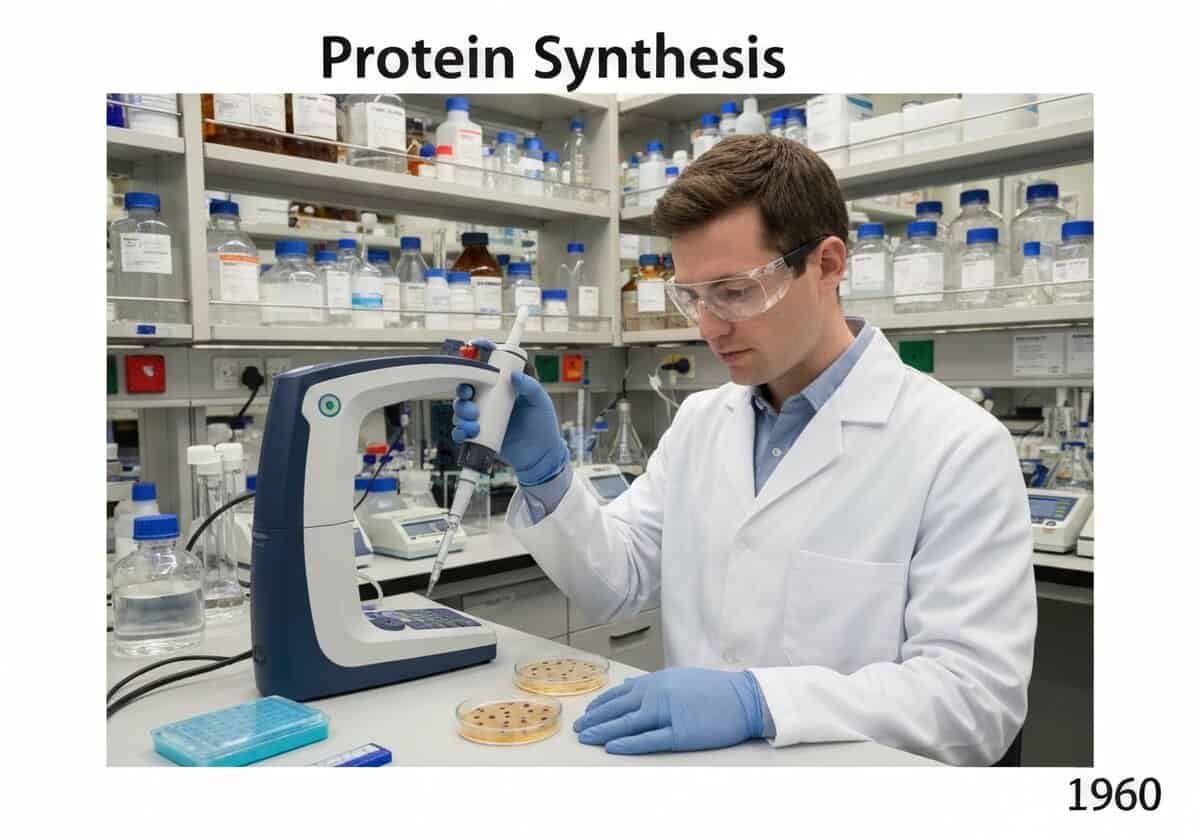
A tradução é o processo biológico no qual os ribossomos no citoplasma ou no retículo endoplasmático sintetizam proteínas. Ela sucede a transcrição, onde a sequência de DNA é copiada para uma molécula de RNA mensageiro (mRNA). Durante a tradução, o ribossomo lê a sequência de mRNA em unidades de três nucleotídeos chamadas códons e, com a ajuda do RNA transportador (tRNA), monta a cadeia de aminoácidos correspondente.
The process of translation occurs in three main stages: initiation, elongation, and termination. During initiation, the ribosomal subunits assemble on the mRNA molecule, typically at a start codon (AUG). In the elongation phase, the ribosome moves along the mRNA, codon by codon. For each codon, a specific tRNA molecule with a complementary anticodon brings the correct amino acid. The ribosome catalyzes the formation of a peptide bond between the new amino acid and the growing polypeptide chain. This cycle repeats, extending the protein. Finally, when the ribosome encounters a stop codon (UAA, UAG, or UGA) on the mRNA, termination occurs. Release factors bind to the ribosome, causing the completed polypeptide chain to be released and the ribosomal subunits to dissociate.
This intricate process is a marvel of molecular machinery, ensuring high fidelity in converting genetic information into functional proteins. The discovery of the mechanisms of translation, including the roles of mRNA, tRNA, and the ribosome, and the cracking of the genetic code by Marshall Nirenberg, Har Gobind Khorana, and others, were landmark achievements of 20th-century biology. This understanding forms the basis of the central dogma of molecular biology and has enabled the entire field of genetic engineering and biotechnology.
UNESCO Nomenclature: 2409
Biologia molecular
Precursores
- Descoberta do DNA como material genético (experimento de Avery-MacLeod-McCarty)
- Elucidação da estrutura da dupla hélice do DNA por Watson e Crick
- a hipótese do dogma central proposta por Francis Crick
- descoberta dos ribossomos como o local da síntese de proteínas
- Isolamento e caracterização de mRNA e tRNA
Aplicações
- production of recombinant proteins like insulin and growth hormone in bacteria or yeast
- desenvolvimento de antibióticos que têm como alvo os ribossomos bacterianos (ex.: tetraciclinas, macrolídeos)
- mrna vaccines (e.g., for covid-19), which hijack the cell’s translation machinery to produce viral antigens
- Kits de síntese de proteínas in vitro para pesquisa e diagnóstico.
- Compreender e potencialmente tratar doenças genéticas causadas por erros de tradução.
Ideias de Inovação Potencial
Devido ao tráfego de bots de coleta de dados, atualmente superior a 40 mil por dia, este conteúdo é reservado aos membros da comunidade.
> Login < ou > Registrar < (100% gratuito) para acessar isso, assim como todo o restante do conteúdo e das ferramentas restritas.
Relacionado a: tradução, síntese de proteínas, ribossomo, mRNA, tRNA, códon, código genético, dogma central, polipeptídeo, expressão gênica.