지속적인 개선, 인간 공학, 인간적 요소, 인간 중심 디자인, 린 제조, 문제 해결 기법, 프로세스 개선, 팀워크, 사용자 중심 디자인
목적:
To actively involve workers in identifying, analyzing, and controlling ergonomic risks in their own jobs and work environment.
사용 방법:
Forms teams of workers, supervisors, and ergonomics experts to collectively identify ergonomic problems, brainstorm solutions, and implement and evaluate improvements.
장점
Increases worker buy-in and ownership of solutions; utilizes workers' direct knowledge of their tasks; often leads to more practical and sustainable solutions.
단점
Can be time-consuming to manage the participatory process; requires training for workers and management; potential for conflicting opinions or unrealistic suggestions if not well-facilitated.
카테고리:
인간 공학, 조작, 품질
다음과 같은 경우에 가장 적합합니다:
Involving employees directly in the process of identifying and solving ergonomic problems in their workplaces.
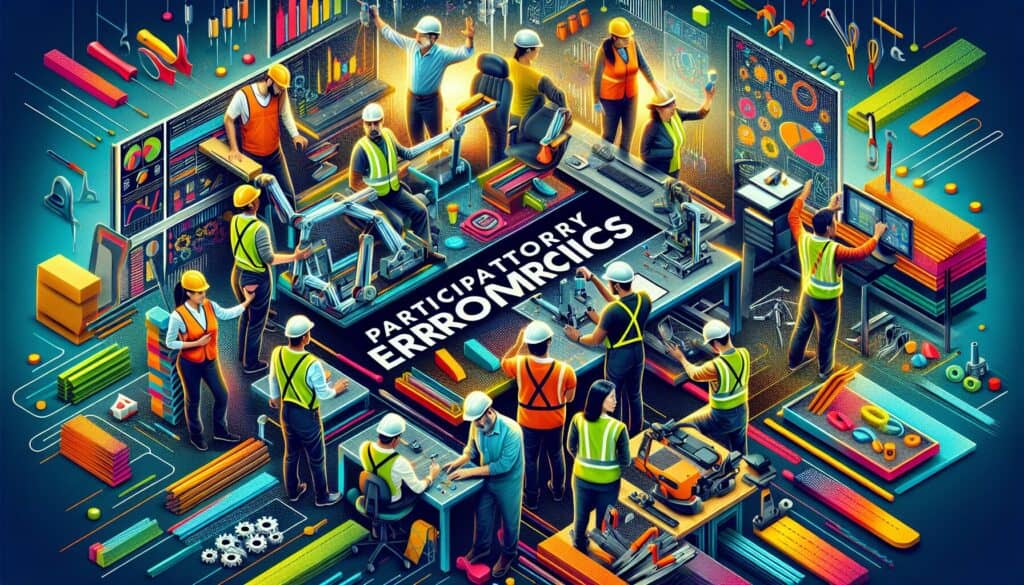
Participatory Ergonomics is particularly beneficial in sectors such as manufacturing, healthcare, and office environments, where physical tasks and workspace layouts significantly impact worker safety and productivity. During the design phase of a new workspace or equipment, this methodology can be implemented effectively through workshops and brainstorming sessions involving a diverse team of employees who perform the tasks, supervisors who manage workflows, and ergonomics experts who understand the principles of optimal design. The collaboration among these participants not only allows for a comprehensive identification of ergonomic challenges but also encourages innovative solutions grounded in real-world applications. Various industries have successfully adopted this approach to enhance job satisfaction and productivity while reducing workplace injuries; for example, in manufacturing, workers can provide feedback on machinery layouts and tool accessibility, while in healthcare, nursing staff can identify challenges in lifting techniques or equipment placement that affects patient care. Engaging employees in this manner fosters a culture of continuous improvement as they become invested in the solutions they help create, making it more likely that changes will be implemented effectively and maintained over time. When teams regularly evaluate the changes made and solicit further input, an ongoing dialogue is established, promoting adaptability as tasks and technologies evolve. The success of these initiatives often leads organizations to establish permanent ergonomic committees or task forces that regularly assess workplace conditions and champion employee-driven improvements.
이 방법론의 주요 단계
Identify ergonomic issues through interactive discussions with workers.
Engage in brainstorming sessions to generate ideas for improvements.
Prioritize identified solutions based on feasibility and impact.
Develop action plans for implementing selected solutions collaboratively.
Execute the action plans while involving workers in the process.
Monitor and assess the impact of implemented solutions with worker feedback.
Iterate on solutions based on evaluation results and ongoing worker input.
프로 팁
Conduct regular workshops that allow workers to voice concerns and suggest feasible ergonomic enhancements, fostering an ongoing dialogue around workplace safety.
Utilize collaborative tools and visual aids like sketches or 3D models during brainstorming sessions to guide discussions toward tangible solutions.
Establish metrics for evaluating ergonomic interventions, ensuring feedback loops are in place for continuous improvement based on real-world applications and user experiences.