그만큼 인터넷 프로토콜 suite의 아키텍처는 개념적 모델로서, 다음과 같이 구분됩니다. 의사소통 기능을 링크 계층, 인터넷 계층, 전송 계층, 응용 계층의 네 가지 추상화 계층으로 나눕니다. 이러한 계층적 접근 방식은 각 계층이 특정 작업을 처리하고 바로 위아래 계층과만 상호 작용하므로 프로토콜 설계 및 개발을 단순화합니다.
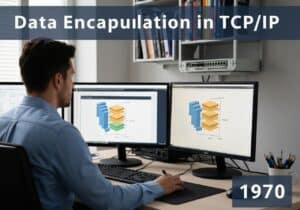

(설명을 위한 생성된 이미지입니다)
그만큼 인터넷 프로토콜 suite의 아키텍처는 개념적 모델로서, 다음과 같이 구분됩니다. 의사소통 기능을 링크 계층, 인터넷 계층, 전송 계층, 응용 계층의 네 가지 추상화 계층으로 나눕니다. 이러한 계층적 접근 방식은 각 계층이 특정 작업을 처리하고 바로 위아래 계층과만 상호 작용하므로 프로토콜 설계 및 개발을 단순화합니다.

The TCP/IP model, also known as the DoD model, was developed in the 1970s for the ARPANET. Unlike the more formal seven-layer OSI model, the TCP/IP model is a descriptive model based on the actual protocols that defined the early Internet. The Link Layer (Layer 1) is responsible for transmitting data between devices on the same local network. The Internet Layer (Layer 2) handles addressing and routing of packets across different networks, with the Internet Protocol (IP) being the core protocol. The Transport Layer (Layer 3) provides host-to-host communication services for applications, with TCP offering reliable, connection-oriented service and UDP providing a simpler, connectionless datagram service. Finally, the Application Layer (Layer 4) contains protocols that applications use to exchange data, such as HTTP for web browsing or SMTP for email. This modularity allows for independent development and evolution of protocols at each layer, a key factor in the Internet’s scalability and success.
현재 하루 4만 건이 넘는 봇 트래픽을 차단하기 위해 이 콘텐츠는 커뮤니티 회원만 이용할 수 있습니다.
> 로그인 < 또는 >등록 < 이 콘텐츠를 비롯한 모든 제한된 콘텐츠와 도구는 (100% 무료로) 이용할 수 있습니다.
TCP/IP 계층형 아키텍처
(날짜를 알 수 없거나 관련이 없는 경우, 예를 들어 "유체역학"의 경우, 주목할 만한 등장 시기를 대략적으로 추정하여 제공합니다.)
고화질 이미지 및 다운로드는 등록된 회원에게만 100% 무료로 제공됩니다.
> 로그인 <