Product Design, Manufacturing & Innovation Resources
घर » सापेक्ष आर्द्रता (आरएच)

सापेक्ष आर्द्रता (आरएच)

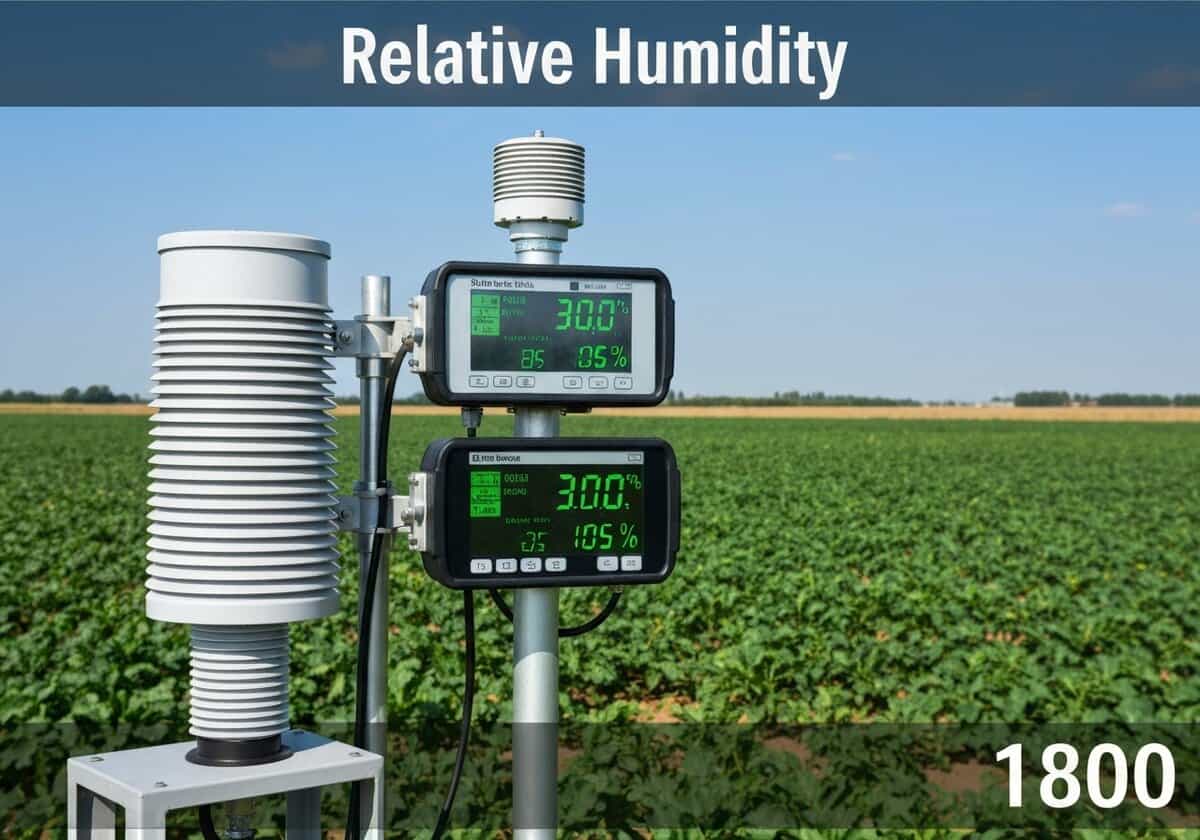
1800
कृषि में सापेक्ष आर्द्रता मापने वाला मौसम विज्ञान स्टेशन।.

(यह छवि केवल उदाहरण के लिए बनाई गई है)

सापेक्ष आर्द्रता ([latex]phi[/latex]) आंशिक आर्द्रता और तापमान के अनुपात को दर्शाती है। दबाव जल वाष्प ([latex]p_{H_2O}[/latex]) के संतुलन के लिए वाष्प दबाव किसी दिए गए तापमान पर पानी की आर्द्रता (p*H₂O) को प्रतिशत में व्यक्त किया जाता है: φ = pH₂O / p*H₂O × 100%। यह दर्शाता है कि हवा संतृप्ति के कितने करीब है, जहां 100% सापेक्ष आर्द्रता का अर्थ है कि हवा संतृप्त है।


Relative humidity is a crucial metric in meteorology and everyday life because it directly relates to human comfort and various physical processes. Unlike absolute humidity, which measures the total mass of water vapor, relative humidity provides context by comparing this amount to the maximum possible amount the air could hold at its current temperature. The equilibrium or saturation vapor pressure of water, [latex]p^*_{H_2O}[/latex], increases non-linearly with temperature. This means that if the amount of water vapor in the air remains constant (constant absolute humidity), a decrease in temperature will cause the relative humidity to increase. If the air cools sufficiently, it will reach its dew point, the temperature at which [latex]\phi = 100\%[/latex] and condensation (dew, fog, or clouds) begins to form. This temperature dependence is why mornings often feel more humid even if the absolute amount of water vapor hasn’t changed overnight. In HVAC systems, controlling relative humidity is as important as controlling temperature for comfort and for preventing mold growth, which thrives in high-humidity environments. The concept is rooted in the work of scientists like John Dalton, whose law of partial pressures (c. 1802) established that the total pressure of a gas mixture is the sum of the partial pressures of its individual components, a foundational principle for understanding the behavior of water vapor in air.

UNESCO Nomenclature: 2501
वायुमंडलीय विज्ञान

Type

सार प्रणाली

व्यवधान

मूलभूत

उपयोग

व्यापक उपयोग

शगुन

  • वायु के एक घटक के रूप में जल वाष्प की खोज
  • इवेंजेलिस्टा टोरिसेली द्वारा दबाव की अवधारणा का विकास
  • गैस नियमों का निरूपण (बॉयल का नियम, चार्ल्स का नियम)
  • जॉन डाल्टन का आंशिक दाब का नियम
  • अवस्था संक्रमणों (वाष्पीकरण और संघनन) की समझ

आवेदन

  • मौसम पूर्वानुमान
  • एचवीएसी (हीटिंग, वेंटिलेशन और एयर कंडीशनिंग) सिस्टम
  • डीह्यूमिडिफायर और ह्यूमिडिफायर
  • कृषि और ग्रीनहाउस प्रबंधन
  • खाद्य भंडारण और संरक्षण
  • विनिर्माण प्रक्रियाएं (जैसे, सेमीकंडक्टर, वस्त्र)

पेटेंट:

NA

संभावित नवाचार विचार

बॉट ट्रैफिक को कम करने के कारण, जो वर्तमान में प्रति दिन 40,000 से अधिक है, यह सामग्री केवल समुदाय के सदस्यों के लिए आरक्षित है।
> लॉगिन < या > रजिस्टर < इस सामग्री और अन्य सभी प्रतिबंधित सामग्रियों और उपकरणों तक पहुंच (100% निःशुल्क) है।

संबंधित विषय: सापेक्ष आर्द्रता, जल वाष्प, आंशिक दाब, संतृप्ति, तापमान, मौसम विज्ञान, एचवीएसी, ओस बिंदु, संघनन, साइक्रोमेट्रिक्स।

ऐतिहासिक संदर्भ

सापेक्ष आर्द्रता (आरएच)

1650
1800
1852
1900
1912
1940
1940
1950
1800
1838
1872
1910
1940
1940
1946

(यदि तिथि अज्ञात है या प्रासंगिक नहीं है, उदाहरण के लिए "द्रव यांत्रिकी", तो इसके उल्लेखनीय उद्भव का एक अनुमानित आंकड़ा प्रदान किया गया है)

संबंधित आविष्कार, नवाचार और तकनीकी सिद्धांत

पंजीकृत सदस्यों के लिए पूर्ण आकार की छवियाँ और डाउनलोड 100% निःशुल्क उपलब्ध हैं।