Product Design, Manufacturing & Innovation Resources
Heim » Thermischer Wirkungsgrad des Otto-Kreisprozesses

Thermischer Wirkungsgrad des Otto-Kreisprozesses

1900
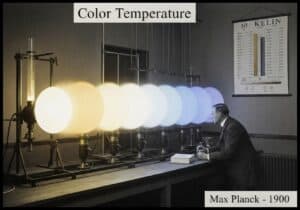
Otto-Motor in einer mechanischen Werkstatt von 1900, Anwendung der Thermodynamik.

(Abbildung dient nur zur Veranschaulichung)

The thermal efficiency ([latex]\eta_{th}[/latex]) of an ideal Otto cycle is a function of the compression ratio ([latex]r[/latex]) and the specific heat ratio ([latex]\gamma[/latex]) of the working fluid. The formula is [latex]\eta_{th} = 1 – \frac{1}{r^{\gamma-1}}[/latex]. This equation shows that efficiency increases with the compression ratio, providing a fundamental principle for engine design and performance optimization.

The derivation of the Otto cycle thermal efficiency formula begins with the general definition of thermal efficiency for any heat engine: [latex]\eta_{th} = \frac{W_{net}}{Q_{in}} = 1 – \frac{Q_{out}}{Q_{in}}[/latex], where [latex]W_{net}[/latex] is the net work output, [latex]Q_{in}[/latex] is the heat added, and [latex]Q_{out}[/latex] is the heat rejected. For the Otto cycle, heat is added at constant volume (process 2-3) and rejected at constant volume (process 4-1). Therefore, [latex]Q_{in} = m c_v (T_3 – T_2)[/latex] and [latex]Q_{out} = m c_v (T_4 – T_1)[/latex], where [latex]m[/latex] is the mass of the working fluid, [latex]c_v[/latex] is the specific heat at constant volume, and [latex]T[/latex] represents the temperature at the numbered states of the cycle.

Substituting these into the efficiency equation gives [latex]\eta_{th} = 1 – \frac{T_4 – T_1}{T_3 – T_2}[/latex]. To simplify this in terms of volumes, we use the relationships for the isentropic processes (1-2 and 3-4). For an isentropic process, [latex]TV^{\gamma-1} = \text{constant}[/latex]. Thus, [latex]\frac{T_2}{T_1} = (\frac{V_1}{V_2})^{\gamma-1} = r^{\gamma-1}[/latex] and [latex]\frac{T_3}{T_4} = (\frac{V_4}{V_3})^{\gamma-1} = r^{\gamma-1}[/latex]. This implies [latex]\frac{T_2}{T_1} = \frac{T_3}{T_4}[/latex] or [latex]\frac{T_4}{T_1} = \frac{T_3}{T_2}[/latex]. Rearranging the efficiency equation to [latex]\eta_{th} = 1 – \frac{T_1(T_4/T_1 – 1)}{T_2(T_3/T_2 – 1)}[/latex] and substituting the temperature ratio equality, the terms in the parentheses cancel out. This leaves [latex]\eta_{th} = 1 – \frac{T_1}{T_2}[/latex]. Finally, using the isentropic relation [latex]\frac{T_1}{T_2} = (\frac{V_2}{V_1})^{\gamma-1} = \frac{1}{r^{\gamma-1}}[/latex], we arrive at the final formula: [latex]\eta_{th} = 1 – \frac{1}{r^{\gamma-1}}[/latex].

UNESCO Nomenclature: 2212
- Thermodynamik

Typ

Formel

Störung

Grundlegendes

Verwendung

Weitverbreitete Verwendung

Vorläufer

  • Sadi Carnot’s work on heat engine efficiency
  • Rudolf Clausius’s formulation of the second law of thermodynamics
  • Konzept der spezifischen Wärmekapazitäten (cv und cp)
  • ideales Gasgesetz
  • Mathematische Beschreibung adiabatischer (isentropischer) Prozesse

Anwendungen

  • Motorenkonstruktion und -optimierung
  • Leistungsvergleich verschiedener Kraftstoffe
  • Entwicklung von Hochkompressionsmotoren
  • Analyse von Turboaufladung und Kompressoraufladung
  • Ausbildung im Automobiltechnikbereich

Patente:

NA

Potenzielle Innovationsideen

Aufgrund des hohen Datenverkehrs durch Web-Scraping-Bots, der derzeit mehr als 40.000 Anfragen pro Tag umfasst, ist dieser Inhalt ausschließlich Community-Mitgliedern vorbehalten.
> Anmelden < oder > Registrieren < (100% kostenlos) Zugriff darauf sowie auf alle anderen eingeschränkten Inhalte und Tools.

Related to: thermal efficiency, compression ratio, specific heat ratio, Otto cycle, thermodynamics, engine performance, isentropic process, ideal gas law, heat engine, automotive engineering.

Historischer Kontext

Thermischer Wirkungsgrad des Otto-Kreisprozesses

1900
1900
1900
1900
1900
1902
1902
1900
1900
1900
1900
1900
1900-12-14
1902
1904

(wenn das Datum unbekannt oder nicht relevant ist, z. B. „Strömungsmechanik“, wird eine gerundete Schätzung seines bemerkenswerten Auftretens bereitgestellt)

Verwandte Erfindungen, Innovationen und technische Prinzipien

Bilder in voller Größe und Downloads sind nur für registrierte Mitglieder 100% kostenlos verfügbar.

> Login <